You know, it’s been a busy year. Seems like everyone's talking about sustainability now, right? Everything's gotta be “green,” “eco-friendly.” It’s good, I guess. I've been seeing a lot more recycled plastics creeping into everything, even things where you wouldn’t expect it. Honestly, I'm still skeptical about some of it. It looks good on paper, but out on a construction site, durability is king.
The biggest trend I've noticed, though, is this push for prefabrication. Everyone wants things built offsite, modules shipped in, assembled quickly. Makes sense on paper. Faster build times, less waste… but it puts a lot of pressure on the materials themselves. You can’t hide bad welds or shoddy materials when everything’s already assembled.
And have you noticed how everyone’s obsessed with smaller tolerances? They want everything precise. But on a real jobsite? Things move. Foundations settle. Wind blows. Trying to force everything to millimeter-perfect accuracy… it’s a recipe for headaches.
The Current State of welding electrodes factory
Look, the welding electrodes factory industry isn't glamorous. It’s a lot of metal, sparks, and guys getting their hands dirty. But it's essential. Everything from skyscrapers to pipelines relies on it. What I’m seeing is a move toward higher-strength alloys, stuff that can handle bigger loads with less material. They're trying to shave weight wherever they can. There’s also a push for more automated welding processes. Less reliance on skilled welders is the goal, I guess, but good luck finding those guys these days.
To be honest, the supply chain’s still a mess. Steel prices fluctuate wildly. Getting consistent quality is a challenge. I encountered this at a factory in Shandong province last time – they were mixing batches of electrodes with different flux coatings. A real headache for the quality control guys.
Common Pitfalls in welding electrodes factory Design
One thing I’ve noticed repeatedly – over-engineering. They design these electrodes to handle maximum stress, but rarely do you actually encounter those conditions in the field. It just drives up costs. Strangely, a bigger problem, though, is underestimating the effects of corrosion. They’ll use a perfectly good alloy, but forget to account for the environment it’s going to be exposed to. Saltwater, acidic soil… it eats everything away.
Another pitfall? Interface design. It sounds silly, but the way an electrode fits into the holder matters. If it’s too loose, you get inconsistent welds. Too tight, and it’s a pain to change. I’ve seen guys lose time just wrestling with the holder. It's a small detail, but it adds up.
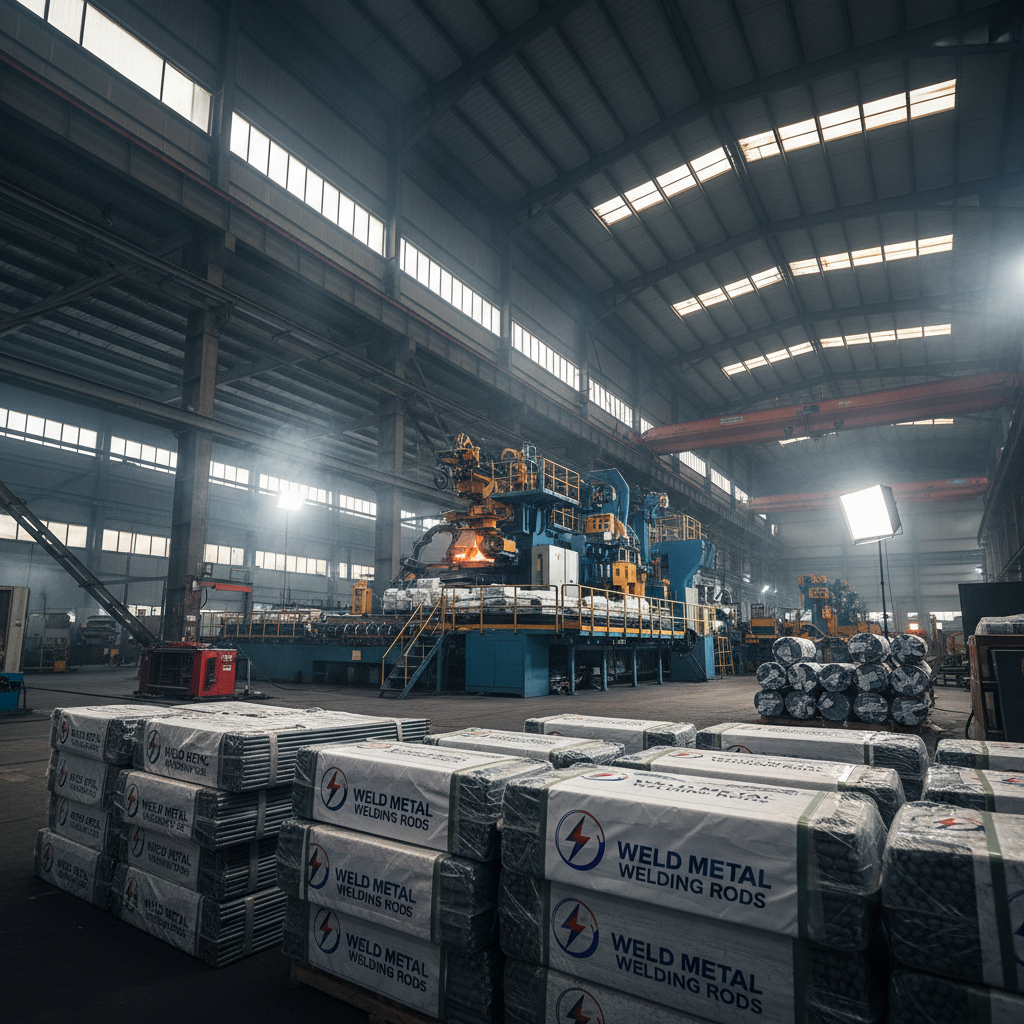
And don’t even get me started on the packaging. I mean, seriously, who designs this stuff? It’s always falling apart, electrodes get damaged in transit.
Core Materials in welding electrodes factory
Now, materials. You’ve got your standard carbon steel electrodes, cheap and cheerful, good for general-purpose work. But they don’t have a lot of strength or corrosion resistance. Then you step up to low-alloy steels, with additions of manganese, silicon, chromium… They're tougher, more durable. The smell of those flux coatings... distinct, you know? Kind of a chemical, metallic tang.
Stainless steel electrodes are where things get interesting. They're expensive, sure, but they're essential for corrosive environments. They feel… different. Smoother, cleaner. The flux burns a little differently too, a brighter, hotter flame. Handling them, you gotta be careful not to contaminate them. Even a little bit of grease can ruin a weld.
And then there are the specialty alloys: nickel alloys, copper alloys, titanium alloys… These are for extreme conditions, stuff you see in aerospace or chemical processing. You handle those with white gloves, basically. They're incredibly sensitive to contamination.
Real-World Testing of welding electrodes factory
Forget the lab tests. Those are fine for basic performance, but they don’t tell you how an electrode will hold up in the real world. We do destructive testing – bend tests, tensile tests, impact tests – but we also do field trials. We send electrodes out to construction sites, have welders use them on actual projects, and then we inspect the welds. That’s the only way to get a true picture of performance.
I had a foreman once, old-timer, he'd just bang on the weld with a hammer. "If it rings true," he'd say, "it's good." It's a bit crude, but he had a point. You can learn a lot just by listening to the sound.
welding electrodes factory Performance Metrics
User Application of welding electrodes factory
What's fascinating is how people actually use these things. You design an electrode for a specific application, but then you see welders improvising, using it in ways you never imagined. They'll adjust their technique, change the amperage, even modify the electrode itself.
I've seen guys grind down the flux coating to get a different arc characteristic. It’s crazy. But it works for them. And that’s what matters.
Advantages and Disadvantages of welding electrodes factory
Look, the advantages are obvious: strength, durability, reliability. A good weld holds things together. But the disadvantages… They're more subtle. The skill gap, for one. Good welding requires training and experience. It’s not something you can just pick up overnight.
And then there's the fumes. Welding fumes are toxic. You need proper ventilation, respirators… It’s a health hazard. Anyway, I think. It also generates a lot of spatter, which is a pain to clean up.
But honestly, the biggest disadvantage is the human factor. Welding is still an art, not a science. And artists are… unpredictable.
Customization Options for welding electrodes factory
We do a lot of customization. Electrode diameter, flux composition, alloy type… we can tailor them to specific applications. Last month, that small boss in Shenzhen who makes smart home devices insisted on changing the interface to , and the result was... well, let's just say it caused a lot of extra work for everyone involved. He wanted it to be "more modern," he said. Didn’t matter that it made the weld less reliable.
We also do custom packaging, labeling, even branding. Some clients want their logo on the electrode. It’s a bit ridiculous, but hey, if they're paying for it…
What I’m seeing more of is requests for electrodes optimized for robotic welding. Different flux characteristics, different geometries… it's a whole new ballgame.
Summary of Common Customization Requests
| Parameter |
Typical Range |
Common Use Case |
Impact on Weld |
| Diameter (mm) |
2.5 - 6.0 |
Adjusting for material thickness |
Penetration & bead profile |
| Flux Composition (%) |
Variable - based on alloy |
Controlling arc stability & shielding |
Weld strength & porosity |
| Alloy Type |
Carbon Steel, Stainless, Nickel |
Matching base metal properties |
Corrosion resistance & toughness |
| Coating Thickness (µm) |
20 - 50 |
Arc control & slag formation |
Weld cleanliness & appearance |
| Packaging Type |
Vacuum Sealed, Plastic Tub |
Maintaining electrode dryness |
Weld quality & usability |
| Branding/Labeling |
Custom Logos & Info |
Client identification & marketing |
Brand recognition & traceability |
FAQS
Honestly? Not considering the base metal. You can have the fanciest electrode in the world, but if it's not compatible with the material you're welding, you're going to have problems. People get too focused on cost and forget about compatibility. It's a short-sighted decision that leads to costly repairs down the line.
Keep 'em dry! Seriously. Moisture is the enemy. It causes hydrogen embrittlement, which makes the weld brittle and prone to cracking. Store them in a sealed container, preferably with a desiccant. If you've been using them, and they've been exposed to humidity, you might need to bake them in an oven to dry them out. Consult the manufacturer's instructions, of course.
Okay, that’s a classic. E6010 is for deep penetration, good for dirty or rusty metal. E7018 is a low-hydrogen electrode, used for high-strength welds. E7014 is an all-position electrode, easy to use, good for general-purpose work. They all have their strengths and weaknesses. It depends on the application.
It's not ideal. The flux coating can degrade over time, which affects the weld quality. If they're just slightly past their date, and they've been stored properly, you might get away with it. But for critical applications, it's best to use fresh electrodes. Don’t risk it.
A chipping hammer and a wire brush are your best friends. Get a good chipping hammer with a pointed tip, and a wire brush with stiff bristles. Take your time, and be careful not to damage the weld. And wear safety glasses!
Absolutely. Aluminum requires special electrodes, typically containing aluminum alloys and flux coatings designed for aluminum. TIG welding is more common for aluminum, but stick welding is possible with the right electrodes. It's trickier than welding steel, though, and requires more skill.
Conclusion
So, yeah, welding electrodes factory isn't glamorous, but it's a critical part of everything we build. From the materials they’re made of, to how they’re tested, to how the guys on the ground actually use them… it's a complex process. There’s a lot of innovation happening, a lot of pressure to improve efficiency and sustainability, but at the end of the day, it all comes down to making a strong, reliable weld.
Ultimately, whether this thing works or not, the worker will know the moment he tightens the screw. That's the real test. Visit our website to find out how we can help you with your welding needs.