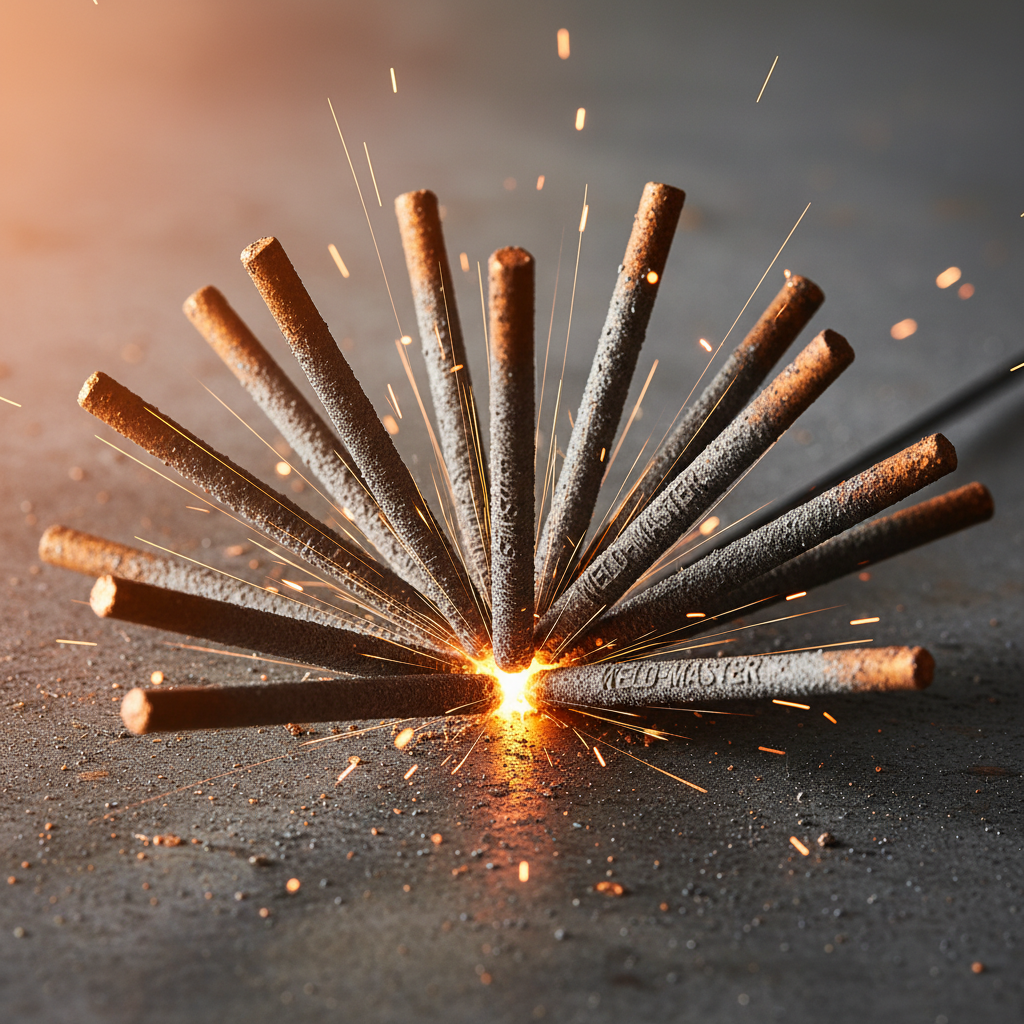
Selecting the correct diameter and composition when dealing with different size welding rods is more than a technical detail; it is the foundation of structural integrity in modern manufacturing. Whether you are working with 2.5mm electrodes for precision root passes or 5.0mm rods for heavy-duty filling, the diameter directly dictates the heat input, penetration depth, and overall weld quality. Understanding these nuances ensures that every joint can withstand the rigorous demands of its intended environment.
Across the global industrial landscape, the standardization of welding consumables—governed by bodies such as AWS (American Welding Society) and ISO—has allowed for seamless international trade in infrastructure. However, the challenge remains in the practical application: choosing a rod that is too large for a thin workpiece can lead to burn-through, while a rod that is too small may result in insufficient fusion and structural failure. This balance is critical in sectors ranging from automotive assembly to massive shipbuilding projects.
By optimizing the use of different size welding rods, companies can significantly reduce material waste and energy consumption. This guide aims to demystify the selection process, providing technical insights into how different diameters and coating types, such as lime-titania or low-hydrogen, interact with various metals to create welds that are not only strong but also durable against corrosion and mechanical stress.
Global Relevance of Different Size Welding Rods
In the realm of global manufacturing, the versatility offered by different size welding rods is indispensable. From the construction of skyscrapers in emerging megacities to the maintenance of oil rigs in the North Sea, the ability to switch between fine-gauge electrodes (like 2.0mm) and heavy-duty rods (like 5.0mm) allows engineers to adapt to varying material thicknesses and joint geometries. This flexibility is what enables the scaling of infrastructure across different continents regardless of the specific local metal grades.
Furthermore, the adherence to international standards like AWS E6013 or E7018 ensures that a welder in China can produce a joint that meets the safety specifications required in the USA or Europe. The global supply chain for welding consumables has evolved to prioritize not just the chemistry of the metal, but the precision of the diameter, as even a 0.5mm deviation can alter the current requirement and the resulting heat-affected zone (HAZ).
Defining Diameter and Material Specifications
When we discuss different size welding rods, we are primarily referring to the diameter of the core wire. For instance, a 2.5mm rod is typically utilized for thin sheets and root passes where control is paramount, while 3.2mm and 4.0mm rods are the "workhorses" of the industry, balanced for both speed and strength. The largest common sizes, reaching 5.0mm, are reserved for filling large gaps or welding thick plates where maximum deposition rates are required to maintain productivity.
However, diameter is only half of the equation; the material composition—such as carbon steel, stainless steel (E308, E309), or cast iron—determines the chemical compatibility with the base metal. For example, using a stainless steel electrode on a chromium-nickel base requires specific diameter choices to manage the higher risk of cracking and the need for precise preheating temperatures, often above 200°C to 300°C.
In a professional context, "size" also encompasses the length of the rod and the thickness of the flux coating. The coating, whether it be lime-titania or low-hydrogen, interacts with the current provided to the rod. A larger diameter rod requires higher amperage to maintain a stable arc, which in turn increases the depth of penetration, making the choice of size a critical decision for the structural integrity of the weld.
Core Components of Electrode Performance
The performance of different size welding rods is heavily influenced by deposition efficiency. This refers to how much of the electrode's metal actually ends up in the joint versus how much is lost to spatter or slag. Smaller rods tend to have higher precision but lower deposition rates, making them ideal for intricate work.
Thermal Management is another core component. Larger rods concentrate more heat into a smaller area, which can lead to warping in thin metals. By carefully selecting among different size welding rods, a technician can control the Heat Input (kJ/mm), ensuring that the mechanical properties of the metal—such as tensile strength and elongation—are not compromised by overheating.
Finally, arc stability varies across sizes. A 2.5mm rod creates a tighter, more focused arc, which is essential for all-position welding (vertical and overhead). Conversely, larger rods are more stable in flat or fillet positions, where the goal is to fill a volume of metal quickly without the risk of the puddle sagging under gravity.
Industrial Applications and Use Cases
In real-world scenarios, the application of different size welding rods varies by industry. In the automotive sector, thin-gauge rods are used for chassis reinforcements and exhaust systems to prevent burn-through. In contrast, the heavy machinery industry, producing cranes and excavators, relies on 4.0mm and 5.0mm E7018 low-hydrogen rods to ensure deep penetration and high crack resistance in thick carbon steel plates.
Specialized environments, such as chemical plants or pharmaceutical factories, often employ stainless steel electrodes like E316L. In these cases, the rod size is chosen based on the corrosion resistance requirements; thinner rods are often used for the first layer to ensure a perfectly sealed root, followed by larger rods to build up the reinforcement, providing a balance between airtightness and structural strength.
Effectiveness of Different Size Welding Rods by Application
Advantages of Precision Rod Selection
The most immediate advantage of utilizing different size welding rods is the drastic reduction in rework. When a welder matches the rod diameter to the base metal thickness, the risk of porosity and slag inclusion is minimized. This not only improves the safety of the finished product but also reduces the time spent on grinding and polishing, leading to a leaner production cycle.
Beyond technical metrics, there is a significant economic and sustainable benefit. Proper sizing minimizes electrode waste—using a 5.0mm rod where a 3.2mm rod would suffice leads to excessive metal deposition and unnecessary power consumption. By optimizing the selection process, companies can lower their carbon footprint and reduce the cost of consumables without sacrificing the quality of the weld.
Future Innovations in Welding Consumables
The future of different size welding rods is moving toward "intelligent consumables." We are seeing the development of electrodes with nano-engineered coatings that allow for stable arcs across a wider range of currents, potentially reducing the need for multiple rod sizes in a single project. These innovations aim to combine the penetration of a larger rod with the precision of a smaller one.
Additionally, the shift toward green energy is driving the demand for specialized alloy rods that can weld new generations of high-strength, low-alloy (HSLA) steels used in wind turbine towers and electric vehicle frames. These materials require incredibly precise thermal control, pushing the industry toward even more granular sizing options to prevent hydrogen-induced cracking.
Automation and robotics are also redefining rod usage. Robotic welding arms can switch between different size welding rods in milliseconds, allowing for a "variable-diameter strategy" where the machine uses a thin rod for the root and automatically switches to a thicker rod for the cap, optimizing both strength and appearance.
Overcoming Common Selection Challenges
One of the most common challenges in using different size welding rods is the "incorrect current" trap. Many operators use a larger rod with insufficient amperage, leading to a "sticky" electrode and poor fusion. The solution lies in strict adherence to amperage charts and the use of digital welding machines that can suggest the optimal settings based on the electrode diameter.
Another hurdle is moisture contamination, particularly in low-hydrogen rods (E7018). Regardless of the size, if the flux absorbs moisture, the weld will suffer from porosity. Experts recommend utilizing holding ovens at 120°C and drying ovens at 200-250°C for one hour to ensure the coating remains intact, regardless of whether you are using 2.5mm or 5.0mm rods.
Lastly, the challenge of "interpass temperature" often leads to failures in stainless steel welding. When using different size welding rods to build up a thick joint, the heat can accumulate, destroying the corrosion resistance of the chromium. The solution is to use narrower beads and implement quick cooling between layers, ensuring the interpass temperature remains within the specified limit.
Comparison of Performance Metrics Across Different Size Welding Rods
| Rod Diameter |
Ideal Material Thickness |
Penetration Depth |
Position Versatility |
| 2.0mm - 2.5mm |
1mm - 3mm |
Low to Medium |
All-Position (High) |
| 3.2mm |
3mm - 6mm |
Medium |
High Versatility |
| 4.0mm |
6mm - 12mm |
High |
Flat / Fillet |
| 5.0mm |
> 12mm |
Very High |
Flat Only (Low) |
| Alloy-Specific (Var) |
Variable |
Material Dependent |
Moderate |
| Flux-Cored (Wire) |
Heavy Plate |
Extreme High |
Semi-Automatic |
FAQS
The choice depends primarily on the thickness of your base metal. Use 2.5mm rods for thinner materials (typically under 3mm) or for the root pass of a joint to ensure precision and avoid burn-through. Switch to 3.2mm rods for general-purpose welding on materials between 3mm and 6mm, as they provide a better balance of deposition rate and heat control.
Yes, significantly. Larger diameter rods require higher current to melt the core wire and maintain a stable arc. For example, a 2.5mm E6013 rod might run at 60-90 amps, whereas a 4.0mm rod of the same type would require 140-180 amps. Always refer to the manufacturer's current chart to avoid sticking or excessive spatter.
Absolutely. In fact, it is a best practice in professional welding. A common technique is to use a smaller rod (e.g., 2.5mm) for the root pass to ensure full penetration and then use larger rods (e.g., 3.2mm or 4.0mm) for the filler and cap passes to increase efficiency and productivity.
Larger rods deposit a greater volume of molten metal in a shorter time. Because of gravity, this larger "puddle" is more likely to sag or drip (blow-through) when welding in a vertical position. Smaller rods provide a smaller, more manageable puddle that freezes faster, making them ideal for all-position welding.
While the available sizes are similar, the application differs. Stainless steel has lower thermal conductivity and a higher coefficient of expansion than carbon steel. Consequently, you often use smaller diameter rods to keep the heat input low, preventing warping and maintaining the corrosion-resistant properties of the metal.
Using a rod that is too large usually results in "burn-through," where the intense heat melts entirely through the base metal, leaving a hole. Additionally, you may experience poor fusion at the edges of the weld and an unattractive, oversized bead that requires extensive grinding to flatten.
Conclusion
Mastering the selection of different size welding rods is a critical skill that bridges the gap between amateur welding and professional engineering. By aligning rod diameter with material thickness, amperage settings, and positional requirements, you ensure that every weld is characterized by optimal penetration, minimal distortion, and maximum structural integrity. From the precision of 2.5mm electrodes to the power of 5.0mm rods, the right tool for the right task is the only way to guarantee safety and quality.
As the industry moves toward smarter materials and automated processes, the fundamental principles of thermal management and material compatibility remain unchanged. We encourage engineers and welders to continuously experiment with optimized rod sequences—combining different sizes for root and fill passes—to maximize efficiency. For high-quality, standardized welding consumables that meet AWS and ISO specifications, visit our website: www.jinlongweldingelectrode.com.