common welding electrodes are fundamental to modern manufacturing, construction, and repair across countless industries. Their ability to join metals efficiently and reliably underpins critical infrastructure, from bridges and skyscrapers to pipelines and automobiles. The global demand for these electrodes is continuously driven by economic development, infrastructure projects, and the necessity for ongoing maintenance and repairs. Understanding the nuances of common welding electrodes—their types, applications, and emerging technologies—is vital for professionals and stakeholders in these sectors.
The market for common welding electrodes is substantial and projected to grow further. According to reports, the global welding electrode market was valued at over $15 billion in 2023 and is expected to reach nearly $20 billion by 2028, exhibiting a CAGR of approximately 5%. This growth is particularly pronounced in developing economies, fueled by increased investment in infrastructure. Addressing challenges related to electrode performance, cost, and environmental impact is paramount to sustaining this growth.
The significance of common welding electrodes extends beyond economic considerations. They play a crucial role in ensuring the safety and longevity of critical assets, reducing downtime, and minimizing environmental risks associated with structural failures. Continuous innovation in electrode technology is driving advancements in welding processes, enabling more efficient, precise, and sustainable joining solutions.
Introduction to common welding electrodes
common welding electrodes are consumable rods used to create a weld by providing the filler metal. They are categorized based on their coating, core wire composition, and intended application. The selection of the right electrode is crucial for achieving a strong, durable, and high-quality weld.
The widespread use of common welding electrodes reflects their versatility and cost-effectiveness. They’re employed in a vast array of industries, including shipbuilding, automotive manufacturing, aerospace, construction, and pipeline maintenance. Choosing the right electrode significantly impacts weld strength, ductility, and resistance to corrosion.
Defining common welding electrodes
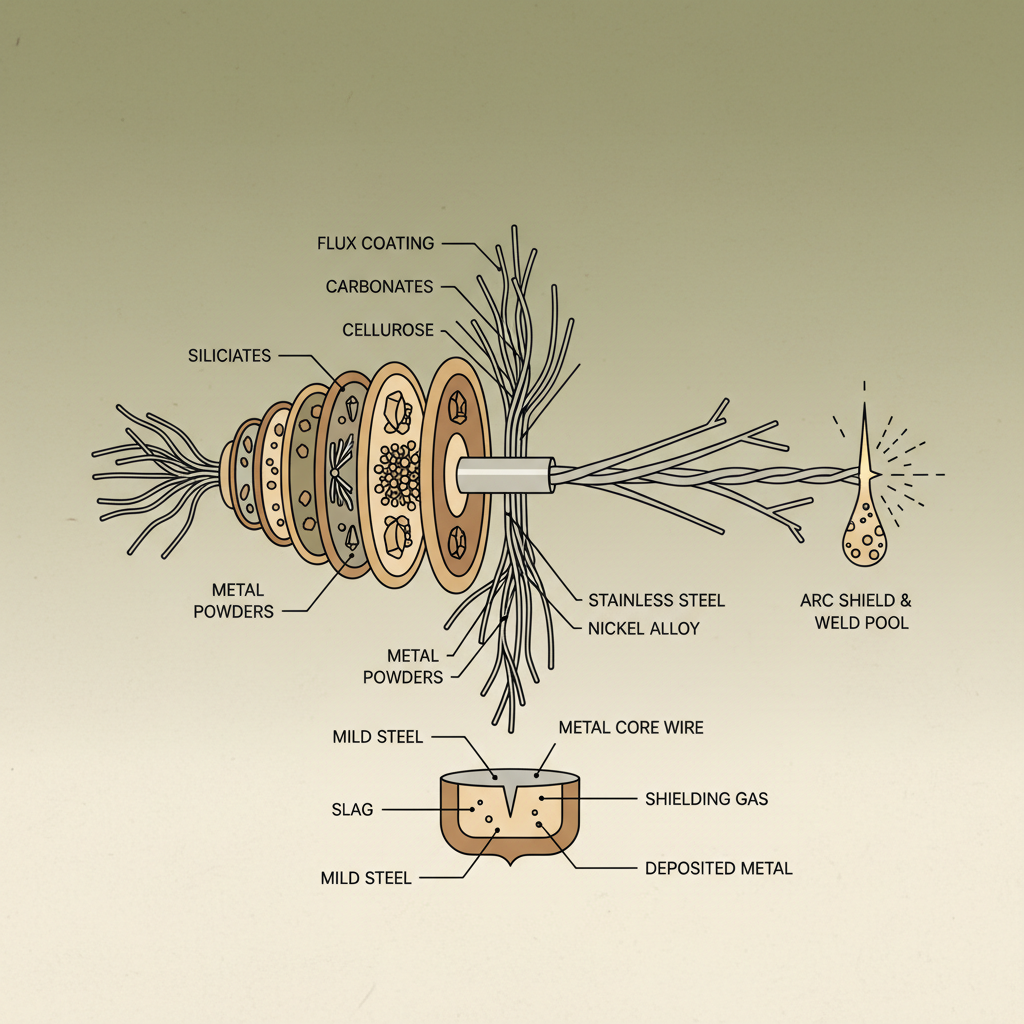
common welding electrodes are essentially the conduits for electrical current and filler metal in arc welding processes. They consist of a metallic wire, typically steel, stainless steel, or nickel alloy, coated in a flux. The flux protects the weld pool from atmospheric contamination, stabilizes the arc, and influences the weld's mechanical properties.
These electrodes are integral to several welding techniques, including Shielded Metal Arc Welding (SMAW, often called stick welding), Gas Metal Arc Welding (GMAW, or MIG welding), and Flux-Cored Arc Welding (FCAW). The specific type of electrode utilized dictates the welding process’s characteristics, such as deposition rate, penetration, and weld quality.
In essence, common welding electrodes act as a bridge, connecting the workpiece and the power source while simultaneously contributing the material needed to create a lasting bond. Their precise formulation and characteristics are tailored to specific metal types and welding requirements.
Core Characteristics of common welding electrodes
One crucial characteristic is tensile strength, indicating the electrode’s ability to withstand pulling forces. Higher tensile strength typically translates to a stronger weld. Another key property is ductility, which refers to the electrode's capacity to deform without fracturing. Ductile electrodes contribute to welds that are more resistant to cracking.
The chemical composition of the electrode, particularly the alloying elements present, dramatically influences the weld’s properties. For example, electrodes with higher chromium content enhance corrosion resistance. The type of flux coating also plays a vital role, controlling arc stability, slag formation, and weld bead shape.
Furthermore, the electrode's diameter affects the welding current and deposition rate. Thicker electrodes require higher currents and deposit more filler metal per unit time. Correct electrode selection, considering these characteristics, ensures optimal weld quality and adherence to industry standards.
Key Factors Influencing Electrode Performance
The welding current is paramount; insufficient current results in poor fusion, while excessive current can cause burn-through. Electrode angle and travel speed also significantly impact weld quality. Maintaining a consistent angle and speed is crucial for uniform penetration and bead formation.
Surface preparation is often overlooked, yet it's vital. Removing rust, scale, oil, and other contaminants ensures a clean weld and prevents defects. The joint design – whether a butt joint, lap joint, or fillet weld – affects the stress distribution and the electrode's ability to achieve adequate fusion.
common welding electrodes Performance Ratings
Global Applications and Industry Impact
In the construction industry, common welding electrodes are vital for erecting steel-framed buildings, bridges, and infrastructure projects worldwide. Shipbuilding relies heavily on specific electrodes for joining large steel plates, ensuring watertight and structurally sound vessels.
The automotive sector utilizes welding electrodes for chassis fabrication, body panel assembly, and exhaust system construction. Pipeline construction, particularly for oil and gas transportation, necessitates high-strength, corrosion-resistant electrodes to guarantee safe and reliable operation. In post-disaster relief operations, portable welding equipment and common welding electrodes are crucial for repairing damaged infrastructure and providing essential services.
Advantages and Long-Term Value Proposition
The primary advantage of common welding electrodes lies in their cost-effectiveness. Compared to other joining methods, such as riveting or bolting, welding generally offers lower material costs and reduced assembly time. Welded joints are also inherently stronger and more durable than mechanically fastened connections.
From a sustainability perspective, welding electrodes contribute to material efficiency by minimizing waste. Welded structures require less material than comparable designs utilizing alternative joining techniques. This not only reduces costs but also lowers the environmental footprint of construction and manufacturing processes. Ultimately, a reliable weld ensures safety, minimizes maintenance, and extends the lifespan of critical assets.
Future Trends and Innovation in common welding electrodes
Research is focused on developing electrodes with improved properties, such as higher deposition rates, lower fume generation, and enhanced weld metal toughness. The use of nanotechnology to modify electrode coatings is showing promise in creating welds with superior mechanical and corrosion resistance.
Automation and robotic welding systems are becoming increasingly prevalent, driving demand for electrodes specifically designed for automated processes. The integration of digital technologies, such as sensor-based monitoring and data analytics, is enabling real-time control of welding parameters and improved weld quality.
Furthermore, the development of environmentally friendly electrodes, utilizing less hazardous materials and reducing carbon emissions, is a growing priority. These advancements align with the global push for sustainable manufacturing practices and cleaner production processes.
Summary of Core Challenges and Solutions Related to common welding electrodes
| Challenge |
Impact on common welding electrodes |
Potential Solution |
Implementation Feasibility (1-10) |
| Fume Emission |
Health hazards, reduced visibility |
Low-fume electrodes, ventilation systems |
8 |
| Slag Inclusions |
Weakened weld, potential for failure |
Improved electrode coatings, proper cleaning |
7 |
| Porosity |
Reduced weld strength, corrosion susceptibility |
Preheating, proper shielding gas |
6 |
| Arc Instability |
Inconsistent weld bead, poor fusion |
Electrode with stable arc characteristics |
9 |
| Electrode Storage |
Moisture absorption, coating degradation |
Proper storage containers, drying ovens |
7 |
| Cost of Specialized Electrodes |
Increased project expenses |
Optimize electrode selection, consider lifecycle costs |
5 |
FAQS
E6010 electrodes are cellulose-sodium coated, designed for deep penetration and used primarily for root passes in pipe welding and out-of-position welding. They produce a fast-freezing slag. E7018 electrodes, however, are a low-hydrogen, iron powder coated electrode offering high ductility and excellent mechanical properties, suitable for multi-pass welds and critical applications requiring high strength and toughness. They require a clean base metal.
Welding stainless steel requires electrodes specifically designed to match its composition and prevent corrosion. Common choices include E308L-16 (for 304/304L stainless), E309L-16 (for dissimilar metal joining), and E316L-16 (for enhanced corrosion resistance). Selecting an electrode with similar alloy content to the stainless steel being welded is crucial for maintaining its properties.
Porosity refers to small voids within the weld metal, typically caused by trapped gases like hydrogen, oxygen, or nitrogen. Prevention involves thorough base metal cleaning, using low-hydrogen electrodes (like E7018), proper shielding gas coverage, and preheating the metal to drive out moisture. Ensure the welding arc is stable and free from drafts.
Welding poses several safety risks. Always wear appropriate personal protective equipment (PPE), including a welding helmet with a proper shade lens, welding gloves, a fire-resistant jacket, and safety shoes. Ensure adequate ventilation to avoid inhaling fumes. Be aware of fire hazards and have a fire extinguisher readily available. Protect surrounding materials from sparks and heat.
Proper storage is vital for maintaining electrode quality. Store electrodes in a dry, sealed container to prevent moisture absorption, especially low-hydrogen electrodes like E7018. If electrodes become damp, they should be baked according to the manufacturer’s instructions before use. Avoid storing electrodes in areas with extreme temperature fluctuations.
The classification system (like E7018) provides essential information about the electrode’s characteristics. 'E' indicates it's an electrode for arc welding. The first two digits (70) represent the tensile strength in thousands of pounds per square inch (70,000 psi). The last two digits (18) indicate the welding position and type of coating – '1' means all positions, and '8' denotes a low-hydrogen, iron powder coating.
Conclusion
common welding electrodes remain indispensable to a vast spectrum of industries, serving as the foundational elements for joining metals and constructing durable, reliable structures. Their versatility, cost-effectiveness, and ongoing innovation ensure their continued importance in a world increasingly reliant on robust infrastructure and advanced manufacturing processes. Understanding the nuances of electrode selection, application, and future trends is paramount for professionals seeking to optimize weld quality and efficiency.
Looking ahead, advancements in electrode technology, coupled with the integration of automation and digital monitoring systems, will further enhance welding capabilities and sustainability. By embracing these innovations and prioritizing safety and responsible material usage, we can unlock the full potential of common welding electrodes, driving progress and creating a more resilient and interconnected world. For a comprehensive range of high-quality common welding electrodes, visit our website: www.jinlongweldingelectrode.com.