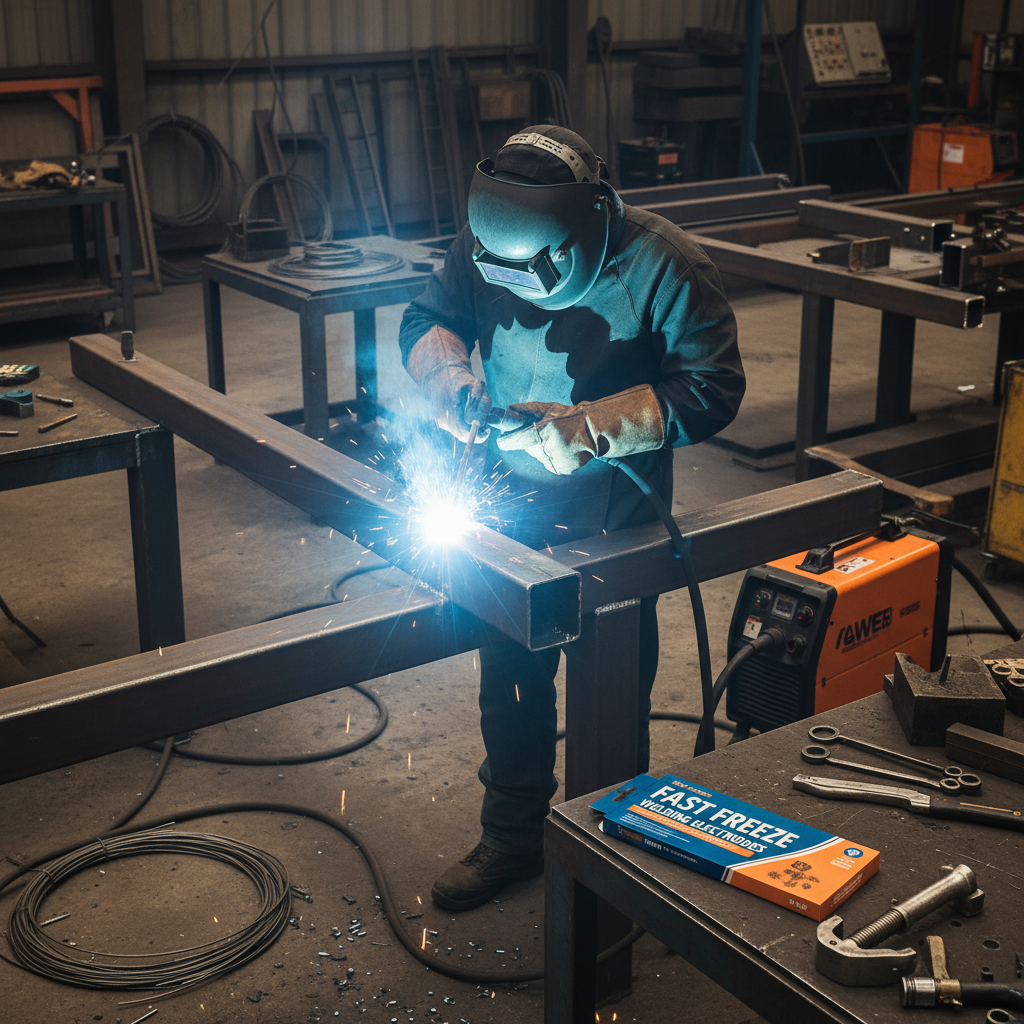
Finding reliable carbon steel electrode suppliers is a critical operational decision for fabrication shops and heavy industry manufacturers. In the metal products manufacturing sector, the quality of the welding consumable directly dictates the structural integrity of the final weld, affecting everything from fatigue resistance to overall safety standards.
The primary challenge for procurement managers is distinguishing between generic welding rods and those that meet strict AWS specifications for specific carbon steel grades. Poorly matched electrodes can lead to slag inclusions, hydrogen-induced cracking, or inadequate penetration, resulting in costly rework or catastrophic structural failure.
This guide provides a professional framework for evaluating suppliers, understanding the technical trade-offs between common AWS carbon steel electrode grades, and establishing a procurement standard that ensures consistent weld quality across diverse industrial applications.

Core Requirements for Industrial Carbon Steel Electrodes

Industrial carbon steel electrodes must deliver a precise balance of arc stability, deposition rate, and mechanical properties. For most structural applications, the focus is on the chemical composition of the deposited metal—specifically the carbon and manganese levels—which determine the tensile strength and ductility of the joint. A high-performance electrode must produce a weld bead with a well-distributed slag cover, ensuring that the weld line is properly molded and free of stomatal resistance.
From a manufacturing standpoint, consistency is the most valued trait. Variations in coating thickness or core wire purity between batches can lead to unpredictable arc behavior. Professional suppliers implement rigorous testing of deposited metal mechanical properties, such as tensile strength and elongation percentages, to ensure that every batch meets the operational demands of the end-user.
Evaluating AWS Specifications and Electrode Grading
The American Welding Society (AWS) standards provide the universal language for carbon steel electrode selection. Understanding these grades allows buyers to match the filler metal to the base metal's properties. For instance, E6010 and E6011 are typically utilized for deep penetration and root passes, while E6013 is favored for its ease of use and "small splash" characteristics in general fabrication. E7018, a low-hydrogen electrode, is essential for heavy-duty structural components where high strength and crack resistance are mandatory.
When auditing carbon steel electrode suppliers, it is necessary to verify that the product conforms to these standards not just in name, but in performance. This involves checking for certifications and test reports that confirm the tensile strength (e.g., 70,000 psi for E70xx) and the coating type (cellulosic, rutile, or basic), as these directly influence the current requirements and the resulting weld appearance.
Application-Specific Selection Logic
Selecting the right electrode requires a deep understanding of the workpiece and the environment. For lightweight structures, such as prefabricated building fabrication or ornamental iron, AWS E6013 electrodes are often the most efficient choice due to their stable arc and easy slag removal. In contrast, the repair of automobile sheet metal or galvanized roofing requires electrodes that can handle zinc coatings without excessive porosity, often necessitating specialized low-carbon steel types or flux-cored alternatives.
For heavy-duty farm implement repairs or industrial lap and butt welds, the priority shifts toward mechanical toughness. In these scenarios, high-strength electrodes like E7018 are preferred. The choice is not merely about strength, but about the "plastic nature" and toughness of the deposited metal, which prevents the weld from snapping under the dynamic loads typical of heavy machinery and agricultural equipment.
Supplier Capability and Production Scalability
The reliability of a supplier is often reflected in their production infrastructure and quality control systems. A supplier capable of an annual output of 50,000 tons, such as Dingzhou Jinlong Metal Production Co., Ltd., indicates a level of scalability that can support large-scale industrial contracts without compromising lead times. Advanced production lines and complete test equipment are essential to maintain the "Copper Bridge" brand quality across global markets.
The following conceptual index illustrates the relative priority of supplier attributes based on different procurement volumes. While small shops prioritize "Ease of Use," large industrial buyers shift their weight toward "Certification Compliance" and "Production Volume" to ensure supply chain stability and regulatory adherence.
Risk Mitigation in Consumable Procurement
Procurement risks in the welding industry usually stem from "invisible" defects. Low-cost suppliers may offer electrodes that look identical to premium brands but contain impurities or inconsistent coatings that lead to porosity. To mitigate this, buyers should request chemical composition analysis of the deposited metal, focusing on limiting sulfur and phosphorus, which are primary drivers of weld brittleness.
Another significant risk is the lack of international certification. Relying on suppliers who hold ISO9001, CE, and BV Rhine certifications ensures that the manufacturer follows a documented quality management system. This traceability is vital for projects involving shipbuilders or automobile-related components, where every weld must be accountable to a specific material standard and batch number.
Storage and Handling Standards for Quality Retention
The performance of a carbon steel electrode is only as good as its storage conditions. Low-hydrogen electrodes, for example, are hygroscopic, meaning they absorb moisture from the air. If the humidity in the warehouse exceeds 60%, the moisture can lead to hydrogen-induced cracking in the weld. Professional procurement must include a plan for controlled storage, utilizing vacuum packing or drying ovens to maintain electrode integrity.
Furthermore, the shelf life of these consumables is a critical factor. Non-vacuum-packed welding wires should generally not be stored for more than six months, while vacuum-packed versions can extend to one year. Buyers must ensure that their suppliers provide clear manufacturing dates and packaging that prevents corrosion and coating degradation during transit and storage.
Supplier Evaluation Decision Framework
When comparing carbon steel electrode suppliers, procurement teams should move beyond unit price and evaluate the "Total Cost of Welding." This includes considering the deposition rate, the amount of weld spatter (which increases cleaning time), and the rate of weld defects. A slightly more expensive electrode that offers a "small splash" and superior arc stability can significantly reduce labor costs and post-weld grinding time.
| Grade Type | Primary Strength | Typical Application | Key Risk Factor |
|---|---|---|---|
| AWS E6010 | Deep Penetration | Root Passes / Pipelines | Rough Appearance |
| AWS E6011 | Versatility (AC/DC) | General Repair / Rust | High Spatter |
| AWS E6013 | Smooth Finish | Light Fabrication | Lower Penetration |
| AWS E7018 | High Toughness | Structural Steel | Moisture Sensitivity |
| Flux-Cored | High Deposition | Heavy Plate Welding | Gas Requirement |
| Cast Iron Alloy | Crack Prevention | Engine Block Repair | High Material Cost |
By using this framework, buyers can align their supplier choice with the technical requirements of the project. Whether the goal is high-speed production or high-strength structural integrity, the selection must be based on the validated performance of the electrode's deposited metal and the manufacturer's ability to maintain those standards consistently.
Frequently Asked Questions
Request Mill Test Certificates (MTC) for specific batches. These documents should list the chemical composition of the deposited metal and the mechanical properties, including tensile strength and elongation, which must align with the AWS grade (e.g., E7018).
E6013 is a rutile electrode used for general purpose, light-duty welding with a smooth finish. E7018 is a low-hydrogen basic electrode used for high-stress structural welding where strength and crack resistance are critical.
Certain coatings absorb moisture, which dissociates into hydrogen during the welding process. This hydrogen can migrate into the weld metal, causing "cold cracking" or hydrogen-induced cracking, especially in high-strength steels.
Yes, but it is recommended to degrease and derust the surface. Some electrodes handle galvanized coatings better than others; flux-cored wires are often preferred for galvanized sheet metal due to better slag performance.
Look for ISO9001 for general quality management, CE for European market compliance, and BV Rhine certifications, which indicate that the products have undergone rigorous third-party testing.
Small splash (low spatter) means fewer metal droplets adhere to the base metal outside the weld bead. This significantly reduces the time spent on post-weld cleaning and grinding, increasing overall fabrication throughput.
Conclusion
Selecting the right carbon steel electrode suppliers requires a transition from price-based purchasing to performance-based procurement. By aligning AWS specifications with specific application needs—whether it be the deep penetration of E6010 or the structural toughness of E7018—manufacturers can ensure the longevity and safety of their metal products. The integration of rigorous certification checks and controlled storage practices further mitigates the risk of weld failure.
For organizations seeking consistent quality and scalable supply chains, reviewing detailed technical data and manufacturer certifications is the first step. Professional product information and application-specific welding solutions can be explored at www.jinlongweldingelectrode.com to ensure the chosen consumables match the engineering requirements of the project.