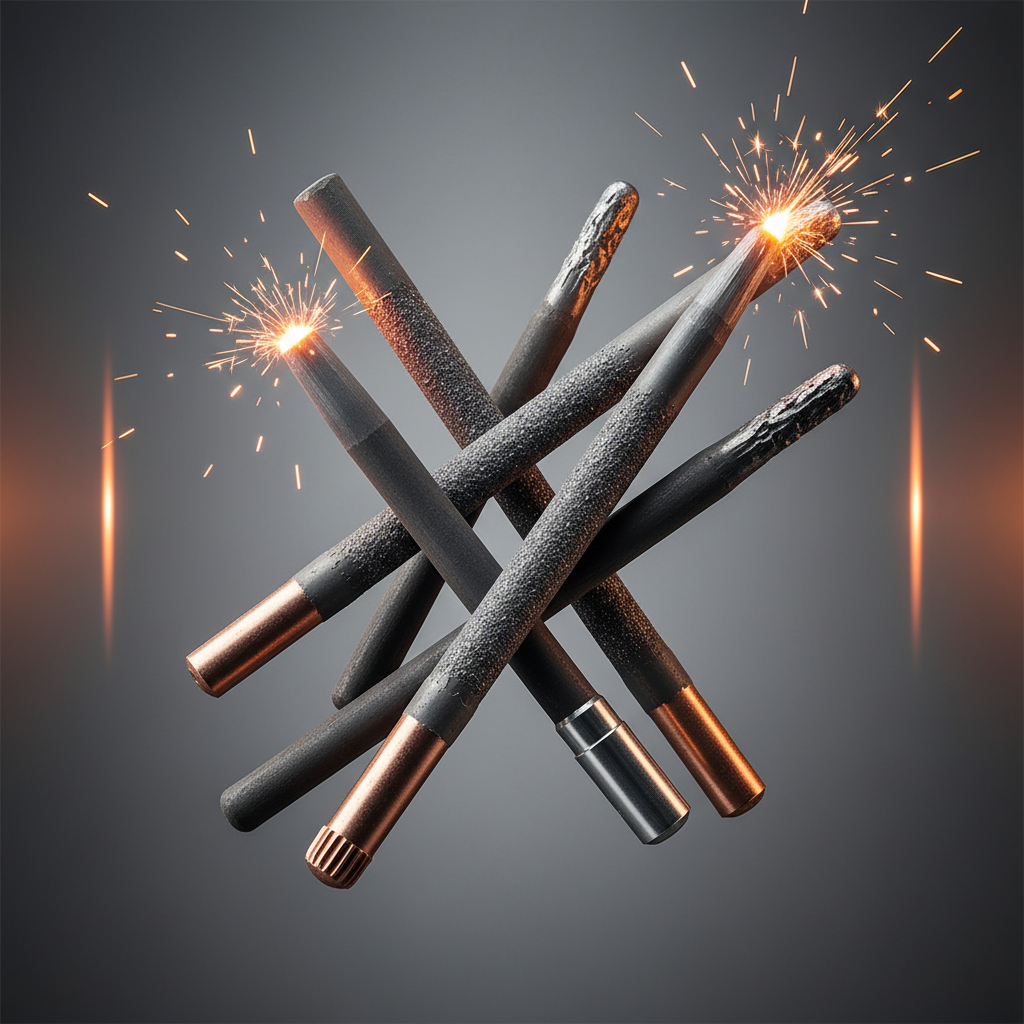
Procuring welding consumables often involves a complex trade-off between immediate expenditure and long-term weld integrity. When evaluating 6011 welding rod price, professional buyers must look beyond the per-kilogram cost and analyze how flux chemistry and core wire quality impact the total cost of ownership.
The AWS E6011 specification defines a high-cellulose sodium electrode designed for deep penetration and versatility across various current types. Because these rods are often used in critical pipeline and structural repairs, price volatility is usually driven by raw material costs and the precision of the coating process.
Understanding the cost drivers allows procurement managers to distinguish between budget-grade electrodes and high-performance options like the Copper Bridge brand, ensuring that the chosen material meets the specific penetration requirements of the project without unnecessary overspending.

Analyzing the Cost Drivers of E6011 Electrodes

The price of AWS E6011 welding rods is not a static figure but a reflection of several industrial variables. Primarily, the quality of the low-carbon steel core wire and the precise ratio of cellulose in the coating dictate the base cost. Higher purity materials reduce the risk of inclusions, which in turn lowers the cost of post-weld inspection and repair.
Furthermore, manufacturing scale plays a significant role. Large-scale facilities, such as those operated by Dingzhou Jinlong Metal Production Co., Ltd., can leverage advanced production lines to maintain consistent quality while optimizing the cost structure for international exports to markets in Southeast Asia and Africa.
Logistics and certification also add layers to the final pricing. Products that carry ISO9001, CE, and BV Rhine certifications generally command a premium because they provide verified assurance of mechanical properties, which is a non-negotiable requirement for industrial infrastructure projects.
Technical Value vs Material Expenditure
While a lower initial price may seem attractive, the technical performance of an E6011 rod determines the actual productivity of the welding operation. The "deep penetration" characteristic of E6011 is essential for welding through rust, paint, or oil, reducing the time spent on surface preparation.
Low-quality electrodes often suffer from arc instability and excessive spatter, which increases the amount of grinding required after the weld is completed. This added labor cost quickly offsets any savings gained from purchasing cheaper materials.
In contrast, premium electrodes like the Copper Bridge series are engineered for arc stability and a well-distributed slag cover. This ensures that the weld bead is formed accurately the first time, maximizing the deposition rate and reducing wasted consumables.
Critical Application Scenarios for E6011 Rods
The versatility of AWS E6011 makes it a primary choice for field welding where conditions are less than ideal. Unlike E6013, which is preferred for clean, aesthetic welds on thin sheets, E6011 is designed for heavy-duty structural applications where deep fusion is the priority.
Common applications include the repair of agricultural equipment, piping systems, and heavy machinery frames. In these scenarios, the ability of the electrode to operate on both AC and DC currents allows welders to use a wider range of power sources without sacrificing weld strength.
For specialized repairs involving cast iron or high-strength alloys, the strategy shifts. While E6011 handles carbon steel, companies often integrate complementary products like NiFe-1 oxidation-resistant alloys to solve fracture and wear problems in engine shells or machine bases.
Quantifying the Impact of Rod Quality on Efficiency
When analyzing operational efficiency, we must compare the deposition rates and slag removal times. High-grade E6011 electrodes minimize the "dead time" spent cleaning the weld zone, directly increasing the linear meters of welding completed per shift.
The following data illustrates the relative efficiency gains when moving from generic budget rods to a standardized high-performance carbon steel electrode system.
6011 welding rod price Performance Metrics
As shown, the reduction in spatter and the improvement in arc stability lead to a significant increase in overall productivity. This demonstrates that investing in certified electrodes reduces the total man-hours required for a project.
Strategic Procurement and Quality Verification
For B2B procurement, the focus should be on the "Total Cost of Welding" (TCW). This involves evaluating the price of the rod, the cost of power consumption, the time spent on post-weld cleaning, and the risk of failure in the field.
Verification should start with the certification of the manufacturer. Ensuring the supplier has a track record of exporting to diverse markets—such as the Middle East and South America—indicates a capability to meet varied international quality standards.
Buyers should also request batch test reports to verify the chemical composition of the deposited metal, ensuring that the carbon and manganese levels are within the AWS E6011 limits to prevent hydrogen-induced cracking in structural steel.
Market Evolution and the Future of Carbon Steel Welding
The welding materials market is shifting toward higher automation and specialized coatings. While manual stick welding remains dominant in repair work, there is a growing trend toward integrating flux-cored welding wires for higher deposition speeds in shop environments.
However, the demand for E6011 remains strong due to its unmatched ability to handle contaminated base metals. Future improvements are likely to focus on reducing fume emissions and enhancing the environmental safety of the cellulose coatings without compromising penetration.
As global infrastructure projects expand in developing regions, the reliance on reliable, cost-effective Chinese manufacturing continues to grow, provided that quality control systems like ISO9001 are strictly maintained by the producers.
Comparative Decision Matrix for Welding Consumables
Selecting the right electrode requires a comparison of technical attributes against the specific needs of the workpiece. Whether the goal is deep penetration, aesthetic finish, or high-strength structural integrity, the following matrix provides a decision guide.
This comparison helps procurement officers decide when to prioritize the penetration power of E6011 over the ease of use associated with E6013 or the strength of E7018.
| Electrode Type | Primary Strength | Typical Application | Cost-to-Value Ratio |
|---|---|---|---|
| AWS E6011 | Deep Penetration | Rusty/Dirty Steel | High for Repair |
| AWS E6013 | Smooth Appearance | Thin Sheet Metal | High for Assembly |
| AWS E7018 | High Tensile Strength | Pressure Vessels | Premium Value |
| AWS E6010 | Fast Freezing | Root Pass Piping | Specialized Utility |
| Cast Iron NiFe-1 | Crack Resistance | Engine Block Repair | Critical Application |
| Stainless Steel | Corrosion Resistance | Food Grade Tanks | Material Specific |
Ultimately, the choice depends on the base metal condition and the required mechanical properties of the joint. For those needing a reliable balance of penetration and cost, reviewing the product range at www.jinlongweldingelectrode.com can provide further technical insights.
Frequently Asked Questions
Conclusion
Navigating the market for carbon steel consumables requires a shift in perspective from "lowest price" to "lowest total cost." By prioritizing certified materials that offer stable arcs and deep penetration, companies can significantly reduce their labor costs and improve the safety of their welded structures.
For procurement professionals seeking high-quality AWS E6011 universal carbon steel welding rods and other industrial consumables, exploring the capabilities of established manufacturers through www.jinlongweldingelectrode.com provides a reliable path toward optimizing both cost and performance.