

Gas Shielded Welding Wire Selection Guide: Application Fit and Specification Checks

Gas Shielded Welding Wire Selection Guide: Application Fit and Specification Checks
Oct . 27, 2026 23:20
THE BUYER'S GUIDE / SELECTION
Gas Shielded Welding Wire Selection Guide: Application Fit and Specification Checks
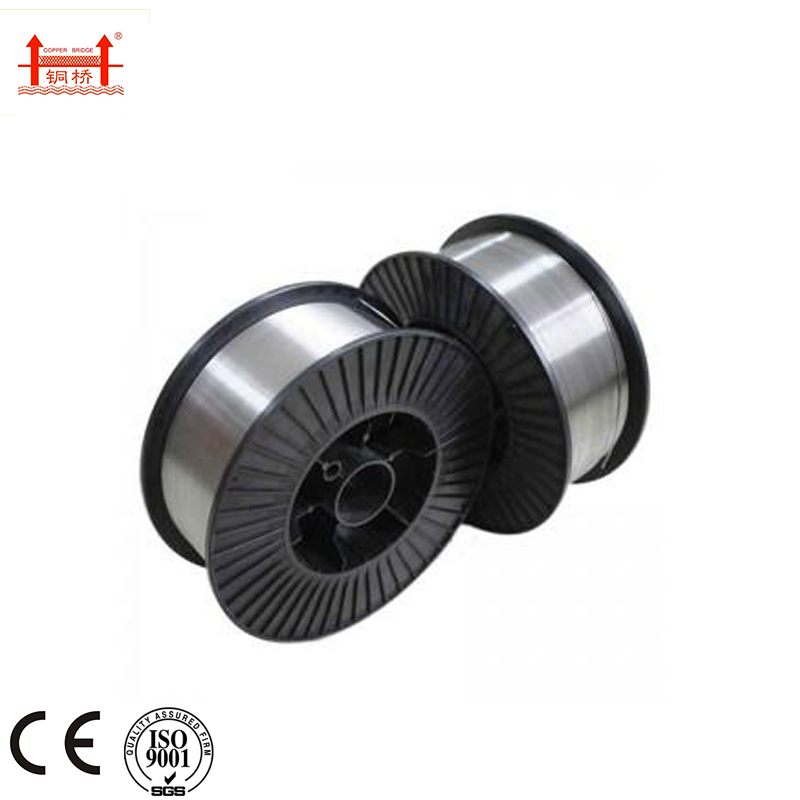
Gas shielded welding wire has become one of the most widely adopted fusion welding consumables across industries from automotive to shipbuilding. This guide walks procurement teams and welding engineers through the key selection criteria — wire grade, base-metal strength class, diameter, and intended application — using the confirmed model range offered by Dingzhou Jinlong Metal Production Co., Ltd. It explains what each specification means in practice, which models suit particular joint types and material thicknesses, and what mechanical-property data to check before placing an order.

Base-metal tensile-strength class: select ER50-series (≥ 500 MPa) for standard structural steels or CB-ER60-G (≥ 620 MPa) for 600 MPa high-strength steel structures, using the mechanical-property data published in the confirmed specification table.
Joint type and plate thickness: CB-ER50-3 for thoroughly treated low-carbon steel; CB-ER50-4 for sheet metal, thin plates, and pipes; CB-ER50-6 for general 500 MPa structural work; CB-ER50-G for thick plates and thick pipelines; CB-ER60-G for high-strength structures — then confirm wire diameter (0.8 / 1.0 / 1.2 / 1.6 mm, confirmed for CB-ER50 series) and polarity against the welding procedure specification; both diameter and polarity data for CB-ER60-G are absent from published materials and must be confirmed with the supplier.
Why Gas-shielded Solid Welding Wire Merits a Careful Selection Process
CO₂ gas-shielded welding, first developed in the 1950s, has grown into an indispensable fusion welding technique. In many industrialised countries it already accounts for 40–50 % of total welding consumable consumption, and its share continues to rise as manufacturers seek to replace manual arc welding with a faster, lower-cost process. The appeal is straightforward: low welding cost, high production efficiency, low power consumption, and all-position capability — including overhead welding in confined spaces.
Yet those benefits are only realised when the wire grade is matched to the base material, joint design, and service requirements. Choosing the wrong grade can lead to under-strength welds, cracking, or excessive spatter. The sections below set out a practical framework for making that match.
Core Selection Criteria
1. Match Wire Grade to Base-Metal Strength Class
The single most important criterion is tensile-strength compatibility. The wire's deposited metal must meet or exceed the minimum tensile requirement of the base steel.
| Wire Model | GB Standard | AWS Equivalent | Tensile Strength Rm | Yield Strength Rel | Elongation A | Impact Toughness KV2 |
|---|---|---|---|---|---|---|
| CB-ER50-3 | ER50-3 | ER70S-3 | ≥ 500 MPa | ≥ 420 MPa | ≥ 22 % | ≥ 27 J (−18 °C) |
| CB-ER50-4 | ER50-4 | ER70S-4 | ≥ 500 MPa | ≥ 420 MPa | ≥ 22 % | Not specified (−29 °C) |
| CB-ER50-6 | ER50-6 | ER70S-6 | ≥ 500 MPa | ≥ 420 MPa | ≥ 22 % | ≥ 27 J (−30 °C) |
| CB-ER50-G | GB/T ER50 | ER70S-G | ≥ 500 MPa | ≥ 420 MPa | ≥ 22 % | Customer-specified (−30 °C) |
| CB-ER60-G | ER60-G | ER90S-G | ≥ 620 MPa | ≥ 490 MPa | ≥ 19 % | ≥ 47 J (−20 °C) |
For structural steel in the 500 MPa class — the majority of construction, automotive, and bridge work — any of the ER50-series wires will satisfy the strength requirement. Projects involving 600 MPa high-strength steel structures require CB-ER60-G.
2. Assess Joint and Material-Thickness Requirements
Once the strength class is confirmed, the specific grade within that class is chosen by joint type and plate thickness:
- CB-ER50-3 — best suited to low carbon steel parts that have received thorough surface treatment (clean, scale-free surfaces).
- CB-ER50-4 — designed for sheet metal, thin plates, and steel pipes. Its higher silicon content (0.65–0.85 %) supports smooth bead formation on thinner sections.
- CB-ER50-6 — a versatile all-rounder for welding all kinds of 500 MPa structural steel components. Its elevated Mn and Si levels improve deoxidation and bead appearance on moderately prepared surfaces.
- CB-ER50-G — extends the ER50 range to thick plates and thick pipelines where impact toughness must be specified to customer requirements down to −30 °C.
- CB-ER60-G — reserved for 600 MPa high-strength steel structures where both higher tensile strength (≥ 620 MPa) and a guaranteed impact value of ≥ 47 J at −20 °C are mandatory.
3. Select the Correct Wire Diameter
Diameter directly affects heat input, deposition rate, and accessibility in tight joints. The CB-ER50 and CB-ER50-G series are available in 0.8 mm, 1.0 mm, 1.2 mm, and 1.6 mm. All models in this series operate on DC+ (DCEP) polarity.
| Diameter | Typical Use Case |
|---|---|
| 0.8 mm | Thin sheet, precision joints, automotive body panels |
| 1.0 mm | General fabrication, medium sheet |
| 1.2 mm | Most common for structural and heavy fabrication |
| 1.6 mm | High-deposition passes on thick sections |
Diameter and polarity data for CB-ER60-G are not specified in current published materials; buyers should confirm both directly with Dingzhou Jinlong Metal Production Co., Ltd.
4. Review Chemical Composition for Your Process Conditions
Chemical composition governs deoxidation, arc stability, and weld pool behaviour. Key figures from the confirmed specification table:
- Carbon (C): Kept low across all grades (0.06–0.15 % for ER50-3/4) to limit hardenability and cracking risk.
- Manganese (Mn) and Silicon (Si): Act as primary deoxidisers. Higher Mn and Si in ER50-6 and ER50-G grades support use on less-clean surfaces and deliver better slag detachability.
- Sulphur (S) and Phosphorus (P): Controlled to ≤ 0.035 % / ≤ 0.025 % (CB-ER50-G tightened to ≤ 0.030 %) to minimise hot-cracking and porosity.
- Copper (Cu): Maximum ≤ 0.50 % is confirmed for CB-ER50-3, CB-ER50-4, CB-ER50-6, and CB-ER60-G, contributing corrosion resistance to the wire surface during storage and handling. No Cu limit is published in current materials for CB-ER50-G (the specification lists only Ti+Zr ≤ 0.30 % for that grade); confirm the Cu requirement with the supplier if it is relevant to your process.
For applications with strict weld-metal hydrogen control — such as pressure vessels or boiler fabrication — confirm that your shielding gas mix and wire surface cleanliness meet the process requirements, as low hydrogen content is noted as a key characteristic of CO₂ gas-shielded welding technology.
Application Fit by Industry Sector
CO₂ gas-shielded welding wire is confirmed for use across a wide range of industries. The table below cross-references typical sectors with the most relevant wire grades:
| Sector | Typical Steel Class | Recommended Grade Range |
|---|---|---|
| Automobile / automotive body | 500 MPa, thin plate | CB-ER50-4, CB-ER50-3 |
| Construction machinery | 500 MPa, medium–thick | CB-ER50-6, CB-ER50-G |
| Shipbuilding | 500 MPa, all thicknesses | CB-ER50-6, CB-ER50-G |
| Bridges & steel structures | 500 MPa structural | CB-ER50-6 |
| High-strength structures | 600 MPa | CB-ER60-G |
| Steel pipes | 500 MPa thin wall | CB-ER50-4 |
| Pressure vessels / boilers | 500–600 MPa | CB-ER50-G, CB-ER60-G |
| Metallurgy / rolling stock | 500 MPa | CB-ER50-6, CB-ER50-G |
| Petrochemical | 500–600 MPa | CB-ER50-G, CB-ER60-G |
A Note on Surface Preparation and Process Limitations
Gas shielded solid welding wire is suited to clean or well-prepared base materials. Heavily rusted, scaled, or painted surfaces — where flux-cored or coated-electrode processes are sometimes preferred — can reduce bead quality and increase porosity risk. CB-ER50-3 in particular is specified for use with thorough surface treatment. If base-material preparation cannot be guaranteed, discuss the suitability of alternative wire types with your supplier before ordering.
Pre-Order Specification Checklist
Before submitting a purchase inquiry for gas shielded welding wire, verify the following against your welding procedure specification (WPS):
- Required tensile class — 500 MPa (ER50 series) or 600 MPa (ER60-G)?
- Impact toughness requirement and test temperature — down to −30 °C for ER50-G; −20 °C for ER60-G.
- Wire diameter — 0.8, 1.0, 1.2, or 1.6 mm based on joint geometry and equipment (confirmed for CB-ER50 series; confirm availability for CB-ER60-G with the supplier).
- Surface preparation level — thorough treatment needed for CB-ER50-3; other grades tolerate moderate preparation.
- Polarity — CB-ER50-3, CB-ER50-4, CB-ER50-6, and CB-ER50-G all use DC+ (DCEP); polarity data for CB-ER60-G is not published in current materials and should be confirmed with the supplier.
- Applicable standard — confirm whether GB or AWS classification is specified in your project documentation.
About the Supplier
Dingzhou Jinlong Metal Production Co., Ltd. is a professional welding consumables manufacturer located in Dingzhou City, Hebei Province, China. The factory produces welding electrodes, welding wire, and related materials with an annual output capacity of 50,000 tonnes. The gas shielded welding wire range described in this guide is manufactured under the company's own "Copper Bridge" brand.
THE PEOPLE

About the author
THE COMPANY
Dingzhou Jinlong Metal Production Co., Ltd.
Dingzhou Jinlong Metal Production Co., Ltd. is located in the industrial zone of Dingzhou city, Hebei province, China. We are professional factory of welding electrodes(welding rods), welding wire, welding blend powder, welding material, machete and nails, with powerful strengthen and advanced technology and the rights of self-supporting export. We introduced the international advanced level of electrodes production line and complete test equipment, our annual output is 50000 tons.…
About Us ↗Visit company website ↗YOUR NEXT STEP
Bring your brief. Start a useful conversation.
Use case, specification, quantity and delivery window: make the next conversation specific.


Related Video

Related News

2026-11-04 02:40:06
How to Choose Copper Coated Mild Steel Wire for MIG Welding
Choose copper coated mild steel wire by base metal, AWS ER70S-6 diameter, welding setup, feedability, and spatter requirements.
2026-10-30 11:59:25
Is Flux Core Better Than MIG? FAQ for E71T-GS Welding Wire
Is flux core better than MIG? Compare documented E71T-GS self-shielded flux core wire with gas-shielded MIG solid wire by application, polarity, diameters, shielding, and mechanical data.
2026-10-27 23:20:02
Gas Shielded Welding Wire Selection Guide: Application Fit and Specification Checks
Compare CB-ER50-3 through CB-ER60-G gas shielded welding wire grades by tensile class, plate thickness, and industry application. Specification tables and a pre-order checklist included.
2026-10-27 23:18:34
Choosing Copper Bridge Welding Electrodes 6013 6011 7018: Application Fit and Specification Checks
Compare application fit and specifications for Copper Bridge Welding Electrodes 6013 6011 7018. Learn which diameter suits your plate thickness, position requirements, and material grade before ordering from Dingzhou Jinlong Metal Production Co., Ltd.
2026-10-22 23:27:30
Stainless Steel Electrode Price Comparisons: Choosing E316L-16 by Application Fit and Specification Checks
Compare stainless steel electrode price quotes like-for-like: check the published E316L-16 classification, 2.5 to 5.0 mm diameters, AC/DC use, chemistry and strength, and when E347-16 fits instead.
2026-07-01 09:32:39
Comprehensive Guide to Selection of Types of Welding Rods PDF
Selecting the correct filler metal is the cornerstone of any successful welding project. Whether you are working on heavy-duty carbon steel pipelines or intricate structural components, understanding the various types of welding rods pdf resources is essential for ensuring weld integrity and structural safety. The choice of electrode affects not only the strength of the joint but also the ease of penetration and the final appearance of the bead. In this comprehensive guide, we will explore the technical specifications of high-performance rods, such as the CB-J425, to help you optimize your manufacturing process.
2026-06-29 16:50:39
Comprehensive Guide to Types of Welding Rods and Uses PDF
Comprehensive Guide to Types of Welding Rods and Uses PDF Selecting the correct filler metal is the most critical step in ensuring the structural integrity and corrosion resistance of any welded joint. For professionals seeking a detailed types of welding rods and uses pdf , understanding the distinction between various alloys is essential. Whether you are working with chromium stainless steel for power plants or chromium-nickel variations for medical machinery, the choice of electrode directly impacts the welds longevity. In this guide, we analyze the technical specifications and industrial applications of high-performance welding electrodes to help you achieve precision and durability in every bead.
2026-06-27 15:42:52
Guide to Types of Welding Electrodes and Their Uses PDF Manual
Understanding Types of Welding Electrodes and Their Uses PDF Guide Selecting the correct filler metal is critical for the structural integrity and longevity of any welded joint. Whether you are working in power plants, chemical processing, or petroleum equipment, knowing the types of welding electrodes and their uses pdf documentation provides the necessary technical foundation to avoid common failures like cracking or corrosion. Chromium stainless steel and chromium-nickel alloys offer specialized resistance to oxidizing acids and high temperatures, but they require precise handling. This guide explores the technical specifications and application methods for high-performance electrodes to ensure professional-grade welding results.

 English
 Arabic
 Bengali
 China
 French
 German
 Hausa
 Indonesian
 Italian
 Japanese
 Javanese
 Malay
 Persian
 Portuguese
 Punjabi
 Russian
 Spanish
 Swahili
 Telugu
 Vietnamese