

Comprehensive Guide to 2.5 Stainless Steel Welding Rods and Their Applications

Comprehensive Guide to 2.5 Stainless Steel Welding Rods and Their Applications
Mar . 11, 2026 02:35
Understanding 2.5 Stainless Steel Welding Rods: A Comprehensive Guide
When it comes to welding projects requiring corrosion resistance and durability, 2.5 stainless steel welding rods are a crucial component. These rods are widely used across various industries, from fabrication and repair to construction and manufacturing. This article provides a detailed overview of these rods, covering their applications, types, advantages, and how to choose the right one for your specific needs. Understanding the nuances of these rods ensures strong, reliable, and long-lasting weld joints.
What are 2.5 Stainless Steel Welding Rods?
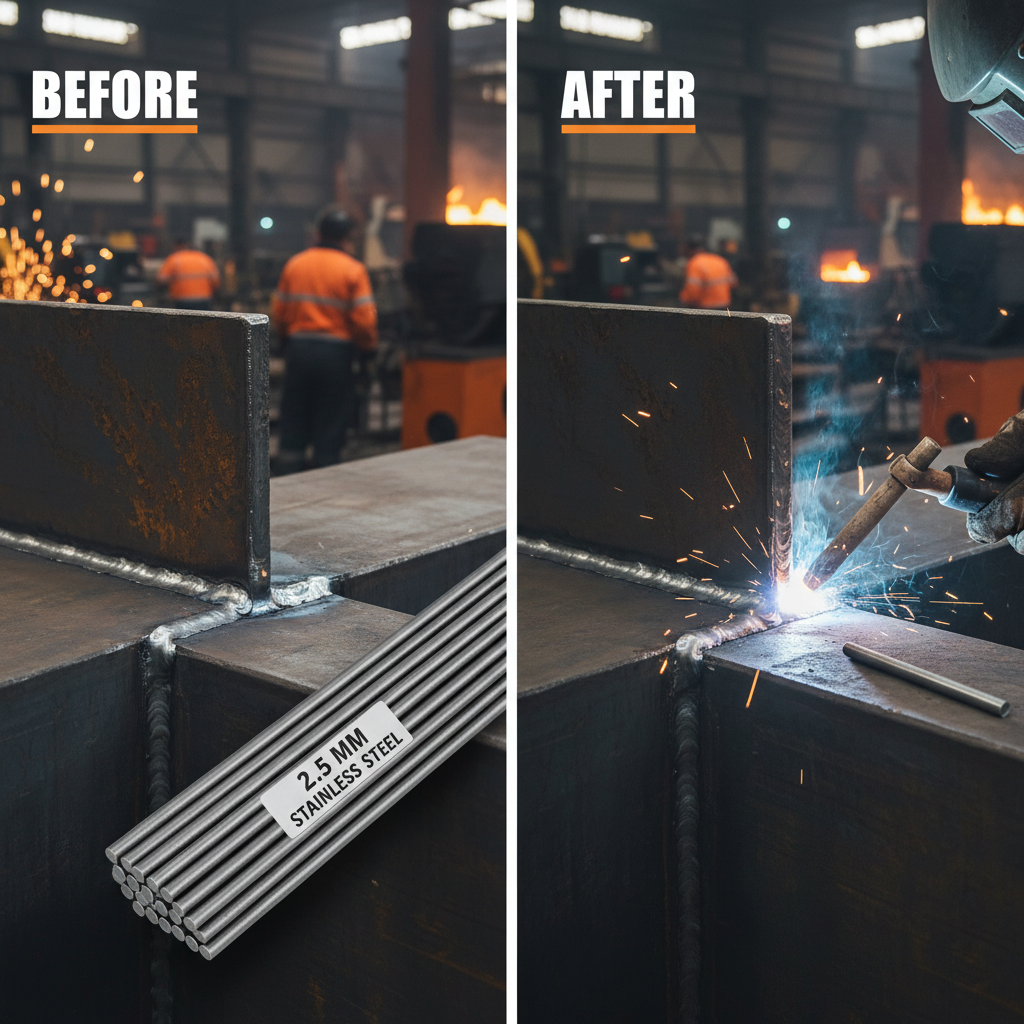
2.5 stainless steel welding rods, also known as electrodes, are metallic consumables used to join stainless steel materials through the welding process. The "2.5" refers to the diameter of the rod in millimeters. These rods are designed to melt and fuse with the base metal, creating a strong and corrosion-resistant weld. They are available in various types, each formulated with different alloys to achieve specific properties and cater to diverse welding applications. The choice of rod depends heavily on the type of stainless steel being welded and the desired characteristics of the weld joint.
Common Types of 2.5 Stainless Steel Welding Rods
Several types of 2.5 stainless steel welding rods cater to different stainless steel grades and welding requirements. The most common include:
- 304/304L: Suitable for welding 304 and 304L stainless steels, providing excellent corrosion resistance in various environments.
- 308/308L: Used for welding 304, 309, and 316 stainless steels, offering good weldability and strength.
- 316/316L: Ideal for welding 316 and 316L stainless steels, providing superior corrosion resistance, especially in chloride-rich environments.
- 309/309L: Employed for joining dissimilar metals and for the first layer of welding on high-carbon stainless steels.
Key Considerations: Choosing the correct rod type is vital for achieving optimal weld quality, corrosion resistance, and mechanical properties. Always verify compatibility with the base metal.
Applications of 2.5mm Stainless Steel Welding Rods
The versatility of 2.5 stainless steel welding rods makes them ideal for a wide range of applications. Some key industries and uses include:
- Food Processing: Welding tanks, pipes, and equipment where hygiene and corrosion resistance are paramount.
- Chemical Processing: Fabricating and repairing vessels and piping systems handling corrosive chemicals.
- Pharmaceuticals: Constructing and maintaining sanitary equipment and piping.
- Construction: Welding stainless steel structures, railings, and architectural components.
- Automotive & Exhaust Systems: Repairing and fabricating stainless steel exhaust systems and components.
- Marine: Welding stainless steel parts used in marine environments requiring resistance to saltwater corrosion.
Comparing Popular 2.5 Stainless Steel Welding Rods
Selecting the right welding rod depends on the specific application and stainless steel grade. Here's a comparative overview of some popular options:
Benefits of Using 2.5 Stainless Steel Welding Rods
Utilizing 2.5 stainless steel welding rods offers numerous advantages:
- Corrosion Resistance: Provides excellent protection against rust and corrosion, extending the lifespan of welded structures.
- High Strength: Creates strong and durable weld joints capable of withstanding significant stress.
- Versatility: Suitable for welding a wide range of stainless steel grades.
- Aesthetic Appeal: Delivers clean, smooth welds with a visually appealing finish.
- Hygiene: Ideal for applications requiring sanitary conditions, such as food and pharmaceutical processing.
Conclusion: Choosing Quality Stainless Steel Welding Rods
Selecting the right 2.5 stainless steel welding rods is crucial for achieving high-quality, durable, and corrosion-resistant welds. Understanding the different types, applications, and benefits allows you to make informed decisions for your specific projects. Jinlong Welding Electrode provides a wide range of high-quality stainless steel welding rods to meet diverse industrial needs. Invest in quality for reliable and long-lasting results.
Frequently Asked Questions (FAQs)
What welding techniques are best suited for 2.5 stainless steel welding rods?
Shielded Metal Arc Welding (SMAW), also known as stick welding, is the most common technique used with these rods. Gas Tungsten Arc Welding (GTAW) or TIG welding, and Gas Metal Arc Welding (GMAW) or MIG welding are also frequently used, particularly for applications requiring higher precision and cleaner welds. Proper technique, including correct amperage, voltage, and travel speed, is essential for achieving a strong and sound weld. Ensure adequate shielding gas coverage is maintained during GTAW and GMAW processes to prevent oxidation and contamination of the weld pool.
How should I store 2.5 stainless steel welding rods to prevent contamination?
Proper storage is crucial for maintaining the quality of welding rods. Store them in a dry, well-ventilated area, protected from moisture and direct sunlight. Ideally, rods should be stored in their original, sealed containers. If the container is opened, ensure the remaining rods are protected from humidity and contaminants. Avoid storing rods near sources of heat or chemicals, as these can affect their properties. Regularly inspect rods for signs of rust or contamination before use.
What safety precautions should I take when welding with stainless steel rods?
Welding stainless steel can produce fumes and ultraviolet radiation that are harmful to your health. Always wear appropriate personal protective equipment (PPE), including a welding helmet with a suitable shade lens, welding gloves, a protective jacket, and a respirator. Ensure adequate ventilation in the welding area to minimize exposure to fumes. Avoid welding on materials that have been cleaned with chlorinated solvents, as these can release toxic gases when heated. Be mindful of fire hazards and keep flammable materials away from the welding area.

Related Video

Related News


2026-04-16 02:35:10
Precision Guide for e312 16 welding rod and Dissimilar Steel Welding
In the demanding world of industrial fabrication and repair, selecting the correct filler metal is the difference between a structural failure and a lifetime bond. The e312 16 welding rod is specifically engineered to meet the rigorous needs of welding dissimilar steels, offering an exceptional balance of strength and corrosion resistance. Whether you are working on high-pressure pipelines or heavy machinery components, understanding the nuances of this specialized electrode is key to achieving professional-grade results. This guide explores the technical advantages and practical applications of the E312 series to help you optimize your welding workflow.
2026-04-09 02:35:17
Choosing the Right cs to ss welding rod number Professional Guide
Joining carbon steel (CS) to stainless steel (SS) is a common challenge in industrial fabrication, requiring a precise understanding of metallurgy to avoid weld failure. The most critical decision in this process is identifying the correct cs to ss welding rod number to ensure a strong, corrosion-resistant bond. Using the wrong filler metal can lead to cracking or premature oxidation due to the different thermal expansion rates of the two materials. In this comprehensive guide, we will break down the technical specifications and selection criteria to help you achieve a professional-grade weld every time.
2026-04-07 02:25:29
Comprehensive Guide to 409 Welding Rod Selection and Optimal Usage
When it comes to welding applications requiring corrosion resistance and good weldability, the 409 welding rod is a frequently chosen option. This article provides a detailed overview of this versatile welding rod, exploring its composition, applications, benefits, and considerations for optimal use. Whether you’re a seasoned professional or new to welding, understanding the properties of 409 welding rod is crucial for achieving high-quality, durable welds. We’ll cover everything you need to know to make informed decisions for your welding projects.
2026-04-04 02:35:28
Comprehensive Guide to 330 Stainless Steel Welding Rod Applications and Techniques
330 stainless steel welding rods are a crucial component in various industries, offering exceptional corrosion resistance and high-temperature strength. This article provides an in-depth look at these rods, covering their properties, applications, choosing the right rod, welding techniques, safety precautions, and where to find high-quality options. Whether you're a seasoned welding professional or new to the field, this guide will offer valuable insights.
2026-03-31 02:35:08
Comprehensive Guide to 312 Stainless Tig Rod for Superior Welding Performance
When choosing the right filler metal for your TIG welding projects, especially in demanding applications, 312 stainless steel tig rod stands out for its exceptional corrosion resistance and high-temperature strength. This comprehensive guide will explore its composition, applications, benefits, and how it compares to other stainless steel rods. We'll also point you to resources for sourcing high-quality rods.
2026-03-28 02:45:04
Comprehensive Guide to 312 17 Welding Rod Applications and Technical Details
Welding rods are essential consumables in the welding process, and selecting the right one is crucial for achieving strong, durable, and high-quality welds. The 312 17 welding rod is a popular choice for many applications due to its unique properties and versatility. This article delves into the characteristics, applications, benefits, and considerations when using 312 17 welding rods, providing a comprehensive resource for welders and engineers alike. Choosing the right rod directly impacts the success and longevity of any welding project.
2026-03-26 02:35:10
Comprehensive Guide to the 312 16 Welding Rod for Superior Steel Welding
The 312 16 welding rod is a versatile and widely-used electrode in various welding applications. Known for its excellent weldability and strong mechanical properties, it's a go-to choice for professionals and hobbyists alike. This article delves into the specifics of this electrode, covering its composition, applications, advantages, and how to choose the right one for your projects. Understanding the nuances of the 312 16 welding rod is crucial for achieving high-quality, durable welds. The designation "312 16" provides key information about the welding rod. "312" refers to the type of flux coating, specifically a low-hydrogen, iron powder coating. This coating is designed to produce welds with excellent mechanical properties and good resistance to cracking. The "16" indicates the diameter of the rod in 32nds of an inch – so a 312 16 rod has a diameter of 16/32 or 1/2 inch. This combination makes it suitable for a wide range of steel welding applications. The low-hydrogen nature of the flux minimizes hydrogen-induced cracking, a common issue in welding certain steels.
2026-03-24 02:45:07
Comprehensive Guide to 309LSI TIG Rod Welding Applications and Best Practices
The 309LSI TIG rod is a versatile welding consumable widely used across various industries for its exceptional corrosion resistance and weldability. This article will explore the properties, applications, advantages, and best practices associated with using 309LSI TIG rods. Whether you're a seasoned welding professional or new to the field, this guide will provide you with valuable insights into maximizing the performance and longevity of your welds. The 309LSI TIG rod is a stainless steel electrode specifically designed for Gas Tungsten Arc Welding (GTAW), commonly known as TIG welding. The "309LSI" designation indicates the alloy composition: 309 signifies the chromium-nickel content, 'L' denotes low carbon content for enhanced corrosion resistance, and 'SI' signifies stabilized with silicon for improved resistance to carbide precipitation during welding.

 English
  Arabic
  Bengali
  China
China  French
  German
  Hausa
Hausa  Indonesian
  Italian
  Japanese
  Javanese
  Malay
Malay  Persian
  Portuguese
  Punjabi
  Russian
  Spanish
  Swahili
  Telugu
  Vietnamese