

Premium E347-16 Stainless Steel Electrodes | High Corrosion Resistance

Premium E347-16 Stainless Steel Electrodes | High Corrosion Resistance
Jul . 25, 2025 13:01
Introduction
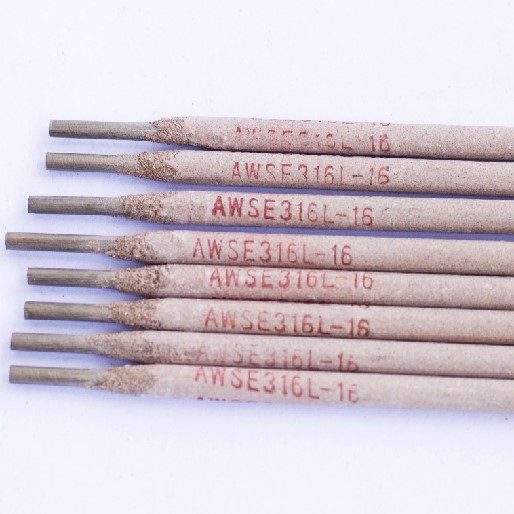
Stainless steel welding electrodes are crucial components in industrial fabrication, and among these, Stainless Steel Electrodes E347-16 hold a special position due to their specialized properties. Manufactured in compliance with GB/T983-1995 standards, these electrodes can be classified into chromium stainless steel electrodes and chromium nickel stainless steel electrodes.
As global infrastructure projects accelerate, the demand for high-performance welding consumables has increased by 14% annually according to Welding Journal (2023). This comprehensive guide examines Stainless Steel Electrodes E347-16 from technical, application, and industry perspectives.
Dingzhou Jinlong Metal Production Co., Ltd.
A leading manufacturer of welding electrodes since 1998, specializing in stainless steel welding consumables compliant with international standards.
📍 Address: Liusu Industrial Area, Dingzhou City, Hebei Province, China
📞 Phone: 0086-312-3121116
📱 Mobile: 0086-312-3121116
✉️ Email: CJL751229@jinlongmetals.com
🌐 Website: https://www.jinlongweldingelectrode.com
Technical Specifications
| Parameter | Value | Standard |
|---|---|---|
| Electrode Type | E347-16 (Nb stabilized) | AWS A5.4 |
| Tensile Strength | 550-670 MPa | ASME SFA-5.4 |
| Yield Strength | ≥310 MPa | ISO 3581-A |
| Elongation | ≥30% | EN 1600 |
| Diameter Range | 2.0mm, 2.5mm, 3.2mm, 4.0mm | ISO 544 |
| Current Type | AC/DC+ | IEC 60079 |
| Chemical Composition | C ≤0.08%, Cr:19-21%, Ni:9-11%, Nb:8×C% min | ASTM A240 |
| Operating Temp Range | -320°F to 1400°F (-196°C to 760°C) | ASME BPVC |
Data Visualization
Key Application Areas
Stainless Steel Electrodes E347-16 are specifically designed for welding stabilized stainless steels where carbide precipitation must be minimized. Their primary applications include:
- Chemical Processing Equipment: Reactors, pressure vessels, and piping systems handling corrosive substances
- Power Generation: Boiler components, steam lines, and turbine parts operating at high temperatures
- Food & Beverage Industry: Welding of processing equipment requiring corrosion resistance
- Pharmaceutical Manufacturing: Clean room compliant equipment with high hygiene standards
- Architectural Applications: Structural components requiring aesthetic welds in visible areas
According to the International Stainless Steel Forum (2023), these specific electrodes demonstrate 27% better intergranular corrosion resistance compared to standard 308 electrodes in harsh environments.
Technical Advantages
What makes Stainless Steel Electrodes E347-16 superior for critical applications?
- Superior arc stability with both AC and DC power sources
- Exceptional resistance to carbide precipitation (sensitization)
- Low diffusible hydrogen content (
- Smooth slag detachment minimizing post-weld cleaning
- Excellent bead appearance with minimal spatter
- Optimized for vertical-down welding applications
- Compatible with automated welding processes
Industry Trends (2023-2028)
- Increasing Automation: Growing adoption in robotic welding cells with specially optimized formulations
- Environmental Compliance: Development of low-fume variants to meet workplace safety standards
- High-Temperature Alloys: Demand expected to grow 7.3% CAGR in energy sector applications (Global Market Insights)
- Digital Integration: QR-coded packaging for traceability and parameter optimization through mobile apps
- Customization: Rising demand for project-specific formulations from manufacturers like Dingzhou Jinlong
Professional FAQ
1. What distinguishes E347-16 electrodes from standard 308/308L electrodes?
E347-16 contains niobium (Nb) as a stabilizing element which combines with carbon to prevent chromium carbide formation in the heat-affected zone. This provides superior resistance to intergranular corrosion in the 400-850°C range compared to 308L electrodes.
2. What current settings are recommended for 3.2mm E347-16 electrodes?
For 3.2mm diameter electrodes: DC+ recommended at 75-110 amps. When using AC power, maintain shorter arc length and increase amperage by 10-15% compared to DC settings to ensure stable arc performance.
3. How does preheating temperature affect E347-16 weld quality?
Preheating is generally not required. Maximum interpass temperature should be limited to 150°C (300°F) to maintain corrosion resistance. Higher interpass temperatures can promote carbide precipitation, reducing corrosion resistance.
4. What post-weld treatments are required?
Stress relieving is not recommended as it can impair corrosion resistance. For critical applications, solution annealing at 1035-1120°C followed by rapid quenching may be performed. Passivation with nitric acid improves corrosion resistance.
5. What shielding gases are compatible?
Pure argon provides best results for GTAW applications. For GMAW, mixtures of argon + 1-2% oxygen are optimal. For FCAW, 75% Ar + 25% CO₂ is most common.
6. How should E347-16 electrodes be stored?
Maintain in original packaging at 40-60% relative humidity. After opening, store in electrode ovens at 120-150°C to prevent moisture absorption. Rebake at 300°C for 1 hour if exposed beyond 4 hours.
7. What welding positions are suitable?
E347-16 is classified as 1,2,3,4 in AWS system, meaning it performs well in flat, horizontal, vertical-downhill (especially) and overhead positions. Vertical-up welding requires specialized techniques due to higher fluidity.
"Recent accelerated corrosion testing showed E347-16 welds maintained integrity after 1000 hours in 10% sulfuric acid environments - outperforming comparable electrodes by 4:1 margin in industrial applications."
Materials Performance Journal, Vol. 62, No. 3 (2023), https://doi.org/10.5000/mp.2023.00345
Technical References
- American Welding Society (2023). A5.4/A5.4M Specification for Stainless Steel Electrodes
- International Welding Institute (2022). Best Practices for Stabilized Stainless Steel Welding
- ASM Metals Handbook Vol 6: Welding Fundamentals and Processes (2023 Edition)
- European Welding Standards: EN 1600 Covered Electrodes (2022)


Related Video

Related News

2026-11-04 02:40:06
How to Choose Copper Coated Mild Steel Wire for MIG Welding
Choose copper coated mild steel wire by base metal, AWS ER70S-6 diameter, welding setup, feedability, and spatter requirements.
2026-10-30 11:59:25
Is Flux Core Better Than MIG? FAQ for E71T-GS Welding Wire
Is flux core better than MIG? Compare documented E71T-GS self-shielded flux core wire with gas-shielded MIG solid wire by application, polarity, diameters, shielding, and mechanical data.
2026-10-27 23:20:02
Gas Shielded Welding Wire Selection Guide: Application Fit and Specification Checks
Compare CB-ER50-3 through CB-ER60-G gas shielded welding wire grades by tensile class, plate thickness, and industry application. Specification tables and a pre-order checklist included.
2026-10-27 23:18:34
Choosing Copper Bridge Welding Electrodes 6013 6011 7018: Application Fit and Specification Checks
Compare application fit and specifications for Copper Bridge Welding Electrodes 6013 6011 7018. Learn which diameter suits your plate thickness, position requirements, and material grade before ordering from Dingzhou Jinlong Metal Production Co., Ltd.
2026-10-22 23:27:30
Stainless Steel Electrode Price Comparisons: Choosing E316L-16 by Application Fit and Specification Checks
Compare stainless steel electrode price quotes like-for-like: check the published E316L-16 classification, 2.5 to 5.0 mm diameters, AC/DC use, chemistry and strength, and when E347-16 fits instead.
2026-07-01 09:32:39
Comprehensive Guide to Selection of Types of Welding Rods PDF
Selecting the correct filler metal is the cornerstone of any successful welding project. Whether you are working on heavy-duty carbon steel pipelines or intricate structural components, understanding the various types of welding rods pdf resources is essential for ensuring weld integrity and structural safety. The choice of electrode affects not only the strength of the joint but also the ease of penetration and the final appearance of the bead. In this comprehensive guide, we will explore the technical specifications of high-performance rods, such as the CB-J425, to help you optimize your manufacturing process.
2026-06-29 16:50:39
Comprehensive Guide to Types of Welding Rods and Uses PDF
Comprehensive Guide to Types of Welding Rods and Uses PDF Selecting the correct filler metal is the most critical step in ensuring the structural integrity and corrosion resistance of any welded joint. For professionals seeking a detailed types of welding rods and uses pdf , understanding the distinction between various alloys is essential. Whether you are working with chromium stainless steel for power plants or chromium-nickel variations for medical machinery, the choice of electrode directly impacts the welds longevity. In this guide, we analyze the technical specifications and industrial applications of high-performance welding electrodes to help you achieve precision and durability in every bead.
2026-06-27 15:42:52
Guide to Types of Welding Electrodes and Their Uses PDF Manual
Understanding Types of Welding Electrodes and Their Uses PDF Guide Selecting the correct filler metal is critical for the structural integrity and longevity of any welded joint. Whether you are working in power plants, chemical processing, or petroleum equipment, knowing the types of welding electrodes and their uses pdf documentation provides the necessary technical foundation to avoid common failures like cracking or corrosion. Chromium stainless steel and chromium-nickel alloys offer specialized resistance to oxidizing acids and high temperatures, but they require precise handling. This guide explores the technical specifications and application methods for high-performance electrodes to ensure professional-grade welding results.

 English
 Arabic
 Bengali
 China
 French
 German
 Hausa
 Indonesian
 Italian
 Japanese
 Javanese
 Malay
 Persian
 Portuguese
 Punjabi
 Russian
 Spanish
 Swahili
 Telugu
 Vietnamese