

Premium Argon Arc Welding Wire: Precision & Durable Welds

Premium Argon Arc Welding Wire: Precision & Durable Welds
Sep . 19, 2025 10:50
Industry Trends and the Evolution of Welding Consumables
The global manufacturing sector is constantly seeking advanced solutions to enhance material integrity, operational efficiency, and longevity of fabricated components. In this pursuit, welding technology plays a pivotal role, with particular emphasis on high-performance consumables. The market for argon arc welding wire is experiencing significant growth, driven by demand from critical industries such as aerospace, automotive, marine, and petrochemicals. These sectors require welding solutions that offer superior strength-to-weight ratios, exceptional corrosion resistance, and reliable performance under extreme conditions.
Aluminum alloys, particularly the 5XXX series like the Aluminum Magnesium 5356, have become indispensable due to their combination of strength, ductility, and resistance to saltwater corrosion. This trend necessitates the development and meticulous manufacturing of specialized welding wires that can consistently deliver welds maintaining these desirable properties. Modern industrial applications demand not just strength, but also weld integrity that withstands cyclic loading, varying temperatures, and aggressive chemical environments. The focus is increasingly on reducing post-weld processing, minimizing defects, and extending the service life of welded structures, directly impacting the demand for high-quality argon arc welding wire.
Technological advancements in welding power sources and automation have also amplified the need for precise and consistent welding consumables. With the rise of robotic welding and advanced pulsed welding techniques, the arc stability and feedability of welding wire are paramount. These trends collectively underscore the critical importance of selecting a superior argon arc welding wire, such as the Aluminum Magnesium 5356, to meet the stringent requirements of today's high-tech manufacturing landscape.
Manufacturing Process Flow of Argon Arc Welding Wire
The production of high-quality argon arc welding wire, particularly specialized aluminum alloys like the 5356, involves a sophisticated multi-stage manufacturing process designed to ensure metallurgical integrity, dimensional precision, and optimal surface finish. This meticulous approach guarantees that the final product meets stringent industry standards and delivers consistent performance in critical welding applications.
Process Stages:
- 1. Raw Material Sourcing and Inspection: High-purity aluminum ingots and alloying elements (magnesium, chromium, titanium) are sourced from reputable suppliers. Each batch undergoes rigorous chemical analysis using spectroscopy (e.g., Optical Emission Spectrometry) to verify compliance with specified ASTM B209/B211 or equivalent standards. This initial step is crucial for controlling the final weld metal chemistry.
- 2. Melting and Continuous Casting: The selected raw materials are melted in induction furnaces under controlled atmospheric conditions to prevent oxidation and minimize hydrogen pickup. The molten metal is then continuously cast into billets or rods. This process ensures a uniform grain structure and reduces segregation of alloying elements, which is vital for the wire's drawability and final mechanical properties.
- 3. Hot Rolling/Extrusion: The cast billets are subjected to hot rolling or extrusion to reduce their diameter and prepare them for subsequent cold working. This stage refines the grain structure further and eliminates internal defects. Precise temperature control is essential to prevent hot short cracking and ensure material workability.
- 4. Cold Drawing (Multi-Stage): This is a critical stage where the wire diameter is progressively reduced through a series of dies. Cold drawing imparts work hardening, increasing the tensile strength and yield strength of the wire. Intermediate annealing steps may be incorporated between drawing passes to restore ductility and relieve internal stresses, especially for finer diameters. This process also contributes to the excellent feedability required for advanced welding systems.
- 5. Surface Cleaning and Treatment: Post-drawing, the wire undergoes extensive cleaning to remove drawing lubricants, surface oxides, and other contaminants. This typically involves chemical degreasing, pickling, and rinsing. A final surface treatment might be applied to enhance arc stability and reduce porosity in the weld metal. A clean surface is paramount for consistent arc starting and penetration in argon arc welding processes.
- 6. Precision Layer Winding/Spooling: The cleaned wire is then precision layer wound onto spools (e.g., 1lb, 10lb, 20lb, 50lb sizes) or coiled into drums. This precise winding prevents tangling and ensures smooth, uninterrupted feeding during the welding operation, crucial for automated and robotic welding systems.
- 7. Final Quality Control and Packaging: Each finished spool undergoes comprehensive quality checks including dimensional inspection (diameter tolerance), surface finish evaluation, chemical composition verification (again, a final check), and mechanical property testing (tensile strength, elongation). Adherence to international standards like AWS A5.10/A5.10M and ISO 9001 is rigorously maintained. Wires are then hermetically sealed in moisture-resistant packaging to prevent oxidation and contamination during storage and transport.
This rigorous manufacturing protocol ensures that the Aluminum Magnesium 5356 argon arc welding wire offers exceptional service life and outstanding performance in its target industries, demonstrating advantages such as energy saving through efficient deposition and superior corrosion resistance due to its controlled metallurgical properties.
Technical Specifications: Aluminum Magnesium 5356 Argon Arc Welding Wire
The Aluminum Magnesium 5356 alloy is a workhorse in industries demanding high-strength, corrosion-resistant aluminum welds. Its specific chemical composition and mechanical properties make it highly suitable for structural applications where strength and ductility are paramount. Below is a detailed breakdown of its key technical specifications.
| Parameter | Specification/Value |
|---|---|
| AWS Classification | ER5356 |
| Base Alloys Recommended | 5083, 5086, 5456, 5052, 5356 |
| Shielding Gas (TIG/MIG) | 100% Argon or Argon/Helium mixtures. Why is argon used in arc welding? Argon provides an inert atmosphere, effectively shielding the molten weld pool and electrode from atmospheric contamination (oxygen, nitrogen), preventing porosity and ensuring a stable arc. |
| Typical Chemical Composition (wt.%) |
Mg: 4.5-5.5 Cr: 0.05-0.20 Ti: 0.05-0.20 Mn: 0.05-0.20 Fe: 0.40 max Si: 0.25 max Cu: 0.10 max Zn: 0.10 max Other (each): 0.05 max Al: Remainder |
| Typical Mechanical Properties (as-welded) |
Tensile Strength: 38,000 psi (262 MPa) Yield Strength: 24,000 psi (165 MPa) Elongation: 17% min |
| Melting Range | 1060-1175°F (570-635°C) |
| Density | 0.096 lb/in³ (2.66 g/cm³) |
| Post-Weld Heat Treatment | None recommended; strength achieved by cold work of the base metal. |
The high magnesium content in ER5356 argon arc welding wire provides excellent strength and good ductility, making it suitable for a wide range of fabrication tasks. The addition of chromium and titanium helps control grain structure, reducing susceptibility to hot cracking and improving weld quality.
Application Scenarios and Technical Advantages
The versatility and robust performance of Aluminum Magnesium 5356 argon arc welding wire make it indispensable across a multitude of industrial applications where material integrity and performance under challenging conditions are paramount.
Key Application Scenarios:
- Marine and Shipbuilding: Due to its exceptional resistance to saltwater corrosion, 5356 wire is extensively used in constructing hulls, superstructures, offshore platforms, and various marine components. This ensures extended service life in harsh maritime environments.
- Automotive Industry: Lightweighting initiatives in automotive manufacturing leverage 5356 for chassis components, body panels, and structural elements where high strength-to-weight ratio is crucial for fuel efficiency and performance.
- Aerospace Applications: For non-flight-critical components and ground support equipment, 5356 offers reliable, strong welds, contributing to the overall integrity and durability of aerospace structures.
- Cryogenic Tanks and Pressure Vessels: The alloy maintains good mechanical properties at low temperatures, making it suitable for welding storage tanks for liquefied gases.
- Railway and Transportation: Fabrication of railway carriages, truck trailers, and other transportation equipment benefits from the alloy’s strength and corrosion resistance, leading to durable and lighter vehicles.
- General Fabrication: From architectural structures to industrial machinery, 5356 is a preferred choice for joining aluminum alloys in diverse fabrication projects.
Technical Advantages:
- Superior Corrosion Resistance: The high magnesium content provides excellent resistance to general corrosion and stress corrosion cracking, especially in marine and industrial environments. This contributes significantly to the extended service life of welded components.
- High Strength and Ductility: Welds produced with 5356 exhibit high tensile and yield strengths, comparable to the base metals, along with good ductility, allowing for post-weld forming or structural integrity under load.
- Excellent Feedability and Arc Stability: Precision manufacturing of the wire ensures consistent diameter, smooth surface finish, and accurate spooling, leading to stable arc performance and reduced wire feeding issues in both MIG and TIG processes. This directly impacts operational efficiency and energy saving.
- Versatility Across Welding Processes: While primarily used for TIG (Gas Tungsten Arc Welding) and MIG (Gas Metal Arc Welding), 5356 offers flexibility. When considering mig welding vs arc welding, or the arc and mig welding difference, it's important to note that ER5356 is a consumable for both, provided an argon-rich shielding gas is used. The term 'arc welding' is broad, encompassing both TIG and MIG, as well as stick (SMAW) or flux-cored arc welding (FCAW). For aluminum, the inert gas shielding of TIG or MIG with argon arc welding wire is critical.
- Reduced Spatter and Clean Welds: The specific alloy chemistry and inert argon shielding facilitate a cleaner weld pool, minimizing spatter and leading to aesthetically pleasing welds with minimal post-weld cleanup, thus saving time and resources. Comparing co2 welding vs arc welding (with argon), the former generates more spatter and requires more cleanup due to the active nature of CO2, whereas argon ensures a smoother process.
- Compatibility: It is highly compatible with welding various 5XXX series aluminum alloys, as well as 6XXX series alloys when strength rather than heat treatability is the primary concern. The difference between tig welding and arc welding for this context primarily lies in the non-consumable electrode of TIG versus the consumable wire of MIG, both benefiting from the shielding provided by argon.
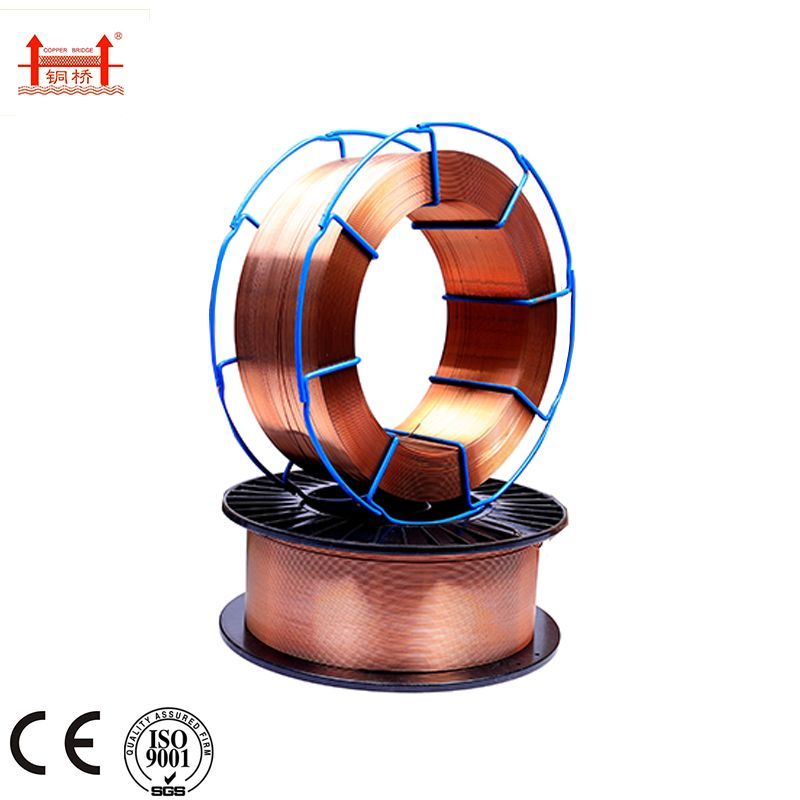
Illustration of precision-wound argon arc welding wire, ready for industrial applications.
Vendor Comparison and Customized Solutions
Selecting the right supplier for argon arc welding wire is as crucial as selecting the wire itself. Manufacturers must evaluate vendors based on more than just price; factors like quality consistency, technical support, customization capabilities, and adherence to international standards are paramount for B2B procurement.
Key Factors in Vendor Comparison:
| Evaluation Criteria | Leading Manufacturer (e.g., Jinlong Welding Electrode) | Standard Supplier |
|---|---|---|
| Product Certifications | ISO 9001, AWS A5.10, CE, TÜV. Full traceability. | Basic ISO, limited product-specific certifications. |
| Quality Consistency | Rigorous QC at every stage, statistical process control (SPC), batch testing. | Standard checks, potential batch variations. |
| Technical Support | Experienced welding engineers, application support, troubleshooting. | Limited or general support. |
| Customization Options | Tailored wire diameters, spool sizes, custom alloys, packaging. | Standard product lines only. |
| Lead Time & Reliability | Streamlined production, efficient logistics, reliable delivery schedules. | Variable lead times, less predictable. |
| Innovation & R&D | Investment in new alloy development, process optimization. | Minimal R&D focus. |
Customized Solutions: Tailoring to Specific Needs
For specialized applications, off-the-shelf welding wires may not always be optimal. A reputable manufacturer of argon arc welding wire offers comprehensive customization capabilities, ensuring the product perfectly aligns with unique project requirements. This includes:
- Custom Wire Diameters: Beyond standard sizes (e.g., 0.8mm, 1.0mm, 1.2mm, 1.6mm), specialized diameters can be produced for highly specific welding processes or material thicknesses.
- Special Spooling and Packaging: From large bulk drums for automated welding lines to custom smaller spools for specialized manual operations, packaging can be adapted for optimal feedability and storage. This is particularly important when considering arc mig and tig welding applications, as each process may have different feeding mechanisms.
- Tailored Alloy Modifications: While ER5356 is standard, slight variations in alloying elements (e.g., trace elements for enhanced fluidity or specific mechanical properties) can be developed in collaboration with clients' metallurgical teams for unique challenges.
- Certifications and Documentation: Providing specific certifications, material test reports (MTRs), and compliance documentation to meet stringent industry-specific regulations (e.g., aerospace, nuclear) is a common customization.
This level of customization and support elevates a supplier to a strategic partner, ensuring not just product delivery, but also optimal welding performance and process efficiency. For projects where the question of "arc or mig what is better" might arise, a knowledgeable vendor can also guide on the most suitable wire for the chosen process.
Application Case Studies and Customer Feedback
Real-world applications underscore the performance and reliability of high-quality argon arc welding wire like the Aluminum Magnesium 5356. Our customers, operating in highly demanding environments, consistently report significant improvements in weld quality, efficiency, and component longevity.
Case Study 1: Marine Vessel Fabrication
A leading European shipyard faced challenges with conventional aluminum welding wires in the fabrication of high-speed ferry structures. Issues included inconsistent weld bead appearance, frequent porosity, and concerns about long-term corrosion resistance in aggressive saltwater conditions. Upon switching to Aluminum Magnesium 5356 argon arc welding wire, they observed:
- Reduced Porosity: Significant reduction in weld defects, improving structural integrity and reducing rework time by 15%.
- Enhanced Corrosion Resistance: Post-fabrication tests confirmed superior resistance to pitting and crevice corrosion, ensuring a longer operational lifespan for the vessels.
- Improved Aesthetics: The stable arc and consistent wire feed resulted in smoother, more uniform weld beads, reducing the need for extensive post-weld finishing.
Customer Feedback: "The consistency of the 5356 wire has been a game-changer for our shipyard. We're now more confident in the durability of our welds, especially in marine environments, and our production efficiency has seen a measurable uplift."
Case Study 2: Cryogenic Tank Manufacturing
An Asian manufacturer specializing in large-scale cryogenic storage tanks for industrial gases required a welding solution that offered excellent low-temperature toughness and crack resistance. Previous wires showed susceptibility to embrittlement at cryogenic temperatures. Utilizing our ER5356 argon arc welding wire with TIG process, the client achieved:
- Optimal Low-Temperature Performance: Welds maintained their mechanical properties and ductility even at -196°C, crucial for preventing brittle fracture.
- High Joint Strength: The weldments exhibited strengths comparable to the base 5083 alloy, critical for the structural integrity of large pressure vessels.
- Consistent Quality: Reduced incidents of welding defects and improved overall productivity, leading to faster project completion.
Customer Feedback: "For our demanding cryogenic applications, the 5356 wire proved superior. Its consistent quality and performance under extreme cold gave us the assurance we needed for critical infrastructure."
These case studies highlight the tangible benefits of choosing a premium argon arc welding wire that is engineered for specific challenges and validated by industry leaders.
Trustworthiness: FAQ, Lead Time, Warranty & Support
Frequently Asked Questions (FAQ)
- Q: What is the primary advantage of using Aluminum Magnesium 5356 wire?
- A: Its primary advantages are high strength, excellent ductility, and superior corrosion resistance, particularly in saltwater and industrial environments, making it ideal for a wide range of critical applications.
- Q: Why is argon used in arc welding with aluminum?
- A: Argon is an inert gas that prevents oxidation of the molten aluminum weld pool and the electrode from atmospheric contaminants. This ensures a stable arc, deep penetration, minimal porosity, and a clean weld bead, which is critical for aluminum alloys.
- Q: Can this argon arc welding wire be used for both MIG and TIG welding?
- A: Yes, ER5356 is suitable for both Gas Metal Arc Welding (GMAW or MIG) and Gas Tungsten Arc Welding (GTAW or TIG) processes, provided the appropriate welding parameters and pure argon or argon-helium shielding gas are used.
- Q: What is the recommended storage for this welding wire?
- A: Welding wire should be stored in its original sealed packaging in a dry environment at room temperature. Once opened, it should be protected from moisture and contaminants to prevent oxidation of the wire surface, which can lead to porosity and arc instability.
- Q: What is the difference between tig welding and arc welding generally?
- A: "Arc welding" is a broad term for processes that use an electric arc to melt and join metals. TIG (Tungsten Inert Gas) welding is a specific type of arc welding that uses a non-consumable tungsten electrode and typically a separate filler metal, providing precise control and high-quality welds. MIG (Metal Inert Gas) is another type, using a consumable wire electrode that also acts as filler metal, generally faster for thicker materials. Our 5356 wire is optimized for both TIG and MIG using inert gas (argon) shielding.
Lead Time and Fulfillment
We maintain robust production schedules and efficient supply chain logistics to ensure timely delivery of our argon arc welding wire. Standard products typically have a lead time of 1-3 weeks, depending on order volume and specific requirements. For customized orders, lead times will be confirmed upon detailed specification review. We pride ourselves on transparent communication and reliable fulfillment to meet our clients' project deadlines.
Warranty Commitments
All our welding wires, including the Aluminum Magnesium 5356 argon arc welding wire, are manufactured under strict quality control standards and come with a comprehensive warranty against material and manufacturing defects. Our products are guaranteed to meet or exceed relevant industry specifications (e.g., AWS A5.10/A5.10M). In the unlikely event of a quality issue, we are committed to prompt investigation and resolution, upholding our reputation for product excellence and customer satisfaction.
Customer Support and Technical Assistance
Our dedicated team of experienced welding engineers and technical specialists is available to provide unparalleled customer support. From initial product selection and application guidance to troubleshooting and process optimization, we offer comprehensive assistance. Our commitment extends beyond sales, ensuring that our clients achieve optimal welding results and maximize the value derived from our high-performance welding consumables. For inquiries or technical assistance, please contact our support team via phone or email, as detailed on our official website.
Citations
- American Welding Society. (2012). AWS A5.10/A5.10M:2012 Specification for Bare Aluminum and Aluminum-Alloy Welding Electrodes and Rods. Miami, FL: AWS.
- ASM International. (2001). ASM Handbook, Volume 6: Welding, Brazing, and Soldering. Materials Park, OH: ASM International.
- Mishra, R. S., & Mahoney, M. W. (2007). Friction Stir Welding and Processing. Materials Park, OH: ASM International. (Referenced for general aluminum welding principles).
- ISO 9001:2015 Quality management systems – Requirements. (2015). International Organization for Standardization.

Related Video

Related News


2026-04-16 02:35:10
Precision Guide for e312 16 welding rod and Dissimilar Steel Welding
In the demanding world of industrial fabrication and repair, selecting the correct filler metal is the difference between a structural failure and a lifetime bond. The e312 16 welding rod is specifically engineered to meet the rigorous needs of welding dissimilar steels, offering an exceptional balance of strength and corrosion resistance. Whether you are working on high-pressure pipelines or heavy machinery components, understanding the nuances of this specialized electrode is key to achieving professional-grade results. This guide explores the technical advantages and practical applications of the E312 series to help you optimize your welding workflow.
2026-04-09 02:35:17
Choosing the Right cs to ss welding rod number Professional Guide
Joining carbon steel (CS) to stainless steel (SS) is a common challenge in industrial fabrication, requiring a precise understanding of metallurgy to avoid weld failure. The most critical decision in this process is identifying the correct cs to ss welding rod number to ensure a strong, corrosion-resistant bond. Using the wrong filler metal can lead to cracking or premature oxidation due to the different thermal expansion rates of the two materials. In this comprehensive guide, we will break down the technical specifications and selection criteria to help you achieve a professional-grade weld every time.
2026-04-07 02:25:29
Comprehensive Guide to 409 Welding Rod Selection and Optimal Usage
When it comes to welding applications requiring corrosion resistance and good weldability, the 409 welding rod is a frequently chosen option. This article provides a detailed overview of this versatile welding rod, exploring its composition, applications, benefits, and considerations for optimal use. Whether you’re a seasoned professional or new to welding, understanding the properties of 409 welding rod is crucial for achieving high-quality, durable welds. We’ll cover everything you need to know to make informed decisions for your welding projects.
2026-04-04 02:35:28
Comprehensive Guide to 330 Stainless Steel Welding Rod Applications and Techniques
330 stainless steel welding rods are a crucial component in various industries, offering exceptional corrosion resistance and high-temperature strength. This article provides an in-depth look at these rods, covering their properties, applications, choosing the right rod, welding techniques, safety precautions, and where to find high-quality options. Whether you're a seasoned welding professional or new to the field, this guide will offer valuable insights.
2026-03-31 02:35:08
Comprehensive Guide to 312 Stainless Tig Rod for Superior Welding Performance
When choosing the right filler metal for your TIG welding projects, especially in demanding applications, 312 stainless steel tig rod stands out for its exceptional corrosion resistance and high-temperature strength. This comprehensive guide will explore its composition, applications, benefits, and how it compares to other stainless steel rods. We'll also point you to resources for sourcing high-quality rods.
2026-03-28 02:45:04
Comprehensive Guide to 312 17 Welding Rod Applications and Technical Details
Welding rods are essential consumables in the welding process, and selecting the right one is crucial for achieving strong, durable, and high-quality welds. The 312 17 welding rod is a popular choice for many applications due to its unique properties and versatility. This article delves into the characteristics, applications, benefits, and considerations when using 312 17 welding rods, providing a comprehensive resource for welders and engineers alike. Choosing the right rod directly impacts the success and longevity of any welding project.
2026-03-26 02:35:10
Comprehensive Guide to the 312 16 Welding Rod for Superior Steel Welding
The 312 16 welding rod is a versatile and widely-used electrode in various welding applications. Known for its excellent weldability and strong mechanical properties, it's a go-to choice for professionals and hobbyists alike. This article delves into the specifics of this electrode, covering its composition, applications, advantages, and how to choose the right one for your projects. Understanding the nuances of the 312 16 welding rod is crucial for achieving high-quality, durable welds. The designation "312 16" provides key information about the welding rod. "312" refers to the type of flux coating, specifically a low-hydrogen, iron powder coating. This coating is designed to produce welds with excellent mechanical properties and good resistance to cracking. The "16" indicates the diameter of the rod in 32nds of an inch – so a 312 16 rod has a diameter of 16/32 or 1/2 inch. This combination makes it suitable for a wide range of steel welding applications. The low-hydrogen nature of the flux minimizes hydrogen-induced cracking, a common issue in welding certain steels.
2026-03-24 02:45:07
Comprehensive Guide to 309LSI TIG Rod Welding Applications and Best Practices
The 309LSI TIG rod is a versatile welding consumable widely used across various industries for its exceptional corrosion resistance and weldability. This article will explore the properties, applications, advantages, and best practices associated with using 309LSI TIG rods. Whether you're a seasoned welding professional or new to the field, this guide will provide you with valuable insights into maximizing the performance and longevity of your welds. The 309LSI TIG rod is a stainless steel electrode specifically designed for Gas Tungsten Arc Welding (GTAW), commonly known as TIG welding. The "309LSI" designation indicates the alloy composition: 309 signifies the chromium-nickel content, 'L' denotes low carbon content for enhanced corrosion resistance, and 'SI' signifies stabilized with silicon for improved resistance to carbide precipitation during welding.

 English
  Arabic
  Bengali
  China
China  French
  German
  Hausa
Hausa  Indonesian
  Italian
  Japanese
  Javanese
  Malay
Malay  Persian
  Portuguese
  Punjabi
  Russian
  Spanish
  Swahili
  Telugu
  Vietnamese