

Arc TIG MIG Welding Gas Selection Guide

Arc TIG MIG Welding Gas Selection Guide
Aug . 29, 2025 16:33
For industrial wholesalers and distributors, success hinges on supplying reliable, high-performance welding consumables that meet diverse application demands. Choosing the correct shielding gas for arc TIG MIG welding processes isn't just a technical detail; it's a critical factor impacting weld quality, productivity, and ultimately, customer satisfaction and repeat business. This comprehensive guide delves into the intricacies of gas selection, emphasizing how pairing the right gas with premium argon arc welding wire unlocks superior results across arc MIG and TIG welding applications. Understanding these synergies empowers you to offer truly valuable solutions to your clients.
Dingzhou Jinlong Metal Production Co., Ltd., a leader situated in the industrial zone of Dingzhou city, Hebei province, China, stands as your trusted partner in this endeavor. As a professional factory with powerful strength and advanced technology, we specialize in manufacturing high-quality welding electrodes (rods), welding wire, welding blend powder, and related materials. Our commitment is unwavering: we pursue excellent quality, sincerely serve customers, and guide industry trends. With an annual output of 50,000 tons produced on international advanced production lines backed by complete test equipment, we deliver the consistent, high-performance consumables your business needs to thrive. We hold the rights of self-supporting export, ensuring smooth global supply chains for our partners.
Understanding the Critical Role of Argon Arc Welding Wire
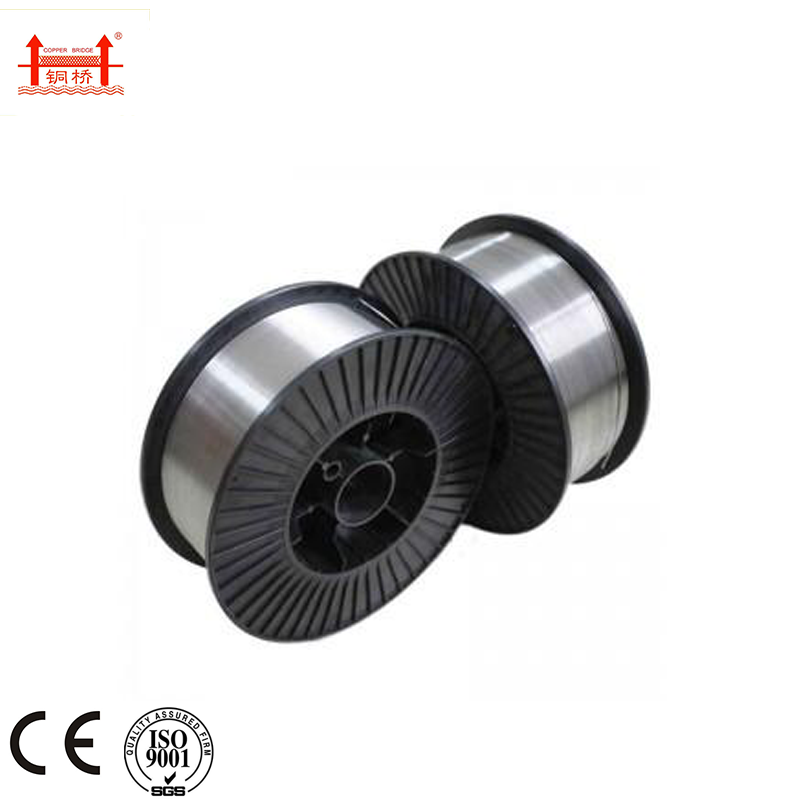
At the heart of successful arc MIG and TIG welding lies the argon arc welding wire. This consumable is far more than just filler metal; it’s a precision-engineered component whose performance is intrinsically linked to the shielding gas environment. The primary function of the gas – most commonly argon or argon-based mixtures – is to create an inert shield around the arc and molten weld pool. This shield prevents atmospheric contamination (oxygen, nitrogen, hydrogen) that causes porosity, brittleness, oxidation, and overall weak, defective welds.
The choice of argon arc welding wire must be meticulously matched to both the base metal and the shielding gas. For instance, wires designed for carbon steel welding under pure argon in TIG (arc TIG MIG welding) behave differently than those optimized for MIG welding with argon-CO2 blends. The wire's chemical composition, deoxidizer content (like silicon and manganese in ER70S-6 types), and surface quality are formulated assuming specific gas interactions. Using an incompatible gas can lead to poor arc stability, excessive spatter, inadequate penetration, or unacceptable bead appearance, directly translating to rework costs and lost time for your end-users. Premium wires, manufactured under strict quality control like those from Dingzhou Jinlong, ensure consistent feedability, stable arc characteristics, and predictable metallurgical outcomes when paired with the recommended gases, providing the reliability your wholesale clients demand.
Navigating Gas Choices for Optimal Arc TIG MIG Welding
Selecting the ideal shielding gas for arc TIG MIG welding involves balancing several factors: the welding process (MIG/GMAW or TIG/GTAW), the base metal type and thickness, the desired weld profile, penetration needs, travel speed, and cost. Here’s a breakdown of common gases and their applications:
Pure Argon (100% Ar): The cornerstone gas for arc MIG and TIG welding of non-ferrous metals.
TIG Welding: The gold standard for aluminum, magnesium, titanium, copper alloys, and exotic metals. Provides excellent arc stability, a clean, oxide-free weld pool, and good penetration control. Essential for high-quality, precision TIG work.
MIG Welding: Primarily used for aluminum and other non-ferrous metals. Offers good spray transfer stability and a clean weld bead. Less suitable for steel MIG due to potential arc wandering and shallow penetration profiles.
Argon-Helium Mixtures (Ar/He):
Used for both TIG and MIG welding of thicker non-ferrous sections (especially aluminum, copper, magnesium alloys). Helium significantly increases heat input and penetration depth due to its higher thermal conductivity. Common blends are 75% Ar / 25% He (good balance) or 50/50 (max penetration). Enhances travel speed and productivity in arc TIG MIG welding on heavy non-ferrous materials.
Argon-CO2 Mixtures (Ar/CO2):
The dominant choice for MIG welding carbon steel, low-alloy steel, and some stainless steels. CO2 is active, promoting deeper penetration and wider bead profiles. However, pure CO2 produces more spatter and a harsher arc.
Common Blends:
95% Ar / 5% CO2 (C5): Excellent all-rounder for short-circuit and spray transfer on thin to medium carbon steel. Offers low spatter, smooth arc, good bead appearance, and sufficient penetration. Ideal for automotive, fabrication, and general industry.
90% Ar / 10% CO2 (C10): Provides deeper penetration than C5, better for thicker materials. Slightly more spatter but still manageable. Good for structural work.
82% Ar / 18% CO2 (C18): Maximizes penetration and weld metal deposition rates, often used for heavy fabrication and positional welding. Produces more spatter and smoke. Requires robust fume extraction.
Impact: These blends stabilize the arc, reduce spatter compared to pure CO2, improve bead wetting, and offer a good compromise between cost and performance for steel arc MIG and TIG welding (primarily MIG).
Argon-Oxygen Mixtures (Ar/O2):
Primarily used for MIG welding stainless steel and some carbon steels. Small oxygen additions (1-5%) improve arc stability, fluidity of the weld pool, and bead wetting (smoother tie-in at the toes). Oxygen helps prevent undercutting, especially in spray transfer. Common blends are 98% Ar / 2% O2 and 95% Ar / 5% O2. Crucially, oxygen is oxidizing, so it is NOT suitable for aluminum, magnesium, copper, or TIG welding where it would contaminate the tungsten.
Tri-Mix Gases (Ar/He/CO2 or Ar/He/O2):
Used for specialized applications, particularly short-circuit MIG welding of stainless steel. A common blend is 90% He / 7.5% Ar / 2.5% CO2 (known as "Stainless Tri-Mix"). Helium provides deep penetration and high travel speeds, argon stabilizes the arc, and a small amount of CO2 stabilizes the arc further and improves wetting without excessive carbon pickup on stainless. Optimizes performance for demanding arc mig and tig welding (MIG focus) on stainless.
Optimizing Performance with the Right Wire and Gas in Arc MIG and TIG Welding
Achieving peak results in arc MIG and TIG welding requires a holistic approach where shielding gas selection and argon arc welding wire choice are perfectly aligned with the base metal and joint requirements. Here’s how to optimize:
Carbon & Low-Alloy Steels (MIG): Pair Ar/CO2 blends (C5, C10, C18) with ER70S type wires (e.g., ER70S-6). The deoxidizers (Si, Mn) in the wire work synergistically with the CO2 to prevent porosity and ensure sound welds. C5 offers the cleanest operation for thinner gauge and sheet metal, while C10 or C18 provide the muscle for thicker sections and positional work.
Stainless Steels (MIG): Use Ar/O2 blends (e.g., 98% Ar / 2% O2) for general austenitic stainless welding with wires like ER308L. For short-circuit transfer on thinner gauges or positional welding, Tri-Mix (He/Ar/CO2) is often superior, minimizing heat input while ensuring good fusion and appearance. Match the wire precisely to the stainless grade (e.g., ER308L for 304/304L).
Aluminum & Non-Ferrous (MIG & TIG): Pure Argon is standard for both processes. For thicker sections (>6mm) in MIG or TIG, adding Helium (25-75%) significantly boosts penetration and travel speed. Use matching aluminum wires (e.g., ER4043, ER5356) known for excellent feedability in MIG and fluidity in TIG.
Gas Purity & Flow Rates: Never underestimate gas purity (99.995% Argon minimum is standard) and correct flow rates (typically 15-25 CFH for TIG, 30-50 CFH for MIG, adjusted for draft). Impure gas or incorrect flow causes contamination and defects. Ensure your supply chain provides consistent, high-purity gases.
Wire Quality is Paramount: Even the best gas can't compensate for substandard wire. Inconsistent diameter, poor cast or helix, surface contaminants (oil, rust), or incorrect chemical composition will lead to feeding problems, arc instability, porosity, and weld defects. This directly impacts your customers' productivity and profitability. Partnering with a manufacturer like Dingzhou Jinlong guarantees wires produced to exacting international standards (GB, AWS), ensuring smooth feeding, stable arcs, and predictable, high-quality welds every time.
Dingzhou Jinlong offers precisely engineered wires designed to excel with common shielding gas mixtures:
|
Model |
GB |
AWS |
Uses |
Recommended Shielding Gas (Typical) |
|
CB-ER50-6 |
ER50-6 |
ER70S-6 |
All-position manual TIG (GTAW) backing welding and MIG (GMAW) on carbon steel pipelines and structures. Excellent for short-circuit and spray transfer. |
MIG: Ar/CO2 (e.g., C5: 95% Ar / 5% CO2, C10: 90% Ar / 10% CO2) |
|
CB-ER308L |
ER308L |
ER308L |
Welding ultra-low carbon 00Cr19Ni10 (304L) stainless steel structures. Suitable for TIG and MIG processes. |
MIG: Ar/O2 (e.g., 98% Ar / 2% O2) or Tri-Mix (e.g., 90% He / 7.5% Ar / 2.5% CO2) |
These products exemplify our commitment to providing wholesalers with solutions that deliver consistent performance in demanding arc mig and tig welding environments, directly contributing to your customers' project success and your reputation as a reliable supplier.
FAQt Our Arc TIG MIG Welding Solutions
Providing exceptional support is key to building strong wholesale partnerships. Here are answers to common questions about our products and their role in arc TIG MIG welding:
What are the key advantages of your argon arc welding wire?
Dingzhou Jinlong's argon arc welding wire offers distinct advantages crucial for wholesalers: Unmatched Consistency: Rigorous quality control from raw materials to finished product ensures uniform diameter, chemistry, and mechanical properties batch after batch, minimizing weld defects and rework for end-users. Superior Feedability: Optimized cast, helix, and smooth surface finish guarantee trouble-free feeding in both automated and manual arc MIG and TIG welding equipment, maximizing uptime. Enhanced Performance: Precise formulation delivers excellent arc stability, minimal spatter, smooth bead appearance, and reliable mechanical properties (tensile strength, impact toughness) when paired with the correct shielding gas. Cost-Effectiveness: High deposition efficiency, reduced waste from feeding issues or defects, and long shelf life provide significant value throughout the supply chain.
How does gas choice impact arc tig mig welding results?
Shielding gas fundamentally shapes the arc TIG MIG welding process: Arc Characteristics: Gas composition directly affects arc stability, voltage, and heat concentration (e.g., helium increases heat/penetration, CO2 can make the arc harsher). Metal Transfer: In MIG, gas dictates transfer mode (short-circuit, globular, spray). Ar/CO2 enables spray transfer on steel, pure argon is needed for spray on aluminum. Penetration & Bead Profile: Gases like helium or CO2 promote deeper penetration and wider beads; pure argon gives a narrower, more controlled profile. Weld Cleanliness & Mechanical Properties: Proper gas shielding prevents contamination (porosity, inclusions), oxidation (particularly on stainless, aluminum), and ensures optimal metallurgy and corrosion resistance. Spatter & Fume Levels: Argon-rich blends generally produce less spatter and fumes than high CO2 or pure CO2.
Why choose Jinlong for arc mig and tig welding wire?
Selecting Dingzhou Jinlong for arc mig and tig welding consumables offers wholesalers compelling benefits: Proven Manufacturing Scale & Expertise: Our 50,000-ton annual capacity, backed by international standard production lines and testing, guarantees reliable supply and consistent, high-specification product meeting GB, AWS, and other global standards. Technical Excellence: We invest in advanced technology and R&D to ensure our wires perform optimally with industry-standard shielding gases across diverse applications. Quality Assurance: Comprehensive in-house testing (chemical, mechanical, dimensional) validates every batch, providing the quality documentation and traceability your industrial clients require. Competitive Value: Combining high performance, consistency, and efficient large-scale production allows us to offer exceptional value, strengthening your margin potential. Dedicated Partnership: We focus on understanding wholesaler needs, providing responsive support, and fostering long-term, mutually beneficial relationships.
Can Jinlong argon arc welding wire wires be used with various shielding gases?
Absolutely. Dingzhou Jinlong engineers its argon arc welding wire specifically for compatibility with standard shielding gases used in their respective applications. For example:
Our CB-ER50-6 (ER70S-6) performs superbly with common Ar/CO2 blends (C5, C10, C18) for carbon steel MIG and pure Argon for carbon steel TIG.
Our CB-ER308L is formulated for use with Ar/O2 mixtures or Tri-Mix gases for stainless MIG and pure Argon for stainless TIG.
We provide clear recommendations for optimal gas pairings to achieve the best results in arc mig and tig welding. While wires are optimized for standard gases, their robust formulation ensures good performance within the typical gas ranges for their alloy type.
How does Jinlong ensure consistent arc tig mig welding wire quality?
Dingzhou Jinlong implements a multi-layered approach to guarantee wire consistency, vital for successful arc TIG MIG welding: Strict Raw Material Control: Only high-purity metals and alloys from qualified suppliers are used. Advanced Manufacturing: State-of-the-art drawing, annealing, and copper coating (where applicable) processes ensure precise dimensional tolerances, surface finish, and mechanical properties. Rigorous In-Process Testing: Continuous monitoring during production checks diameter, cast, helix, surface defects, and chemical composition. Comprehensive Final Testing: Every batch undergoes full testing per relevant standards (tensile strength, yield strength, elongation, chemical analysis). Traceability: Robust systems track materials and processes from start to finish. Quality Culture: Our commitment to excellence permeates the entire organization, ensuring reliability for your distribution business and your end customers.
Partner with Dingzhou Jinlong for Welding Success
Mastering shielding gas selection is a powerful tool for enhancing arc MIG and TIG welding outcomes. By understanding the intricate interplay between gas, argon arc welding wire, base metal, and process, wholesalers can provide truly valuable, solution-oriented product offerings to their customers. Dingzhou Jinlong Metal Production Co., Ltd. is your committed partner in this mission. We don't just supply welding consumables; we provide the consistent quality, technical expertise, and reliable high-volume production capacity that underpins your success as a distributor. Our focus on excellence – from our advanced Dingzhou factory to our global export capabilities – ensures you have access to wires that perform flawlessly with industry-standard gases, maximizing productivity and minimizing downtime for end-users. Contact Dingzhou Jinlong today to explore how our comprehensive range of welding electrodes, wires, and materials can strengthen your product portfolio and build profitable, long-lasting partnerships. Let us help you guide the trend in welding supply.

Related Video

Related News


2026-04-16 02:35:10
Precision Guide for e312 16 welding rod and Dissimilar Steel Welding
In the demanding world of industrial fabrication and repair, selecting the correct filler metal is the difference between a structural failure and a lifetime bond. The e312 16 welding rod is specifically engineered to meet the rigorous needs of welding dissimilar steels, offering an exceptional balance of strength and corrosion resistance. Whether you are working on high-pressure pipelines or heavy machinery components, understanding the nuances of this specialized electrode is key to achieving professional-grade results. This guide explores the technical advantages and practical applications of the E312 series to help you optimize your welding workflow.
2026-04-09 02:35:17
Choosing the Right cs to ss welding rod number Professional Guide
Joining carbon steel (CS) to stainless steel (SS) is a common challenge in industrial fabrication, requiring a precise understanding of metallurgy to avoid weld failure. The most critical decision in this process is identifying the correct cs to ss welding rod number to ensure a strong, corrosion-resistant bond. Using the wrong filler metal can lead to cracking or premature oxidation due to the different thermal expansion rates of the two materials. In this comprehensive guide, we will break down the technical specifications and selection criteria to help you achieve a professional-grade weld every time.
2026-04-07 02:25:29
Comprehensive Guide to 409 Welding Rod Selection and Optimal Usage
When it comes to welding applications requiring corrosion resistance and good weldability, the 409 welding rod is a frequently chosen option. This article provides a detailed overview of this versatile welding rod, exploring its composition, applications, benefits, and considerations for optimal use. Whether you’re a seasoned professional or new to welding, understanding the properties of 409 welding rod is crucial for achieving high-quality, durable welds. We’ll cover everything you need to know to make informed decisions for your welding projects.
2026-04-04 02:35:28
Comprehensive Guide to 330 Stainless Steel Welding Rod Applications and Techniques
330 stainless steel welding rods are a crucial component in various industries, offering exceptional corrosion resistance and high-temperature strength. This article provides an in-depth look at these rods, covering their properties, applications, choosing the right rod, welding techniques, safety precautions, and where to find high-quality options. Whether you're a seasoned welding professional or new to the field, this guide will offer valuable insights.
2026-03-31 02:35:08
Comprehensive Guide to 312 Stainless Tig Rod for Superior Welding Performance
When choosing the right filler metal for your TIG welding projects, especially in demanding applications, 312 stainless steel tig rod stands out for its exceptional corrosion resistance and high-temperature strength. This comprehensive guide will explore its composition, applications, benefits, and how it compares to other stainless steel rods. We'll also point you to resources for sourcing high-quality rods.
2026-03-28 02:45:04
Comprehensive Guide to 312 17 Welding Rod Applications and Technical Details
Welding rods are essential consumables in the welding process, and selecting the right one is crucial for achieving strong, durable, and high-quality welds. The 312 17 welding rod is a popular choice for many applications due to its unique properties and versatility. This article delves into the characteristics, applications, benefits, and considerations when using 312 17 welding rods, providing a comprehensive resource for welders and engineers alike. Choosing the right rod directly impacts the success and longevity of any welding project.
2026-03-26 02:35:10
Comprehensive Guide to the 312 16 Welding Rod for Superior Steel Welding
The 312 16 welding rod is a versatile and widely-used electrode in various welding applications. Known for its excellent weldability and strong mechanical properties, it's a go-to choice for professionals and hobbyists alike. This article delves into the specifics of this electrode, covering its composition, applications, advantages, and how to choose the right one for your projects. Understanding the nuances of the 312 16 welding rod is crucial for achieving high-quality, durable welds. The designation "312 16" provides key information about the welding rod. "312" refers to the type of flux coating, specifically a low-hydrogen, iron powder coating. This coating is designed to produce welds with excellent mechanical properties and good resistance to cracking. The "16" indicates the diameter of the rod in 32nds of an inch – so a 312 16 rod has a diameter of 16/32 or 1/2 inch. This combination makes it suitable for a wide range of steel welding applications. The low-hydrogen nature of the flux minimizes hydrogen-induced cracking, a common issue in welding certain steels.
2026-03-24 02:45:07
Comprehensive Guide to 309LSI TIG Rod Welding Applications and Best Practices
The 309LSI TIG rod is a versatile welding consumable widely used across various industries for its exceptional corrosion resistance and weldability. This article will explore the properties, applications, advantages, and best practices associated with using 309LSI TIG rods. Whether you're a seasoned welding professional or new to the field, this guide will provide you with valuable insights into maximizing the performance and longevity of your welds. The 309LSI TIG rod is a stainless steel electrode specifically designed for Gas Tungsten Arc Welding (GTAW), commonly known as TIG welding. The "309LSI" designation indicates the alloy composition: 309 signifies the chromium-nickel content, 'L' denotes low carbon content for enhanced corrosion resistance, and 'SI' signifies stabilized with silicon for improved resistance to carbide precipitation during welding.

 English
  Arabic
  Bengali
  China
China  French
  German
  Hausa
Hausa  Indonesian
  Italian
  Japanese
  Javanese
  Malay
Malay  Persian
  Portuguese
  Punjabi
  Russian
  Spanish
  Swahili
  Telugu
  Vietnamese