

High-Quality Solid Welding Wire for Precise Welding Flux Core Wire vs Solid Wire Guide

High-Quality Solid Welding Wire for Precise Welding Flux Core Wire vs Solid Wire Guide
Jul . 05, 2025 08:09
- Introduction to solid welding wire
: Composition, purpose, and relevance - Key differences: Flux core wire vs. solid wire
- Technical advantages of solid wire welding
- Comparative analysis of leading manufacturers
- Tailored solutions: Selecting the right solid welding wire
- Application case studies: Performance and results in real-world settings
- Conclusion: Optimizing processes with solid welding wire
(solid welding wire)
Introduction to Solid Welding Wire: The Foundation of Precision Welding
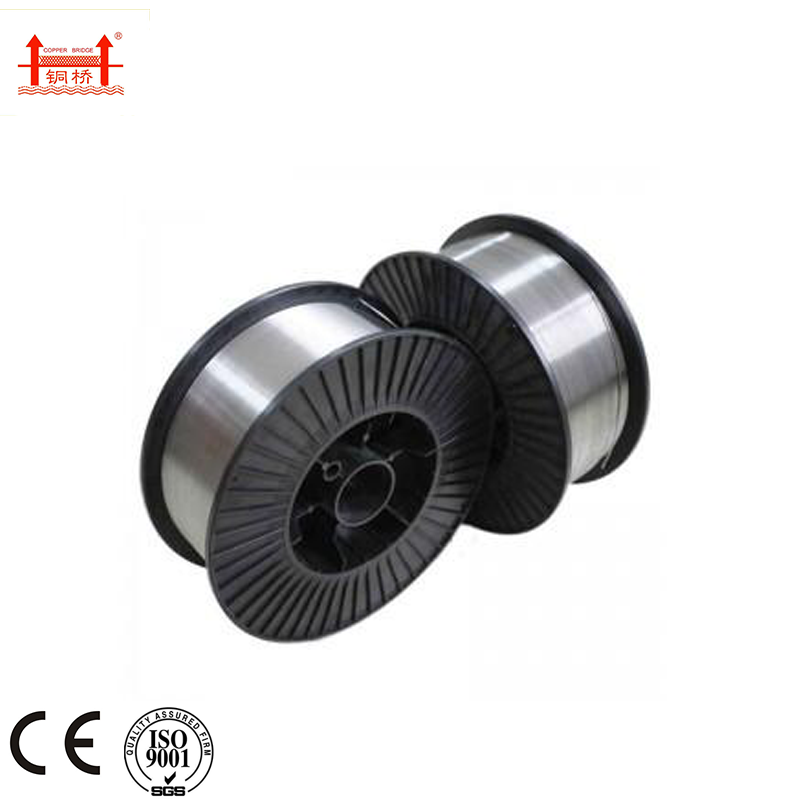
Solid welding wire forms the backbone of many modern metal joining operations, excelling in both industrial and commercial fabrication environments. Manufactured from high-quality mild steel or stainless steel, this consumable is precisely engineered for adaptability in Gas Metal Arc Welding (GMAW/MIG). The wire typically ranges from 0.6mm to 1.6mm in diameter, with chemical compositions optimized for strength, ductility, and reduced spatter. As the global metal fabrication market grew to $20.7 billion in 2023, the demand for high-performance welding materials has climbed, pushing solid wires to the forefront due to their consistency and ease of automation. Choices in this segment are critical; subtle changes in wire construction, surface finish, and copper coating can result in measurable improvements in weld bead appearance, penetration, and overall productivity.
Distinguishing Flux Core Wire vs Solid Wire: A Technical Perspective
The debate of flux core wire vs solid wire is shaped by project requirements, welding positions, and environmental factors. Solid wire is best paired with shielding gases such as argon/CO2 blends, delivering cleaner, lower-spatter welds in controlled indoor environments. Flux core wire, on the other hand, encapsulates its own flux within the wire, enabling operation in windy or less controlled outdoor settings. The chart below contrasts these two approaches in key performance categories:
| Attribute | Solid Welding Wire | Flux Core Wire |
|---|---|---|
| Shielding | Requires external gas (Argon/CO2 blends) | Self-shielded, no external gas needed |
| Weld Appearance | Cleaner, smoother beads | More spatter, higher slag residue |
| All-Position Capability | Excellent, especially with pulsed arc | Ideal for vertical, overhead |
| Penetration | Medium to deep, controllable | Usually deeper |
| Productivity Rate | High; well-suited for automation | Moderate; better for manual work |
The choice between flux core and solid wire often hinges on specific project variables, production environment, and targeted mechanical properties.
Technical Advantages of Solid Wire Welding
Users prefer solid wire welding gas combinations for their ability to fine-tune arc stability and reduce post-weld cleanup. Solid wire's surface preparation minimizes oxide build-up, leading to fewer inclusions within the weld pool and enhanced tensile strength. Studies indicate that automated systems using 0.9mm solid wire with 75/25 argon-CO2 gas can increase deposition rates by up to 20% while reducing porosity. During high-speed, multi-pass processes in automotive manufacturing, the use of premium copper-coated wire yields consistent feedability, with less than 0.5% wire feeding interruptions per 1,000 meters used. This advancement has allowed robotic GMAW systems to achieve up to 97% arc-on time, compared to 85-90% for manual processes using flux core wires. Additionally, welders benefit from less fume generation, improving safety and visibility while maintaining mechanical integrity through carefully controlled chemistry.
Comparative Analysis: Leading Manufacturers of Solid Welding Wire
The global solid welding wire market is driven by competition among top manufacturers dedicated to quality innovation. While many brands offer standard ER70S-6 and ER70S-3 grades, distinctions in wire diameter precision, deoxidizer content, and spooling technology set leading manufacturers apart. The table below summarizes performance benchmarks for three dominant suppliers:
| Manufacturer | Wire Type | Tensile Strength (MPa) | Wire Diameter Tolerance (mm) | Feedability (m, avg. interruption-free) | Unique Features |
|---|---|---|---|---|---|
| Lincoln Electric | SuperArc® L-56 | 510 | ±0.01 | 1200 | Highly active deoxidizers, excellent arc stability |
| ESAB | OK Autrod 12.51 | 500 | ±0.02 | 1100 | Improved copper coating, low fume levels |
| Böhler Welding | Union SG2 | 520 | ±0.015 | 1150 | Consistent droplet transfer, European standards compliance |
While all three companies ensure high-quality ER70S-6 wires, their individual approaches to metallurgy, wire precision, and environmental responsibility lend unique advantages to end users, particularly for automated and large-scale fabrication projects.
Tailored Solutions: Selecting the Right Solid Welding Wire for Your Application
An optimal selection of welding solid wire must address specific base materials, targeted mechanical properties, productivity expectations, and project budget. For thin gauge steel fabrication in HVAC or automotive industries, a smaller diameter (0.8mm or 0.9mm) wire paired with a 75/25 shielding gas delivers minimal distortion and esthetically pleasing bead profiles. Heavy structural welding, by contrast, may require 1.2mm diameter wires and 100% CO2 for deeper penetration and higher deposition rates. Furthermore, progressive manufacturers offer wire solutions formulated for galvanized substrates and high-strength alloys, increasing joint reliability and extending service life by up to 30%. Custom spooling (precision wound or random wound) and packaging options help streamline feeding in robotic and semi-automated workstations, with many providers now certifying wires to AWS or EN norms, ensuring consistent results in highly regulated sectors.
Application Case Studies: Success Stories in Industrial Contexts
To illustrate real-world performance, consider the following application scenarios:
- Automotive Assembly: In 2023, a major North American auto manufacturer switched from flux core to solid ER70S-6 wire in door panel assembly. The transition reduced rework rates from 6.2% to 1.5%, and improved aesthetic quality scores by 17%. The automated GMAW line realized a 12% cycle time improvement thanks to fewer wire feed interruptions and smoother arc starts.
- Pipeline Construction: A leading energy contractor deployed 1.2mm solid welding wire with 80/20 shielding gas in a new oil pipeline development. Weld penetration depths increased by 18% compared to previous flux core operations, ensuring joint integrity over long distances. Post-weld X-ray testing showed a 60% reduction in porosity-related defects.
- Structural Steel Fabrication: In high-rise framing, utilizing ESAB’s copper-coated wires allowed fabricators to sustain all-position welding with minimal slag, increasing throughput while meeting stringent code requirements. This resulted in a project completion time that was 14% ahead of projected milestones.
These cases highlight the versatility and productivity gains possible with targeted solid wire applications.
Conclusion: Achieving Operational Excellence with Solid Welding Wire
In sum, integrating solid welding wire into diverse metalworking environments delivers quantifiable benefits in productivity, consistency, and finished weld quality. Whether the priority lies in maximizing automated throughput, minimizing post-weld processing, or executing high-integrity joints under tight specifications, the technical profile of solid wire aligns with evolving manufacturing demands. The performance data and industry case studies reviewed substantiate that, with careful selection and appropriate gas shielding, solid wire provides a robust solution adaptable to a host of modern fabrication challenges. Continuous innovation from manufacturers, as well as custom options for challenging base materials and applications, ensure that investing in the right wire unlocks lasting value across numerous sectors.
(solid welding wire)
FAQS on solid welding wire
Q: What is solid welding wire?
A: Solid welding wire is a continuous, solid strand of metal used as a filler material in gas metal arc welding (GMAW/MIG). It is commonly used for welding clean, thin materials. The wire requires a shielding gas to protect the weld from contamination.Q: What is the difference between flux core wire and solid wire?
A: Flux core wire contains a flux in the center and can be used without external shielding gas, while solid wire needs a separate shielding gas. Solid wire produces cleaner welds with less spatter. Flux core wire is better for outdoor or windy conditions.Q: What shielding gas is used with solid wire welding?
A: The most common gases for welding solid wire are Argon or a mix of Argon and CO2. The gas selection depends on the type of metal being welded. Using the right shielding gas ensures a stable arc and quality weld.Q: When should I choose solid wire for welding?
A: Choose solid wire when welding clean, thin materials indoors, where wind isn’t a concern. It offers cleaner welds and less post-weld cleanup. Solid wire is ideal for automotive, fabrication, and sheet metal work.Q: What are the advantages of solid welding wire?
A: Solid welding wire creates precise, clean welds with minimal spatter. It is easy to use and provides excellent results on thinner materials. This makes it popular for professional and hobbyist MIG welding projects.
Related Video

Related News


2026-04-16 02:35:10
Precision Guide for e312 16 welding rod and Dissimilar Steel Welding
In the demanding world of industrial fabrication and repair, selecting the correct filler metal is the difference between a structural failure and a lifetime bond. The e312 16 welding rod is specifically engineered to meet the rigorous needs of welding dissimilar steels, offering an exceptional balance of strength and corrosion resistance. Whether you are working on high-pressure pipelines or heavy machinery components, understanding the nuances of this specialized electrode is key to achieving professional-grade results. This guide explores the technical advantages and practical applications of the E312 series to help you optimize your welding workflow.
2026-04-09 02:35:17
Choosing the Right cs to ss welding rod number Professional Guide
Joining carbon steel (CS) to stainless steel (SS) is a common challenge in industrial fabrication, requiring a precise understanding of metallurgy to avoid weld failure. The most critical decision in this process is identifying the correct cs to ss welding rod number to ensure a strong, corrosion-resistant bond. Using the wrong filler metal can lead to cracking or premature oxidation due to the different thermal expansion rates of the two materials. In this comprehensive guide, we will break down the technical specifications and selection criteria to help you achieve a professional-grade weld every time.
2026-04-07 02:25:29
Comprehensive Guide to 409 Welding Rod Selection and Optimal Usage
When it comes to welding applications requiring corrosion resistance and good weldability, the 409 welding rod is a frequently chosen option. This article provides a detailed overview of this versatile welding rod, exploring its composition, applications, benefits, and considerations for optimal use. Whether you’re a seasoned professional or new to welding, understanding the properties of 409 welding rod is crucial for achieving high-quality, durable welds. We’ll cover everything you need to know to make informed decisions for your welding projects.
2026-04-04 02:35:28
Comprehensive Guide to 330 Stainless Steel Welding Rod Applications and Techniques
330 stainless steel welding rods are a crucial component in various industries, offering exceptional corrosion resistance and high-temperature strength. This article provides an in-depth look at these rods, covering their properties, applications, choosing the right rod, welding techniques, safety precautions, and where to find high-quality options. Whether you're a seasoned welding professional or new to the field, this guide will offer valuable insights.
2026-03-31 02:35:08
Comprehensive Guide to 312 Stainless Tig Rod for Superior Welding Performance
When choosing the right filler metal for your TIG welding projects, especially in demanding applications, 312 stainless steel tig rod stands out for its exceptional corrosion resistance and high-temperature strength. This comprehensive guide will explore its composition, applications, benefits, and how it compares to other stainless steel rods. We'll also point you to resources for sourcing high-quality rods.
2026-03-28 02:45:04
Comprehensive Guide to 312 17 Welding Rod Applications and Technical Details
Welding rods are essential consumables in the welding process, and selecting the right one is crucial for achieving strong, durable, and high-quality welds. The 312 17 welding rod is a popular choice for many applications due to its unique properties and versatility. This article delves into the characteristics, applications, benefits, and considerations when using 312 17 welding rods, providing a comprehensive resource for welders and engineers alike. Choosing the right rod directly impacts the success and longevity of any welding project.
2026-03-26 02:35:10
Comprehensive Guide to the 312 16 Welding Rod for Superior Steel Welding
The 312 16 welding rod is a versatile and widely-used electrode in various welding applications. Known for its excellent weldability and strong mechanical properties, it's a go-to choice for professionals and hobbyists alike. This article delves into the specifics of this electrode, covering its composition, applications, advantages, and how to choose the right one for your projects. Understanding the nuances of the 312 16 welding rod is crucial for achieving high-quality, durable welds. The designation "312 16" provides key information about the welding rod. "312" refers to the type of flux coating, specifically a low-hydrogen, iron powder coating. This coating is designed to produce welds with excellent mechanical properties and good resistance to cracking. The "16" indicates the diameter of the rod in 32nds of an inch – so a 312 16 rod has a diameter of 16/32 or 1/2 inch. This combination makes it suitable for a wide range of steel welding applications. The low-hydrogen nature of the flux minimizes hydrogen-induced cracking, a common issue in welding certain steels.
2026-03-24 02:45:07
Comprehensive Guide to 309LSI TIG Rod Welding Applications and Best Practices
The 309LSI TIG rod is a versatile welding consumable widely used across various industries for its exceptional corrosion resistance and weldability. This article will explore the properties, applications, advantages, and best practices associated with using 309LSI TIG rods. Whether you're a seasoned welding professional or new to the field, this guide will provide you with valuable insights into maximizing the performance and longevity of your welds. The 309LSI TIG rod is a stainless steel electrode specifically designed for Gas Tungsten Arc Welding (GTAW), commonly known as TIG welding. The "309LSI" designation indicates the alloy composition: 309 signifies the chromium-nickel content, 'L' denotes low carbon content for enhanced corrosion resistance, and 'SI' signifies stabilized with silicon for improved resistance to carbide precipitation during welding.

 English
  Arabic
  Bengali
  China
China  French
  German
  Hausa
Hausa  Indonesian
  Italian
  Japanese
  Javanese
  Malay
Malay  Persian
  Portuguese
  Punjabi
  Russian
  Spanish
  Swahili
  Telugu
  Vietnamese