In the demanding world of industrial fabrication, selecting the right consumables is critical for structural integrity. The use of high-performance f1 f2 f3 f4 welding electrodes ensures that carbon steel pipelines and similar structures are joined with maximum precision and strength. By focusing on the chemistry of the deposited metal and the efficiency of the coating, operators can achieve superior weld quality across various positions.
Global infrastructure projects, from oil and gas pipelines to heavy machinery manufacturing, rely on the consistent performance of specialized welding rods. The challenge often lies in balancing penetration depth with surface finish, a problem that is effectively addressed by the high cellulose sodium type coating found in advanced welding solutions. This allows for efficient bottom welding and filling in the most rigorous environments.
Understanding the technical specifications of f1 f2 f3 f4 welding electrodes is essential for engineers aiming to optimize their production lines. By utilizing materials that meet AWS E6010 standards, industries can ensure a tensile strength of 500 Mpa and an elongation of 28%, providing the reliability required for high-pressure applications.
Global Industrial Relevance of f1 f2 f3 f4 welding electrodes
The global demand for robust carbon steel welding has surged as nations upgrade their energy transport networks and urban infrastructure. High-quality f1 f2 f3 f4 welding electrodes play a pivotal role in this expansion, providing the necessary metallurgical bond for general carbon steel pipelines. Their ability to perform in various positions makes them indispensable for rapid deployment in remote industrial zones.
Adhering to international standards like AWS E6010 ensures that these consumables provide consistent results regardless of the geographical location. By stabilizing the arc and ensuring deep penetration, these electrodes reduce the risk of weld failure in critical joints, thereby enhancing the overall safety of global industrial assets.
Defining f1 f2 f3 f4 welding electrodes in Modern Fabrication
In simple terms, f1 f2 f3 f4 welding electrodes are specialized consumables designed for the arc welding of carbon steel. Specifically, the CB-J425 model, which corresponds to AWS E6010, is characterized by its high cellulose sodium type coating. This specific chemical composition allows the electrode to create a powerful arc with deep penetration, which is essential for the initial "root" pass of a weld.
These electrodes are not merely rods of metal; they are engineered tools that manage the heat and gas protection of the weld pool. The high cellulose content in the coating generates a shielding gas that protects the molten metal from atmospheric contamination, ensuring a clean and strong deposit. This makes them the primary choice for bottom welding and filling in pipeline structures.
From a humanitarian and industrial perspective, the reliability of these electrodes means fewer repairs and lower downtime for critical utilities. When water or gas pipelines are constructed using these standardized materials, the result is a sustainable piece of infrastructure that can withstand environmental stress for decades, supporting the growth of local communities.
Core Components and Coating Chemistry
The effectiveness of f1 f2 f3 f4 welding electrodes stems from their precise chemical composition. The deposited metal consists primarily of iron, with carefully controlled amounts of Carbon (0.09%), Manganese (0.42%), and Silicon (0.15%). These elements are balanced to ensure that the resulting weld is neither too brittle nor too soft, maintaining an optimal balance of strength and ductility.
Central to the performance of f1 f2 f3 f4 welding electrodes is the high cellulose sodium coating. Unlike other coatings that prioritize a smooth finish, this cellulose-based chemistry is designed for deep penetration and high-velocity arc stability. This is why they are uniquely suited for the bottom welding of pipelines where a strong, penetrating root bead is required to ensure full fusion.
Furthermore, the manageability of these electrodes is enhanced by their low sulfur (0.010%) and phosphorus (0.010%) content. By minimizing these impurities, the risk of hot cracking is significantly reduced. This ensures that f1 f2 f3 f4 welding electrodes provide a reliable bond even when working with materials that may have slight surface irregularities.
Performance Metrics and Tensile Efficiency
When evaluating the mechanical properties of the deposited metal, the most critical metrics are tensile strength and elongation. For professional-grade f1 f2 f3 f4 welding electrodes, the tensile strength is rated at 500 Mpa. This ensures that the welded joint can withstand significant longitudinal stress without failing, which is a non-negotiable requirement for pressure-bearing pipelines.
Equally important is the elongation rate of 28%, which indicates the metal's ability to deform plastically before rupture. This flexibility prevents sudden, brittle fractures under thermal expansion or seismic shifts. The synergy between high strength and adequate elongation makes these electrodes the gold standard for structural carbon steel applications.
Comparative Performance of Electrode Variants
Practical Applications in Pipeline Construction
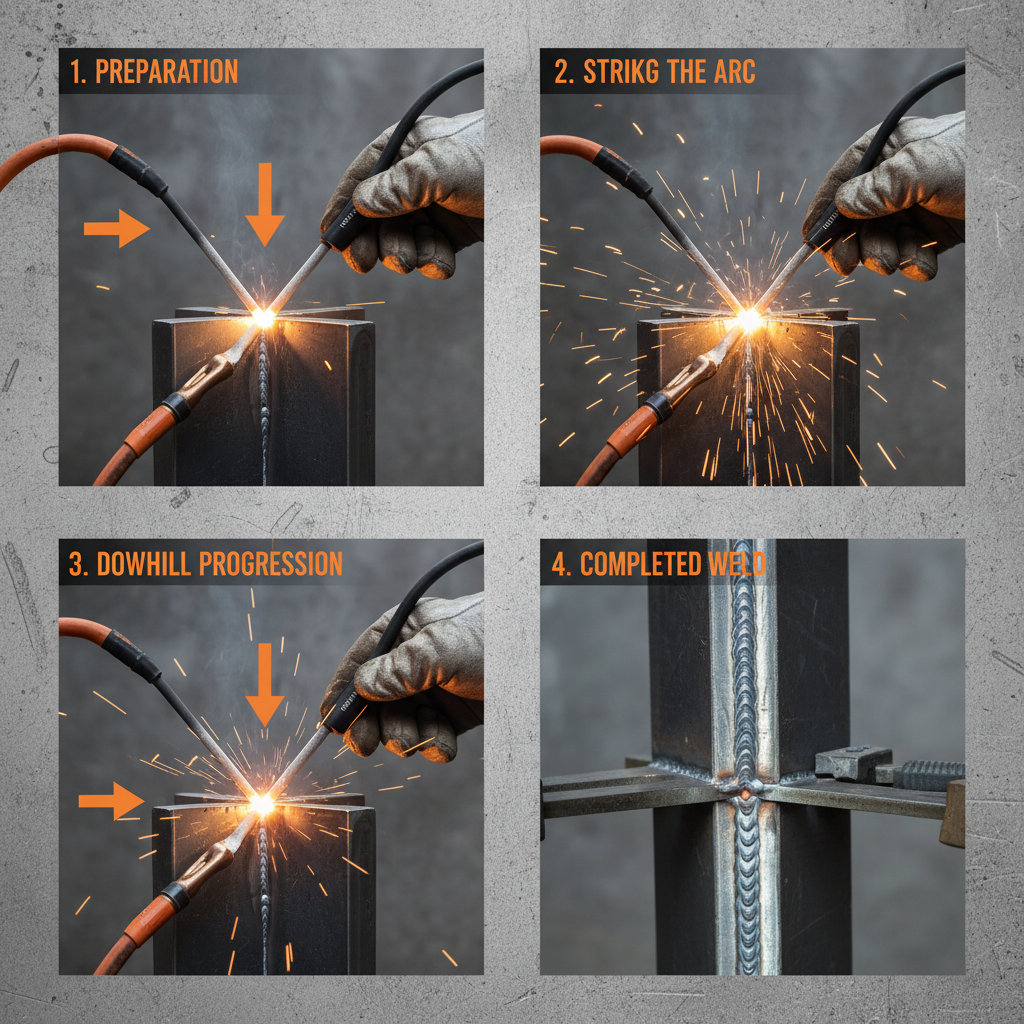
In real-world pipeline construction, the application of f1 f2 f3 f4 welding electrodes is divided into three primary stages: bottom welding, filling welding, and cover welding. The bottom weld, or root pass, is the most critical as it forms the foundation of the joint. Using the high-penetration capabilities of the AWS E6010 electrode ensures that the root is fully fused, preventing leaks in high-pressure gas or oil lines.
Beyond the root pass, these electrodes are used for filling and capping to build up the weld metal and provide a durable exterior seal. This versatility allows a single type of electrode to handle the entire welding sequence for general carbon steel structures. This streamlines the supply chain for construction firms, as they can rely on a consistent material for multiple phases of the project.
Long-term Reliability and Safety Value
The long-term value of utilizing f1 f2 f3 f4 welding electrodes lies in the reduction of maintenance costs and the increase in operational safety. When a weld is performed with the correct chemical composition and mechanical properties, the risk of stress corrosion cracking is minimized. This is especially vital in industrial zones where pipes are exposed to varying temperatures and corrosive soil conditions.
Safety is not just a technical requirement but a moral imperative in heavy industry. The trust placed in these electrodes allows engineers to certify structures for high-pressure use, knowing that the joint strength meets or exceeds the base metal strength. This reliability reduces the frequency of emergency shutdowns and prevents catastrophic failures.
Furthermore, the ease of use associated with these electrodes—such as the fact that they generally do not require baking before use—increases productivity on site. However, professional operators know that if the rods are exposed to moisture, a brief bake at 70-80℃ for 0.5-1 hour is necessary to maintain the integrity of the cellulose sodium coating.
Future Innovations in Electrode Technology
The future of f1 f2 f3 f4 welding electrodes is moving toward greater environmental sustainability and digital integration. Innovations in coating chemistry are aiming to reduce the fumes generated during the welding process without sacrificing the deep penetration characteristics of the cellulose sodium type. This "green" shift will improve the health and safety of welders in confined spaces.
Automation is also transforming how these electrodes are deployed. Robotic welding systems are being integrated with smart sensors to monitor the arc stability and deposited metal quality in real-time. This ensures that the high tensile strength of 500 Mpa is consistently achieved across kilometers of pipeline, removing the variable of human fatigue.
Moreover, the trend toward "intelligent consumables" may soon allow electrodes to provide data on their own moisture levels or chemical purity. By combining traditional metallurgy with digital transformation, the industry is ensuring that carbon steel welding remains the backbone of global infrastructure while evolving to meet modern ecological standards.
Technical Specifications and Application Analysis of f1 f2 f3 f4 welding electrodes
|
Parameter Dimension
|
Technical Value
|
Industrial Impact
|
Performance Score (1-10)
|
| Tensile Strength |
500 Mpa |
High pressure resistance |
10 |
| Elongation |
28% |
Prevents brittle fracture |
9 |
| Coating Type |
Cellulose Sodium |
Deep root penetration |
10 |
| C Content |
0.09% |
Optimized weld toughness |
8 |
| Diameter Range |
2.5-5.0mm |
Versatile thickness use |
9 |
| Current Type |
DC |
Stable arc control |
8 |
FAQS
Generally, these electrodes do not need to be baked before welding. However, if they have been exposed to moisture or stored in humid conditions, it is recommended to bake them at 70-80℃ for 0.5 to 1 hour. This ensures the cellulose sodium coating remains dry, preventing hydrogen-induced porosity and ensuring the deep penetration characteristics are maintained.
They are primarily used for the bottom welding (root pass), filling, and cover welding of general carbon steel pipelines. Because of their high cellulose sodium coating, they provide the deep penetration necessary to ensure a strong, fused root bead in pipe welding, which is critical for preventing leaks in high-pressure systems.
The deposited metal offers a high tensile strength of 500 Mpa, meaning it can withstand significant pulling forces without failing. Additionally, it has an elongation of 28%, which provides the necessary ductility to handle thermal expansion and structural shifts without cracking.
These electrodes are designed for use with Direct Current (DC). Using DC provides a more stable arc and better control over the penetration depth, which is essential when performing critical root passes on carbon steel pipelines.
The precise balance of Carbon (0.09%), Manganese (0.42%), and Silicon (0.15%) ensures optimal strength and toughness. Low levels of sulfur and phosphorus (both 0.010%) are critical to preventing hot cracking, making the weld far more reliable in heavy-duty industrial applications.
These electrodes are available in a range of diameters from 2.5mm to 5.0mm. This variety allows welders to choose the appropriate thickness based on the joint gap and the thickness of the carbon steel pipeline being joined.
Conclusion
In summary, f1 f2 f3 f4 welding electrodes, specifically the AWS E6010 / CB-J425 variety, provide a critical combination of deep penetration, high tensile strength (500 Mpa), and excellent ductility (28% elongation). By utilizing a high cellulose sodium coating, these consumables allow for seamless bottom, filling, and cover welding in carbon steel pipelines, ensuring structural integrity and long-term safety in the most demanding industrial environments.
As the industry moves toward greater automation and sustainable practices, the importance of high-standard consumables only increases. We recommend that engineers and procurement specialists prioritize electrodes that meet strict chemical and mechanical specifications to minimize risk and maximize infrastructure lifespan. For high-performance welding solutions, visit our website: www.jinlongweldingelectrode.com