Understanding the welding rod per kilo price is essential for procurement managers, independent contractors, and industrial engineers who need to balance project budgets with structural integrity. In the competitive landscape of metal fabrication, the cost of consumables directly impacts the bottom line, making it critical to distinguish between budget-grade electrodes and high-performance alloys.
The global market for welding consumables is highly volatile, influenced by the fluctuating costs of raw materials like iron ore, nickel, and chromium. When analyzing the welding rod per kilo price, one must consider that a lower initial cost may lead to higher expenses in the long run due to increased slag removal time or higher failure rates in critical joints.
Whether you are sourcing AWS E6013 for general purpose fabrication or E7018 for high-strength structural work, knowing how to evaluate the welding rod per kilo price ensures that you are investing in quality that meets international ISO and AWS standards. This guide provides a comprehensive analysis of price drivers and value optimization in the welding industry.
Global Market Dynamics of Welding Rod Pricing
The global welding materials market is a complex ecosystem where the welding rod per kilo price is often a bellwether for broader industrial health. With the rise of infrastructure projects in Southeast Asia and the modernization of bridges in North America, the demand for standardized electrodes like the AWS E6011 and E6013 has surged. Market fluctuations are typically driven by the LME (London Metal Exchange) prices, where sudden spikes in nickel or manganese can lead to immediate adjustments in wholesale pricing.
Furthermore, the shift toward sustainable manufacturing has introduced "green" electrodes, which may carry a premium. However, the long-term economic benefit is realized through reduced emissions and better energy efficiency during the welding process. Companies that monitor the welding rod per kilo price closely can leverage bulk purchasing agreements to hedge against these volatile commodity cycles.
Defining the Welding Rod Per Kilo Price Metric
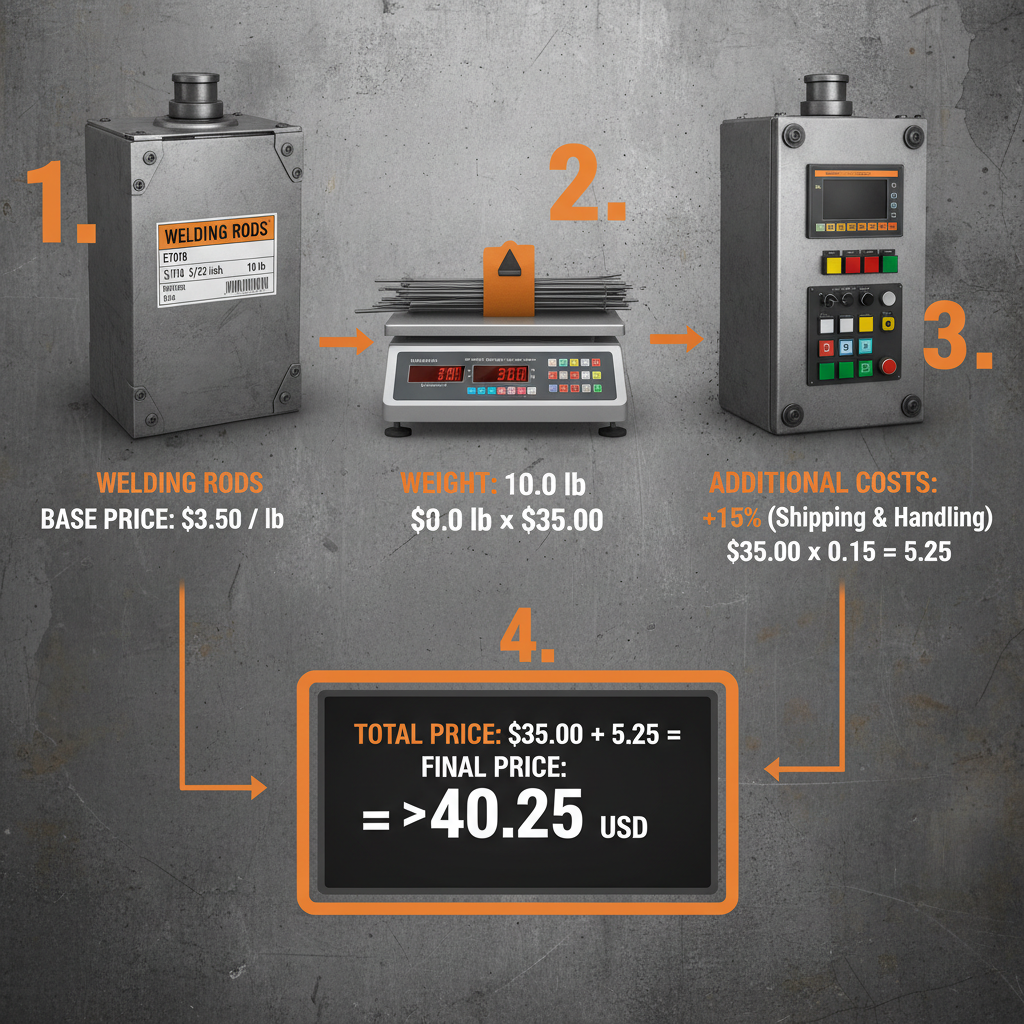
In simple terms, the welding rod per kilo price represents the unit cost of welding consumables based on weight rather than per-piece. This is the industry standard for B2B transactions because it allows for a direct comparison between different brands and specifications, regardless of whether the rod is 2.5mm or 5.0mm in diameter. By focusing on weight, buyers can calculate the exact cost of the weld deposit for a specific project.
This metric is deeply connected to modern industrial needs, particularly in large-scale shipbuilding and pipeline construction. In these sectors, where thousands of kilograms of material are consumed daily, even a small variance in the welding rod per kilo price can result in thousands of dollars of difference in the total project budget. It transforms a simple purchase into a strategic financial decision.
Beyond the numbers, this pricing model reflects the purity and composition of the electrode. A higher welding rod per kilo price often indicates a specialized coating—such as the low-hydrogen coating found in E7018 rods—which prevents cracking in high-stress environments. Thus, the price per kilo is not just a cost, but a proxy for the technical capabilities of the material.
Core Factors Influencing Consumable Costs
One of the primary drivers of the welding rod per kilo price is the chemical composition of the core wire. For instance, stainless steel electrodes (like E308L or E316L) contain high percentages of chromium and nickel, making them significantly more expensive than standard carbon steel electrodes. The alloying elements determine the rod's resistance to corrosion and heat, which is directly reflected in the market price.
The quality of the flux coating also plays a pivotal role in determining the welding rod per kilo price. Advanced coatings that ensure "small splash" or "easy slag removal" require more precise chemical engineering and higher-grade minerals. When you pay a premium for these features, you are essentially paying for reduced post-weld cleaning time, which lowers the overall labor cost.
Lastly, manufacturing scale and certification costs impact the final welding rod per kilo price. Products that carry AWS (American Welding Society) or ISO certifications undergo rigorous testing to ensure consistency. This quality assurance process adds a layer of cost, but it provides the buyer with the guarantee that the weld will not fail under operational pressure.
Cost Efficiency and Performance Scalability
Achieving cost efficiency requires looking beyond the sticker welding rod per kilo price and analyzing the deposition rate. A rod that is slightly more expensive per kilo but offers a higher deposition rate (meaning more metal is transferred to the joint per hour) is actually more cost-effective. This scalability is crucial for high-volume industrial shops.
When scaling operations, the choice between manual shielded metal arc welding (SMAW) and flux-cored arc welding (FCAW) often comes down to the weight-based cost analysis. While flux-cored wire might have a different price point, its efficiency in heavy-duty applications often outweighs the lower per-kilo cost of traditional sticks.
Comparative Value Analysis of Welding Rod Per Kilo Price
Industrial Applications Across Global Regions
The application of welding rod per kilo price analysis varies significantly by region. In the industrial zones of China and India, the focus is often on the universality of the E6013 rod, where extreme volume leads to highly competitive pricing. These regions prioritize scalability for rapid urban expansion and mass manufacturing of metal goods.
Conversely, in North American and European offshore oil rigs or nuclear power plants, the priority shifts from the lowest per-kilo cost to the highest reliability. In these "zero-failure" environments, engineers willingly pay a higher welding rod per kilo price for certified AWS E7018 or specialized stainless electrodes to ensure structural safety and longevity against saltwater corrosion.
Long-Term Value and Reliability Advantages
Investing in a higher-quality product despite a steeper welding rod per kilo price often yields significant long-term dividends. High-grade electrodes reduce the incidence of porosity and slag inclusions, which means fewer X-ray failures during quality inspections. The cost of grinding out and re-welding a failed joint far exceeds the pennies saved on a cheaper rod.
Moreover, the reliability of premium rods enhances welder productivity. When an electrode ignites easily and maintains a stable arc, the welder experiences less fatigue and completes tasks faster. This intersection of material science and human ergonomics proves that the true value of a welding rod is found in the total cost of the finished weld, not the price of the raw material.
From a sustainability perspective, high-efficiency rods produce less waste and spatter. This not only cleans up the workspace but also reduces the amount of scrap metal generated. By optimizing the welding rod per kilo price against the waste ratio, companies can move toward a more lean and environmentally responsible manufacturing process.
Future Innovations in Welding Material Pricing
The future of the welding rod per kilo price will be shaped by digital transformation and material science. We are seeing the emergence of "smart alloys" that can adapt to different base metals, potentially reducing the need to stock dozens of different rod types. While these may initially increase the price per kilo, they will reduce inventory holding costs.
Automation and robotic welding are also shifting the demand. Robotic arms require highly consistent wire and rod diameters to prevent feeding jams. This demand for extreme precision is creating a new premium tier in the welding rod per kilo price, where the value is placed on dimensional tolerance rather than just chemical composition.
Sustainability policies, such as the European Green Deal, are pushing manufacturers toward cobalt-free and low-emission coatings. As these technologies scale, the price disparity between traditional and eco-friendly rods will shrink, making sustainable welding the standard rather than a luxury.
Comparative Analysis of Welding Rod Categories and Pricing Drivers
| Rod Category |
Price Volatility |
Primary Cost Driver |
Value Score (1-10) |
| Universal Carbon Steel (6013) |
Low |
Mass Production Scale |
8 |
| Low-Hydrogen Steel (7018) |
Medium |
Coating Specialization |
9 |
| Stainless Steel (E308/309) |
High |
Nickel/Chrome Market |
7 |
| Cast Iron Alloy (NiFe-1) |
High |
Rare Element Content |
6 |
| Flux-Cored Wire (E71T) |
Medium |
Manufacturing Process |
10 |
| Copper Bridge Electrodes |
Low |
Brand Distribution |
8 |
FAQS
The price difference is primarily due to the flux coating. E6013 is a general-purpose rod with a rutile coating, whereas E7018 is a low-hydrogen electrode. The production of E7018 requires more stringent moisture control and specialized coating materials to prevent hydrogen-induced cracking in heavy steel, which increases the manufacturing cost per kilo.
Buying by the kilo (bulk) is almost always more cost-effective for industrial users. Wholesale pricing reduces the impact of packaging and logistics costs. When you analyze the welding rod per kilo price in bulk, you can often secure a 10-20% discount compared to buying small retail boxes, making it the preferred method for contractors.
Nickel is a core component of stainless steel and specialized alloy rods. Because nickel is traded on the global commodities market, any geopolitical instability or supply chain disruption causes its price to spike. Since the core wire constitutes a large portion of the rod's weight, these increases are passed directly into the welding rod per kilo price.
Generally, the price per kilo remains consistent regardless of diameter because the material composition is the same. However, some manufacturers may charge a slight premium for very thin rods (like 2.0mm) due to the increased precision required in the drawing process. Always check the weight-based price to avoid paying more for smaller sizes.
Not necessarily, but it warrants caution. A low price might result from efficient mass production or lower brand recognition. However, if the price is significantly below market average, it may indicate a lack of certification or inferior flux quality, which could lead to weld defects and expensive failures. Always verify AWS specifications.
For long-term projects (6 months+), it is recommended to review consumable pricing quarterly. Given the volatility of the steel and nickel markets, the welding rod per kilo price can shift noticeably. Including a "material fluctuation clause" in your contracts can help protect your margins against these changes.
Conclusion
Navigating the complexities of the welding rod per kilo price requires a holistic approach that balances initial procurement costs with long-term operational efficiency. We have explored how material composition, certification standards, and global market trends dictate pricing, and why the "cheapest" option is rarely the most economical when accounting for labor, waste, and quality control.
As the industry moves toward automation and sustainable materials, the value proposition of welding consumables will continue to evolve. We recommend that professionals prioritize certified, high-performance electrodes to ensure structural safety and project longevity. For the highest quality consumables and competitive bulk pricing, visit our website: www.jinlongweldingelectrode.com