

E347 16 Welding Rod: All-Position, AC/DC - Why Choose It?

E347 16 Welding Rod: All-Position, AC/DC - Why Choose It?
Oct . 06, 2025 00:45
Stainless Steel Electrodes E347-16: field notes, specs, and what buyers really ask
If you’ve been shortlisting stabilized stainless consumables for heat-resistant piping or food plant retrofits, you’ve likely searched for [e347 16]. To be honest, it’s one of those quiet workhorse electrodes—reliable, forgiving on AC or DCEP, and built for joints that can’t afford intergranular corrosion.
Quick context and why it matters
Industry trend snapshot: retrofit and maintenance teams in chemicals, F&B, and energy are leaning toward stabilized weld metals for 321/347 stainless to curb carbide precipitation after repeated thermal cycling. In fact, many maintenance managers say they’ve moved to [e347 16] for mixed-age plants where the original spec is “somewhat 321-ish” but documentation is fuzzy. It’s a practical hedge.
Origin point: Liusu Industrial Area, Dingzhou City, Hebei Province, China—where several electrode makers cluster. This one adheres to GB/T 983-1995, and aligns with AWS A5.4 for E347-16. That’s the baseline you want.
What it is (and isn’t)
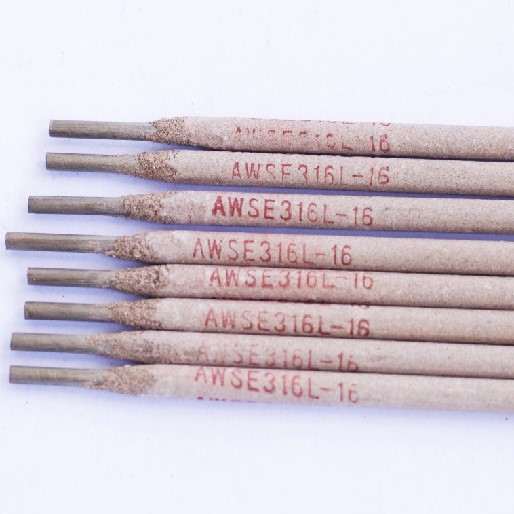
- Type: Chromium–nickel stainless electrode, Nb (columbium) stabilized; rutile coating (-16), AC or DCEP.
- Use cases: Welding similar stainless grades (347/321), overlays on 304/304L where stabilization helps, valves, tanks, heat exchangers, and refinery lines.
- Not ideal for: Chloride stress-corrosion hot spots with poor design—choose wisely or consider higher-alloy solutions.
Product specification (typical, not guaranteed)
| Classification | AWS A5.4 E347-16; GB/T 983-1995 |
| Typical chemistry (deposit) | Cr ≈ 19–21%, Ni ≈ 9–11%, Nb stabilized; C low (real-world use may vary) |
| Mechanical properties | UTS ≈ ≥550 MPa; Elongation ≈ ≥30%; FN ≈ 4–12 (WRC-1992 methods) |
| Polarity | AC or DCEP |
| Positions | All-position (except vertical down in most specs) |
| Diameters (common) | 2.5 / 3.2 / 4.0 mm; lengths 300–350 mm |
Process flow: how it’s made and verified
Materials: stainless core wire, rutile-based flux with binders, stabilizers (Nb-bearing), deoxidizers. Methods: precision extrusion, low-moisture baking (≈300–350°C), vacuum or foil-lined packing. Testing: per AWS A5.4/GB/T 983—tensile, bend, ferrite number (FN), and radiography on procedure welds. Moisture resistance and re-dry guidance (≈250–300°C for 1–2 h) included. Service life: depends on duty cycle, but many customers report long-term stability in cycling up to ~425–550°C when metallurgy and design are correct.
Application notes and setup
- Targets: food-grade piping, chemical processing skids, flare headers, heat-exchanger shells, pharma vessels.
- Prep: clean joints, minimal gap, interpass typically kept under ~150°C.
- Parameters: moderate amperage; short arc; let the slag do its job—-16 rutile is forgiving and smooth-beading.
Vendor comparison (indicative)
| Vendor | Certs/Standards | Lead Time | Customization | Notes |
|---|---|---|---|---|
| Jinlong ([e347 16]) | GB/T 983-1995, AWS A5.4 alignment | Around 2–4 weeks ex-works | Private label, special baking, diameter range | Value-focused; strong MOQ flexibility |
| Global Brand A | AWS/ISO with marine approvals | 1–3 weeks (stock-dependent) | Standard pack, limited private label | Premium pricing; wide distributor network |
| Regional Vendor B | Local GB/T conformance | 3–5 weeks | Some custom diameters | Competitive; verify batch-to-batch FN |
Case study: heat exchanger repair, mid-size refinery
A maintenance crew swapped in [e347 16] to overlay worn 304 shells (previously cracking after thermal shocks). Post-repair dye penetrant came back clean; after 9 months, operators reported fewer start-up weeps. Anecdotal, yes—but it aligns with what we see when stabilization is prioritized.
Compliance, testing, and storage
- Standards: AWS A5.4 E347-16, GB/T 983-1995; comparable to ISO 3581-A stabilized grades.
- QA: tensile/bend per code; FN by WRC-1992 methodology; IGC risk assessed per ASTM A262 practices (where relevant).
- Storage: keep dry; re-dry ≈250–300°C for 1–2 h if moisture pickup occurs.
Final thought: specs matter, but so does bead appearance and operator comfort. Rutile -16 coatings on [e347 16] tend to win over teams fast—smooth arc, easy slag, fewer surprises.
Authoritative citations
- AWS A5.4: Specification for Stainless Steel Electrodes for SMAW
- ISO 3581: Welding consumables — Covered electrodes for stainless and heat-resisting steels
- ASTM A262: Practices for Detecting Susceptibility to Intergranular Attack in Austenitic Stainless Steels
- GB/T 983-1995 (China National Standard) — Stainless steel covered electrodes

Related Video

Related News


2026-04-16 02:35:10
Precision Guide for e312 16 welding rod and Dissimilar Steel Welding
In the demanding world of industrial fabrication and repair, selecting the correct filler metal is the difference between a structural failure and a lifetime bond. The e312 16 welding rod is specifically engineered to meet the rigorous needs of welding dissimilar steels, offering an exceptional balance of strength and corrosion resistance. Whether you are working on high-pressure pipelines or heavy machinery components, understanding the nuances of this specialized electrode is key to achieving professional-grade results. This guide explores the technical advantages and practical applications of the E312 series to help you optimize your welding workflow.
2026-04-09 02:35:17
Choosing the Right cs to ss welding rod number Professional Guide
Joining carbon steel (CS) to stainless steel (SS) is a common challenge in industrial fabrication, requiring a precise understanding of metallurgy to avoid weld failure. The most critical decision in this process is identifying the correct cs to ss welding rod number to ensure a strong, corrosion-resistant bond. Using the wrong filler metal can lead to cracking or premature oxidation due to the different thermal expansion rates of the two materials. In this comprehensive guide, we will break down the technical specifications and selection criteria to help you achieve a professional-grade weld every time.
2026-04-07 02:25:29
Comprehensive Guide to 409 Welding Rod Selection and Optimal Usage
When it comes to welding applications requiring corrosion resistance and good weldability, the 409 welding rod is a frequently chosen option. This article provides a detailed overview of this versatile welding rod, exploring its composition, applications, benefits, and considerations for optimal use. Whether you’re a seasoned professional or new to welding, understanding the properties of 409 welding rod is crucial for achieving high-quality, durable welds. We’ll cover everything you need to know to make informed decisions for your welding projects.
2026-04-04 02:35:28
Comprehensive Guide to 330 Stainless Steel Welding Rod Applications and Techniques
330 stainless steel welding rods are a crucial component in various industries, offering exceptional corrosion resistance and high-temperature strength. This article provides an in-depth look at these rods, covering their properties, applications, choosing the right rod, welding techniques, safety precautions, and where to find high-quality options. Whether you're a seasoned welding professional or new to the field, this guide will offer valuable insights.
2026-03-31 02:35:08
Comprehensive Guide to 312 Stainless Tig Rod for Superior Welding Performance
When choosing the right filler metal for your TIG welding projects, especially in demanding applications, 312 stainless steel tig rod stands out for its exceptional corrosion resistance and high-temperature strength. This comprehensive guide will explore its composition, applications, benefits, and how it compares to other stainless steel rods. We'll also point you to resources for sourcing high-quality rods.
2026-03-28 02:45:04
Comprehensive Guide to 312 17 Welding Rod Applications and Technical Details
Welding rods are essential consumables in the welding process, and selecting the right one is crucial for achieving strong, durable, and high-quality welds. The 312 17 welding rod is a popular choice for many applications due to its unique properties and versatility. This article delves into the characteristics, applications, benefits, and considerations when using 312 17 welding rods, providing a comprehensive resource for welders and engineers alike. Choosing the right rod directly impacts the success and longevity of any welding project.
2026-03-26 02:35:10
Comprehensive Guide to the 312 16 Welding Rod for Superior Steel Welding
The 312 16 welding rod is a versatile and widely-used electrode in various welding applications. Known for its excellent weldability and strong mechanical properties, it's a go-to choice for professionals and hobbyists alike. This article delves into the specifics of this electrode, covering its composition, applications, advantages, and how to choose the right one for your projects. Understanding the nuances of the 312 16 welding rod is crucial for achieving high-quality, durable welds. The designation "312 16" provides key information about the welding rod. "312" refers to the type of flux coating, specifically a low-hydrogen, iron powder coating. This coating is designed to produce welds with excellent mechanical properties and good resistance to cracking. The "16" indicates the diameter of the rod in 32nds of an inch – so a 312 16 rod has a diameter of 16/32 or 1/2 inch. This combination makes it suitable for a wide range of steel welding applications. The low-hydrogen nature of the flux minimizes hydrogen-induced cracking, a common issue in welding certain steels.
2026-03-24 02:45:07
Comprehensive Guide to 309LSI TIG Rod Welding Applications and Best Practices
The 309LSI TIG rod is a versatile welding consumable widely used across various industries for its exceptional corrosion resistance and weldability. This article will explore the properties, applications, advantages, and best practices associated with using 309LSI TIG rods. Whether you're a seasoned welding professional or new to the field, this guide will provide you with valuable insights into maximizing the performance and longevity of your welds. The 309LSI TIG rod is a stainless steel electrode specifically designed for Gas Tungsten Arc Welding (GTAW), commonly known as TIG welding. The "309LSI" designation indicates the alloy composition: 309 signifies the chromium-nickel content, 'L' denotes low carbon content for enhanced corrosion resistance, and 'SI' signifies stabilized with silicon for improved resistance to carbide precipitation during welding.

 English
  Arabic
  Bengali
  China
China  French
  German
  Hausa
Hausa  Indonesian
  Italian
  Japanese
  Javanese
  Malay
Malay  Persian
  Portuguese
  Punjabi
  Russian
  Spanish
  Swahili
  Telugu
  Vietnamese