

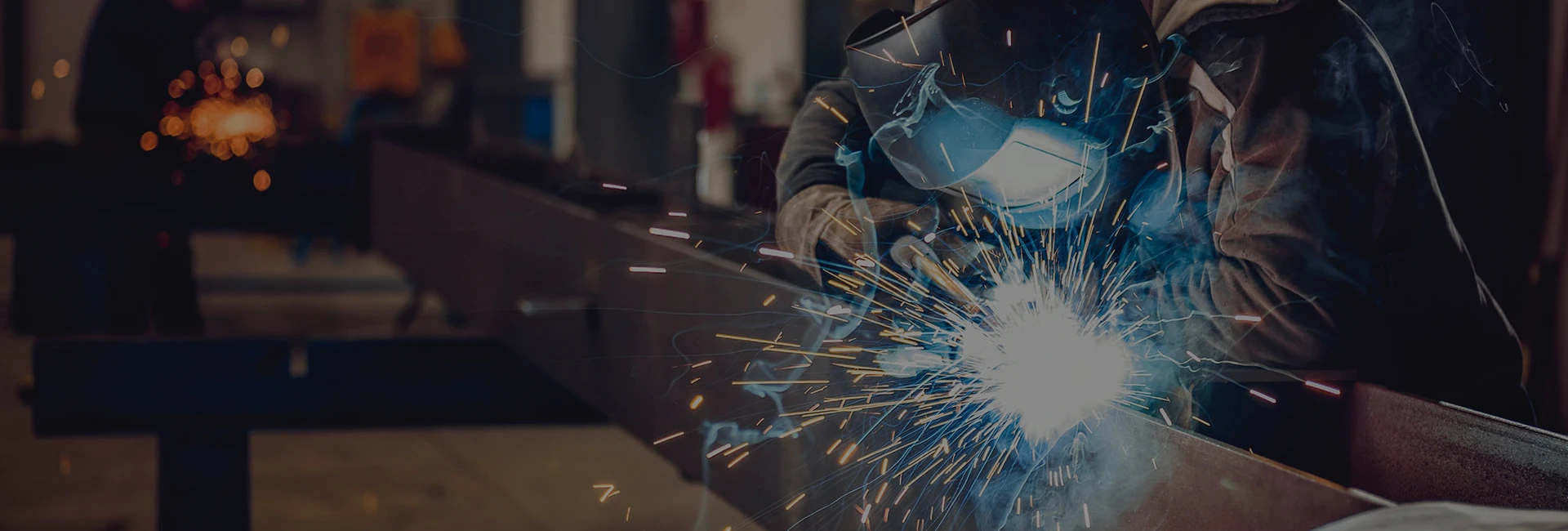
Cast Iron Welding Rod Types: Nickel-Fe, Machinable, Tough

Cast Iron Welding Rod Types: Nickel-Fe, Machinable, Tough
Oct . 16, 2025 12:30
A Pragmatic Guide to Cast Iron Welding Rod Types (with field notes)
If you’ve ever nursed a cracked pump housing back to life at 2 a.m., you already know the stakes. Choosing the right cast iron welding rod types isn’t just a spec-sheet decision—it’s the difference between a tidy repair and a painful do-over. Today I’m focusing on a Ni-Fe workhorse from Hebei, China: Oxidation-Corrosion-Resistant Cast Iron Welding Alloy Nife-1. I’ve seen it on shop floors where downtime cuts deeper than carbon content.
Industry snapshot: what’s changing (and what isn’t)
The market is drifting toward nickel-based deposits for mixed-metal repairs and post-weld machinability. Fe-rich rods are still around—cheaper, sure—but many customers say they’d rather avoid brittle surprises. Short arc, controlled heat input, and slow cooling remain gospel. And yes, procedure qualification under ASME IX is coming up more in mid-size shops than it used to—surprisingly formal, but smart.
Product spotlight: Nife-1 (Ni-Fe for tough, machinable repairs)
Origin: Liusu Industrial Area, Dingzhou City, Hebei Province, China. The Nife-1 is built for gray and nodular iron, especially where corrosion and oxidation sneak in—think marine pumps, compressor bodies, engine blocks. In fact, it seems that machinability after welding is where this rod quietly wins.
| Parameter | Nife-1 Spec (≈ values) | Notes (real-world use may vary) |
|---|---|---|
| AWS Classification | ENiFe-CI | Per AWS A5.15 |
| Core Chemistry | Ni ≈55–60%, Fe balance, C ≤1.0%, Mn ≤1.5% | Optimized for crack resistance + machinability |
| Diameters | 2.5 / 3.2 / 4.0 mm (others on request) | Customization available |
| Current/Polarity | DCEP or AC, short arc | Low heat input; stringer beads |
| Preheat | ≈80–250°C | Depends on section thickness & base iron |
| Interpass Temp | ≤150°C | Peen lightly; slow cool |
| Deposit Tensile Strength | ≈480–550 MPa | Procedure-dependent |
| Deposit Hardness | ≈170–220 HB | Machinable with HSS/Carbide |
Where it fits
- Repair of gray, ductile, and some alloyed irons (engine heads, gearboxes, press frames)
- Marine and chemical pumps where oxidation/corrosion nibble at edges
- MRO work when you can’t afford a brittle HAZ—honestly, most shops
Process flow (how pros run it)
Materials: clean to bright metal, V or U prep, drill crack stops. Methods: preheat per mass; short beads (10–25 mm), peen, stagger sequence, slow cool under insulation. Testing standards: AWS A5.15 classification, ASME IX WPS/PQR, hardness mapping at HAZ. Service life: many users report multi-year uptime post-repair, provided alignment and vibration are addressed. Industries: mining, marine, power gen, pulp & paper, agriculture.
Vendor comparison (quick, imperfect, but useful)
| Vendor | Flagship Type | Strengths | Certs | Typical Price/kg (≈) | Lead Time |
|---|---|---|---|---|---|
| Jinlong (Nife-1) | ENiFe-CI | Oxidation/corrosion resistance; machinable | ISO 9001, CE (seller-declared) | $18–$28 | 2–4 weeks |
| Global Brand A | ENiFe-CI | Very consistent chemistry lot-to-lot | AWS/ASME docs | $22–$32 | Stock–3 weeks |
| Global Brand B | ENi-CI | Highest machinability, premium price | ISO 9001 | $28–$40 | 1–3 weeks |
| Regional Maker C | Fe-CI | Low cost for non-critical repairs | Factory COA | $6–$12 | 1–2 weeks |
Customization and feedback
Jinlong supports custom diameters, private labeling, and carton/foil packaging—handy for distributors. One maintenance manager told me, “It wet-in nicely on a porous casting—no drama.” To be honest, that’s what you want.
Mini case study
A quarry shop in Southeast Asia used Nife-1 to repair a cracked gray iron crusher housing. Procedure: 150°C preheat, 20 mm stringers, peening, vermiculite cool. Post-weld machining went smoothly; deposit hardness measured ≈190 HB; the unit ran two seasons without recurrence. Not flashy—just effective.
If you’re mapping cast iron welding rod types to jobs: heavy-section structural repairs → ENiFe-CI; finish-critical, high-machinability → ENi-CI; budget or non-critical → Fe-CI. And double-check base metal type (ASTM A48 vs A536) before you strike an arc.
Standards to mind: AWS A5.15 for classification, ASME Section IX for qualification, and base-metal specs like ASTM A48/A536. It’s not bureaucracy—it’s insurance.
Bottom line
For shops juggling varied repairs, Nife-1 is a practical middle path among cast iron welding rod types: tough deposits, decent ductility, and post-weld machinability—without the price shock of pure nickel rods.
- AWS A5.15: Specification for Welding Electrodes and Rods for Cast Iron.
- ASME Boiler and Pressure Vessel Code, Section IX: Welding Qualifications.
- ASTM A48/A48M (Gray Iron Castings) and ASTM A536 (Ductile Iron Castings).
- ISO 9001: Quality Management Systems (certification framework referenced by vendors).
- ASM Handbook, Vol. 6: Welding, Brazing, and Soldering (cast iron repair best practices).

Related Video

Related News


2026-04-16 02:35:10
Precision Guide for e312 16 welding rod and Dissimilar Steel Welding
In the demanding world of industrial fabrication and repair, selecting the correct filler metal is the difference between a structural failure and a lifetime bond. The e312 16 welding rod is specifically engineered to meet the rigorous needs of welding dissimilar steels, offering an exceptional balance of strength and corrosion resistance. Whether you are working on high-pressure pipelines or heavy machinery components, understanding the nuances of this specialized electrode is key to achieving professional-grade results. This guide explores the technical advantages and practical applications of the E312 series to help you optimize your welding workflow.
2026-04-09 02:35:17
Choosing the Right cs to ss welding rod number Professional Guide
Joining carbon steel (CS) to stainless steel (SS) is a common challenge in industrial fabrication, requiring a precise understanding of metallurgy to avoid weld failure. The most critical decision in this process is identifying the correct cs to ss welding rod number to ensure a strong, corrosion-resistant bond. Using the wrong filler metal can lead to cracking or premature oxidation due to the different thermal expansion rates of the two materials. In this comprehensive guide, we will break down the technical specifications and selection criteria to help you achieve a professional-grade weld every time.
2026-04-07 02:25:29
Comprehensive Guide to 409 Welding Rod Selection and Optimal Usage
When it comes to welding applications requiring corrosion resistance and good weldability, the 409 welding rod is a frequently chosen option. This article provides a detailed overview of this versatile welding rod, exploring its composition, applications, benefits, and considerations for optimal use. Whether you’re a seasoned professional or new to welding, understanding the properties of 409 welding rod is crucial for achieving high-quality, durable welds. We’ll cover everything you need to know to make informed decisions for your welding projects.
2026-04-04 02:35:28
Comprehensive Guide to 330 Stainless Steel Welding Rod Applications and Techniques
330 stainless steel welding rods are a crucial component in various industries, offering exceptional corrosion resistance and high-temperature strength. This article provides an in-depth look at these rods, covering their properties, applications, choosing the right rod, welding techniques, safety precautions, and where to find high-quality options. Whether you're a seasoned welding professional or new to the field, this guide will offer valuable insights.
2026-03-31 02:35:08
Comprehensive Guide to 312 Stainless Tig Rod for Superior Welding Performance
When choosing the right filler metal for your TIG welding projects, especially in demanding applications, 312 stainless steel tig rod stands out for its exceptional corrosion resistance and high-temperature strength. This comprehensive guide will explore its composition, applications, benefits, and how it compares to other stainless steel rods. We'll also point you to resources for sourcing high-quality rods.
2026-03-28 02:45:04
Comprehensive Guide to 312 17 Welding Rod Applications and Technical Details
Welding rods are essential consumables in the welding process, and selecting the right one is crucial for achieving strong, durable, and high-quality welds. The 312 17 welding rod is a popular choice for many applications due to its unique properties and versatility. This article delves into the characteristics, applications, benefits, and considerations when using 312 17 welding rods, providing a comprehensive resource for welders and engineers alike. Choosing the right rod directly impacts the success and longevity of any welding project.
2026-03-26 02:35:10
Comprehensive Guide to the 312 16 Welding Rod for Superior Steel Welding
The 312 16 welding rod is a versatile and widely-used electrode in various welding applications. Known for its excellent weldability and strong mechanical properties, it's a go-to choice for professionals and hobbyists alike. This article delves into the specifics of this electrode, covering its composition, applications, advantages, and how to choose the right one for your projects. Understanding the nuances of the 312 16 welding rod is crucial for achieving high-quality, durable welds. The designation "312 16" provides key information about the welding rod. "312" refers to the type of flux coating, specifically a low-hydrogen, iron powder coating. This coating is designed to produce welds with excellent mechanical properties and good resistance to cracking. The "16" indicates the diameter of the rod in 32nds of an inch – so a 312 16 rod has a diameter of 16/32 or 1/2 inch. This combination makes it suitable for a wide range of steel welding applications. The low-hydrogen nature of the flux minimizes hydrogen-induced cracking, a common issue in welding certain steels.
2026-03-24 02:45:07
Comprehensive Guide to 309LSI TIG Rod Welding Applications and Best Practices
The 309LSI TIG rod is a versatile welding consumable widely used across various industries for its exceptional corrosion resistance and weldability. This article will explore the properties, applications, advantages, and best practices associated with using 309LSI TIG rods. Whether you're a seasoned welding professional or new to the field, this guide will provide you with valuable insights into maximizing the performance and longevity of your welds. The 309LSI TIG rod is a stainless steel electrode specifically designed for Gas Tungsten Arc Welding (GTAW), commonly known as TIG welding. The "309LSI" designation indicates the alloy composition: 309 signifies the chromium-nickel content, 'L' denotes low carbon content for enhanced corrosion resistance, and 'SI' signifies stabilized with silicon for improved resistance to carbide precipitation during welding.

 English
  Arabic
  Bengali
  China
China  French
  German
  Hausa
Hausa  Indonesian
  Italian
  Japanese
  Javanese
  Malay
Malay  Persian
  Portuguese
  Punjabi
  Russian
  Spanish
  Swahili
  Telugu
  Vietnamese