

Professional Guide to Welding and 6013 electrode price
Selecting a welding consumable involves more than just comparing the 6013 electrode price; it requires a deep understanding of how electrode chemistry affects weld integrity and operational efficiency. For industrial applications involving mild steel and galvanized materials, the choice of coating and hydrogen content can be the difference between a structural failure and a durable bond. Professional welders often seek a balance between arc stability, penetration depth, and slag removal ease to maintain high productivity on construction sites or in manufacturing plants.
Our high-performance welding solutions, specifically designed to meet AWS standards, provide the necessary mechanical properties to ensure toughness and resistance to stomatal defects. By focusing on the synergy between cellulose coatings and core wire quality, we enable both professional fabricators and repair shops to achieve clean weld lines with minimal spatter, regardless of whether they are operating in controlled factory environments or harsh field conditions.

Understanding the Technical Composition and Mechanical Performance of E6011 Electrodes
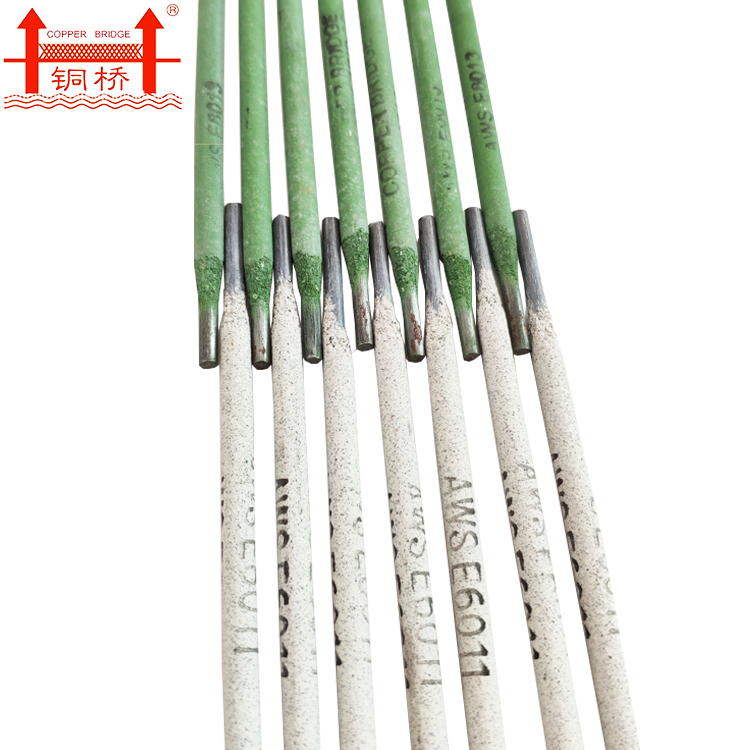
The AWS E6011 electrode is engineered for deep penetration and high-strength welds, making it an essential tool for welding mild steel and galvanized steel. Unlike generic rods, this specific electrode utilizes a cellulose-based coating that facilitates a powerful, stable arc and minimizes slagging. This combination allows the welder to penetrate deep into the workpiece, which is critical for root passes in pipeline welding or structural repairs where full fusion is mandatory.
From a mechanical standpoint, the deposited metal is characterized by its impressive toughness and ductility. With a guaranteed tensile strength (Rm) of ≥420 Mpa and a yield strength (Rel) of ≥330 Mpa, these electrodes ensure that the resulting joint can withstand significant stress. Furthermore, the impact energy (KV2) remains stable even at low temperatures (-30°C), providing critical reliability for infrastructure located in cold climates. The low-hydrogen characteristic is a pivotal feature, reducing the risk of hydrogen-induced cracking in high-strength steel applications.
- Deep Penetration: Ideal for welding gaps and rusted surfaces.
- Cellulose Coating: Ensures a smooth arc and efficient slag distribution.
- Material Versatility: Compatible with mild steel and various galvanized substrates.
- Environmental Safety: Eco-friendly formulation that minimizes harmful fume emissions.

Industrial Application Scenarios and Operational Advantages
In the realm of heavy manufacturing and field construction, the versatility of the E6011 electrode is highly valued. In repair shops, where workpieces may not be perfectly cleaned, the high-penetration capability allows the arc to "burn through" contaminants, ensuring a secure weld. In contrast, in manufacturing plants, the stability of the arc helps maintain tight tolerances and clean weld beads, reducing the need for extensive post-weld grinding.
The ability to operate on both AC and DC currents provides significant flexibility for technicians. Whether using an older transformer-based machine or a modern inverter, the electrode maintains a consistent arc. This is particularly useful in remote field sites—such as shipbuilding or automotive assembly—where power sources may vary. The resulting weld lines are not only aesthetically sound but possess the plastic nature and toughness required for dynamic loading environments.
Furthermore, the durability of the electrode in harsh environments ensures that the core wire remains protected from moisture and contamination during storage and use. This reliability reduces waste and prevents defects like porosity, which are common when using lower-grade consumables in humid or dusty settings.
Procurement Strategies for High-Volume Welding Consumables
For procurement managers, evaluating a supplier involves looking beyond the immediate 6013 electrode price to consider the total cost of ownership. This includes the rate of electrode consumption, the amount of time spent on slag removal, and the frequency of weld failures. A higher-quality electrode with better arc stability often results in lower overall project costs by reducing labor hours and rework.
When auditing suppliers, it is crucial to verify international certifications. Compliance with ISO9001, CE, and BV Rhine standards indicates a consistent manufacturing process. A supplier with an annual output of 50,000 tons, such as Dingzhou Jinlong Metal Production Co., Ltd., can offer the stability of supply needed for large-scale projects without compromising on quality. This scale of production allows for better quality control across different batches, ensuring that the chemical composition of the deposited metal remains within guarantee values.
Buyers should also consider the logistical capabilities of the manufacturer. Having a global presence—with offices in hubs like Dubai and Nairobi—facilitates faster technical support and streamlined shipping, which is vital for maintaining project timelines in Southeast Asia, the Middle East, and Africa.
Technical Specification and Performance Matrix
| Diameter (mm) | Current Range (A) | Tensile Strength (Rm) | Impact Value (KV2) |
|---|---|---|---|
| 2.5 mm | 30-50 A | ≥ 420 Mpa | ≥ 27 J (-30°C) |
| 3.2 mm | 80-100 A | 440-500 Mpa | 50-90 J (-30°C) |
| 4.0 mm | 110-130 A | ≥ 330 Mpa (Rel) | Typical Low Hydrogen |
| 5.0 mm | 150-200 A | 22-30% (A) | High Toughness |
| Various | AC/DC Compatible | ISO9001 Certified | CE/BV Certified |
Quality Assurance in Electrode Manufacturing Processes
The integrity of a welding electrode begins with the purity of the raw materials. The chemical composition of the deposited metal—specifically the levels of Carbon (C), Manganese (Mn), and Silicon (Si)—must be strictly controlled. For instance, keeping Sulfur (S) ≤0.035% and Phosphorus (P) ≤0.040% is essential to prevent hot cracking and ensure the weld remains ductile under stress.
Advanced production lines allow for the precise application of the cellulose coating, ensuring uniform thickness along the entire length of the rod. This uniformity is what creates the "small spark" and "stable arc" characteristics. If the coating is uneven, the welder will experience erratic arc behavior, leading to increased spatter and poor weld bead molding.
Consistent testing is the final pillar of quality. Utilizing complete test equipment to verify mechanical properties—such as elongation and impact strength—ensures that every batch meets the AWS E6011 standard. This rigorous approach allows brands like "Copper Bridge" to successfully expand into demanding markets across South America and Africa, where structural reliability is non-negotiable.
Future Trends in Welding Materials and Sustainability
The welding industry is currently shifting toward materials that offer higher efficiency with lower environmental impact. The development of eco-friendly electrodes that reduce the emission of harmful fumes is a primary focus. By optimizing the chemical composition of the coatings, manufacturers can protect the health of the welder while maintaining the high-performance characteristics required for industrial steel fabrication.
Additionally, there is a growing trend toward specialized brands tailored to specific regional needs. The introduction of brands like NIHOWELD for the Philippines and ZETA for Venezuela demonstrates a strategic move toward localized product optimization. This allows manufacturers to adjust their formulations based on the specific steel grades and environmental conditions prevalent in those markets.
As automation increases in the manufacturing sector, the demand for electrodes that can be easily integrated into semi-automated systems continues to grow. The focus remains on improving the "plastic nature" of the weld, ensuring that joints can withstand the evolving demands of modern architectural and automotive engineering.
Frequently Asked Questions About Industrial Welding Electrodes
What is the primary difference between E6011 and other mild steel electrodes?
The E6011 electrode features a cellulose coating that provides much deeper penetration and a more forceful arc compared to rutile-coated electrodes. This makes it superior for welding through rust, paint, or for root passes in heavy pipe work.
Can E6011 electrodes be used with both AC and DC welding machines?
Yes, these electrodes are designed for versatility and are compatible with both AC and DC currents, allowing them to be used across a wide range of power sources in both shop and field environments.
Why is the cellulose coating important for the welding process?
The cellulose coating helps create a smooth, stable arc and produces a slag that is well-distributed. This minimizes spatter and ensures that the weld line is molded well, reducing the amount of post-weld cleanup required.
How does the low-hydrogen property benefit high-strength steel welding?
Low hydrogen content significantly reduces the risk of hydrogen-induced cracking (cold cracking), which is a common failure mode in high-strength steels and thick-section welds.
What certifications should I look for when sourcing electrodes in bulk?
Look for ISO9001 international system certification, as well as CE and BV Rhine certifications. These ensure that the manufacturer adheres to strict quality management and safety standards.
Which electrode diameter is best for thin versus thick mild steel?
For thinner materials, 2.5mm electrodes with lower current (30-50A) are recommended to prevent burn-through. For thick sections requiring deep fusion, 4.0mm or 5.0mm electrodes are used with higher current settings.
Technical References and Industry Standards
- American Welding Society (AWS) Standards
- ISO 9001 Quality Management Systems
- BV Rhine Certification Guidelines
- European Conformity (CE) Marking Requirements
Whether you are upgrading your factory's consumable supply or managing a large-scale infrastructure project, choosing electrodes based on technical merit and certified manufacturing capabilities is the only way to ensure structural longevity. For expert guidance on matching the right electrode to your specific steel grade, contact our technical team today.
Related Technical Resources


 English
 Arabic
 Bengali
 China
 French
 German
 Hausa
 Indonesian
 Italian
 Japanese
 Javanese
 Malay
 Persian
 Portuguese
 Punjabi
 Russian
 Spanish
 Swahili
 Telugu
 Vietnamese